
Reviewed for accuracy by Muhammad Gulbadin, founder and operations manager at Urban Flooring, 15+ years in UAE flooring.
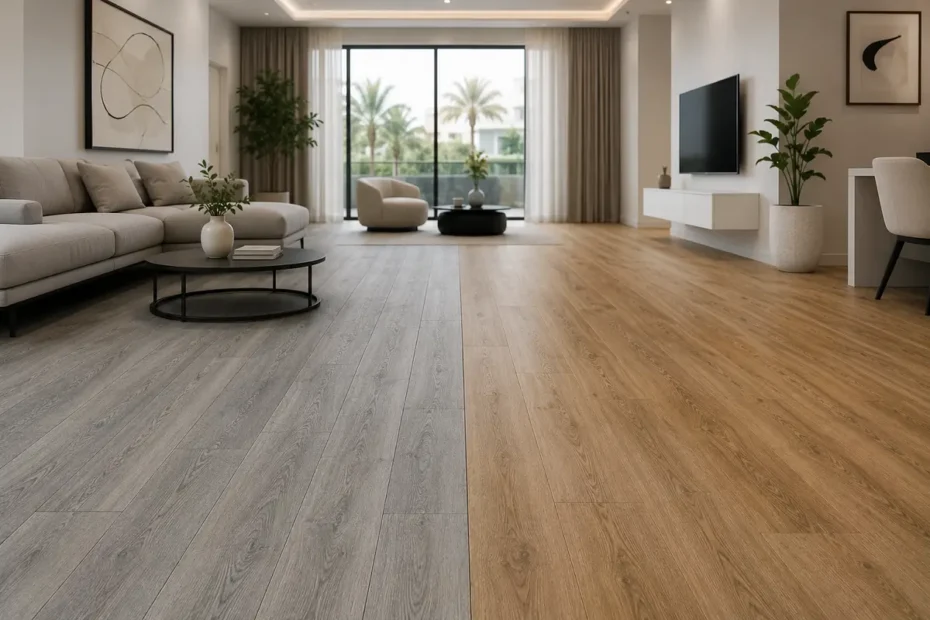
For most UAE homes, vinyl is the safer all-round choice: SPC and other vinyls are waterproof and shrug off heat and humidity, so they suit kitchens, bathrooms and whole-home use. Laminate can be cheaper and feels warmer and more like real wood in dry rooms, but it is only water-resistant and swells if water reaches its core. The right pick depends on the room.
This is an honest, UAE-specific comparison for anyone choosing between the two across flooring in Dubai and the wider UAE. It states plainly where laminate genuinely wins, not just where vinyl does, so you can route each room to the right floor.
What is the difference between vinyl and laminate flooring?
They look almost identical on a showroom floor, but vinyl and laminate are made from completely different materials. Vinyl has a plastic core that cannot absorb water. Laminate has a compressed wood-fibre core that can. That one difference drives water resistance, feel, durability and price, and it is the only distinction you really need before choosing.
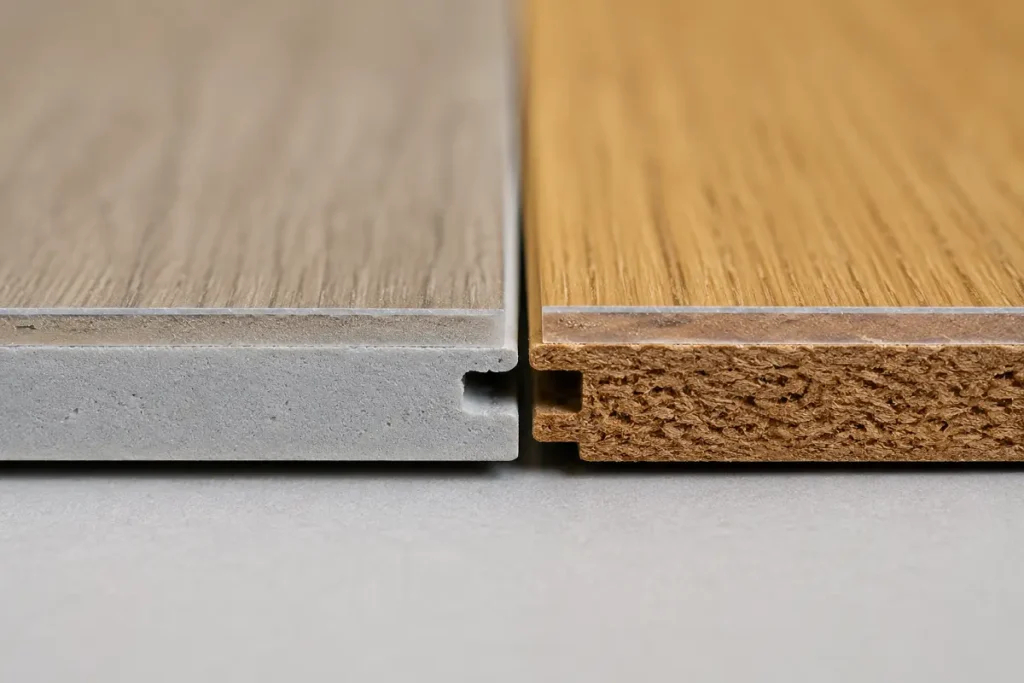
Vinyl flooring is plastic-based. Its core is flexible PVC (LVT), a rigid stone-composite of limestone and PVC (SPC), or a foamed wood-polymer (WPC), topped by a printed film and a clear wear layer. Because the core is synthetic, it does not absorb water.
Laminate flooring is wood-based. Under its printed design layer and hard melamine wear layer sits a high-density fibreboard (HDF) core, made of compressed wood fibre. That core is stable and dent-resistant, but it swells if water reaches it.
So no, laminate is not “cheap vinyl”. They are separate products. The plastic-core-versus-wood-fibre-core distinction is what decides water resistance, feel, durability and price, and it is the only difference you really need to understand before choosing.
Vinyl vs laminate at a glance
The table compares the two across the points that actually decide a UAE home: core material, water resistance, durability, look, feel, sound, performance in heat and humidity, cost and lifespan. Each floor leads on roughly half the rows, so read it as a map of trade-offs rather than a scoreboard.
| Feature | Vinyl (SPC / LVT / WPC / PVC) | Laminate |
|---|---|---|
| Core material | PVC or stone-composite (plastic); non-absorbent | HDF (compressed wood fibre); absorbs water if breached |
| Water resistance | Waterproof (SPC/WPC/LVT); does not swell | Water-resistant only; HDF core swells if water sits or seeps to seams |
| Durability / scratch | Resists dents and water best; scratch resistance set by wear-layer mil | More scratch and abrasion-resistant (hard AC4/AC5 wear layer); dents easier under heavy loads |
| Look | HD print and emboss; wide wood and stone range | HD print and deep emboss; slight edge for the most authentic wood look |
| Feel / warmth underfoot | Softer, warmer, cushioned (especially WPC and padded LVT); SPC is firm and cool | Firm, real-wood feel; warmer than cold SPC, harder than cushioned vinyl |
| Sound | Quieter, absorbs footfall | Can sound hollow or clicky without good underlay |
| UAE heat and humidity | Handles heat, humidity and wet zones; SPC most heat-stable | Risk of swelling in humidity and wet rooms; better in dry, AC-controlled rooms |
| Indicative cost (supply and fit) | SPC AED 35–150/sqm (3.3–13.9/sqft); LVT 45–350 (4.2–32.5); WPC 90–200 (8.4–18.6) | AED 45–160/sqm (4.2–14.9/sqft) |
| Lifespan | 15–20+ years (SPC to ~25 with care) | 10–20 years (premium AC5 longer with care) |
Bands are indicative, supplied and fitted, before VAT, June 2026. For the full range across every floor type, see our flooring cost guide.
Which handles water and UAE humidity better, vinyl or laminate?
This is the decisive point for the UAE, and vinyl wins it clearly. Vinyl’s plastic core does not absorb water, so it will not swell in a wet room or in humidity. Laminate’s wood-fibre core will, given the chance. That single fact decides which floor belongs in a kitchen, a bathroom or a laundry.

SPC, WPC and most LVT are waterproof. The plastic core does not absorb water, so the floor will not swell or warp in wet zones or in UAE humidity, which makes vinyl right for kitchens, bathrooms, laundries and whole-home use. For the rigid, most heat-stable option in wet and sun-exposed rooms, SPC flooring is the pick.
Laminate is water-resistant only. Its HDF core swells, lifts and warps if water sits on it or seeps through the seams, and many laminate warranties are voided if it is fitted in a bathroom. Even “moisture-resistant” or so-called “waterproof” laminate only buys roughly 24 to 72 hours against a spill; it is not a true wet-room floor, and any supplier claiming laminate is fully waterproof is overstating it.
In a dry, air-conditioned room, laminate is perfectly fine. In any wet or humid UAE zone, vinyl is the safe choice. For the full picture on wet areas, see our guide to waterproof flooring options.
On our own jobs, the laminate damage we are called to is almost always in wet rooms: swelling and lifting at the joints in kitchens and bathrooms, rarely in dry bedrooms or living rooms. It is a room problem, not a laminate problem, which is why the room decides the floor.
Which is more durable and scratch-resistant, vinyl or laminate?
Durability splits two ways, and an honest answer names both. Laminate resists scratches and abrasion better, thanks to its hard melamine wear layer. Vinyl resists dents and water better, thanks to its denser, non-absorbent core. Neither is simply tougher, so the right pick depends on which kind of damage your rooms actually see.
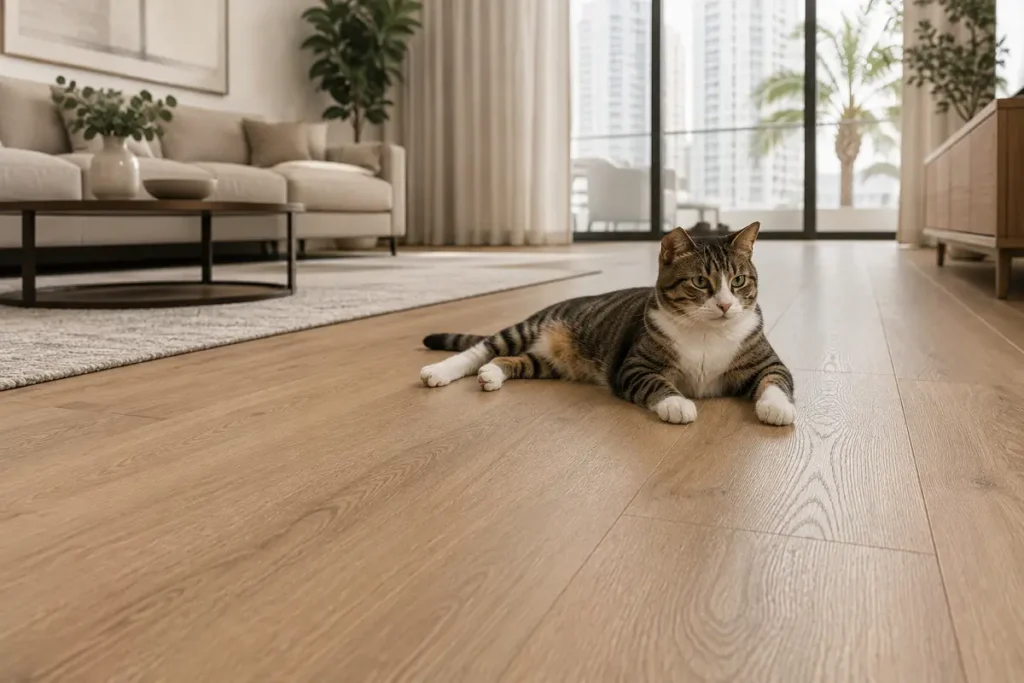
Laminate is the more scratch and abrasion-resistant of the two. Its hard melamine and aluminium-oxide wear layer is rated on the AC scale, which grades abrasion, impact, staining and humidity swelling together, and for UAE homes you want AC4 as a minimum, AC5 for offices or retail. That hard surface copes better with pet claws, dragged furniture, grit and sunlight fade than most vinyl.
Vinyl is the more dent and water-resistant. Its core absorbs heavy drops better, especially rigid SPC, and it does not swell. Vinyl’s wear is measured in mil: 12 mil for light residential, 20 mil for pets and children, 28 mil for commercial.
So if scratches are your worry, lean laminate; if dents, spills and moisture are the worry, lean vinyl. Both are durable floors, and in practice the wear-layer mil and the AC rating decide real-world life far more than the core does.
Across the UAE homes we have fitted over the years, vinyl holds up better overall in this climate. Laminate can last well in the right dry room, but vinyl is the one we see age more reliably across wet and dry zones alike.
Look, feel and comfort underfoot: vinyl vs laminate
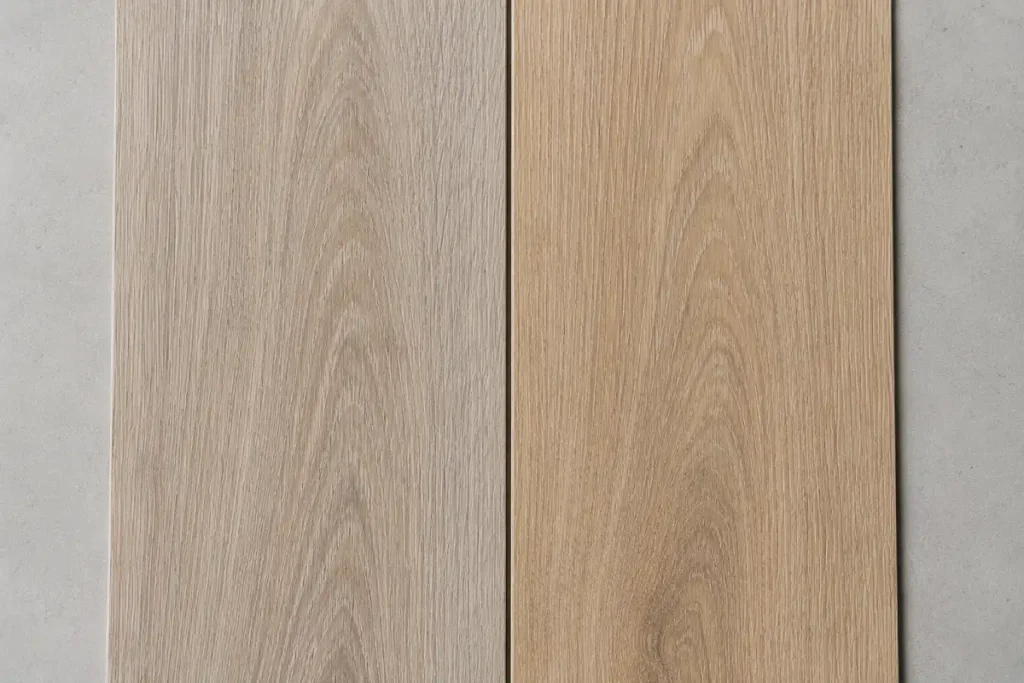
On looks, modern vinyl and laminate are close, because both use high-resolution printing and embossing, and laminate holds a slight edge for the most authentic wood look and the deepest grain at the premium end. Feel is where they separate: laminate is firm and wood-like, vinyl is softer and quieter.
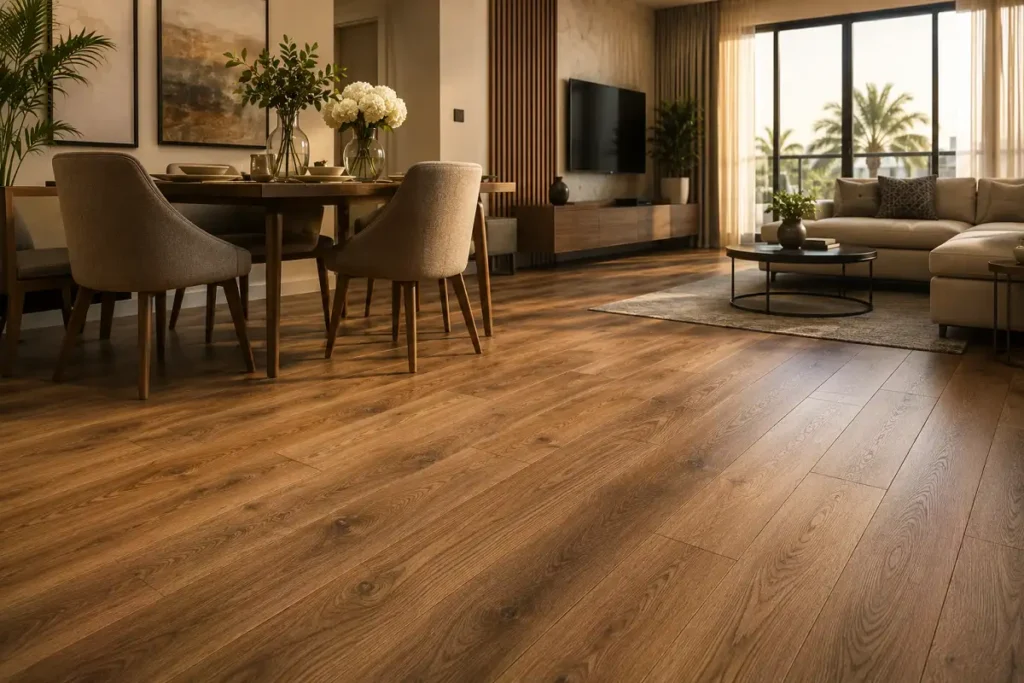
Feel is where they diverge. Laminate gives a firm, warm, wood-like step, and it is warmer underfoot than cold SPC. Vinyl is softer, more cushioned and quieter, especially WPC flooring and padded LVT. On sound, vinyl is the quieter floor; laminate can sound hollow or clicky without a good underlay.
The honest read: choose laminate if you want the truest wood look and a firm, warm feel in dry rooms. Choose vinyl for a softer, quieter step, and pick WPC if comfort underfoot matters most. Warmth is not a clean win for either, laminate beats cold SPC, but cushioned WPC and padded LVT beat laminate.
In our experience, regret runs both ways and it is almost always about the room, not the product. Someone who put laminate in a wet area wishes they had vinyl, and someone who chose cool SPC in a cosy bedroom sometimes wishes they had the warmer feel of laminate. Match the floor to the room and the regret disappears.
Vinyl vs laminate cost in the UAE
There is no flat cheaper winner; it depends on grade. At the budget end, the two overlap closely. Laminate starts from around AED 45/sqm (about AED 4.2/sqft) supplied and fitted, while entry SPC starts a little lower at about AED 35/sqm (about AED 3.3/sqft). Mid-range, both sit near AED 70 to 120/sqm (about AED 6.5 to 11.1/sqft).
At the premium end they diverge. Premium LVT runs up to around AED 350/sqm (about AED 32.5/sqft), while premium laminate tops out lower at roughly AED 130 to 200/sqm (about AED 12.1 to 18.6/sqft). Budget for underlay at around AED 5 to 15/sqm (about AED 0.5 to 1.4/sqft) where it is needed.
All figures are indicative, supplied and fitted, before 5% VAT, and depend on grade, area and subfloor. For the full breakdown across every floor type, see our flooring cost guide.
Vinyl or laminate, by room
The cleanest way to choose is by room rather than by product. Vinyl goes wherever water, humidity or heat is a factor. Laminate goes in dry, air-conditioned rooms where look and budget lead. Most UAE homes split cleanly along that line, and the mapping below covers the usual cases.
- Kitchens, bathrooms, laundries and any wet or humid zone: vinyl, for its waterproof core.
- Dry bedrooms, dining rooms and budget formal living: laminate is a fine, good-looking and often cheaper choice.
- Whole-home single floor: vinyl is the safer workhorse, because one floor then covers wet and dry rooms alike.
- Sun-facing dry rooms: either works. Laminate’s fade resistance is strong, and vinyl’s SPC is the most heat-stable.
For most UAE homes that want one floor throughout, vinyl flooring is the practical answer. For dry-room projects where look and budget lead, laminate flooring earns its place.
Vinyl vs laminate: frequently asked questions
Is laminate the same as vinyl flooring?
No. They look similar but are different materials. Vinyl has a plastic core (PVC or stone-composite) and does not absorb water. Laminate has a wood-fibre HDF core under a printed layer, which gives a firm, warm, wood-like feel but swells if water reaches it. Laminate is not “cheap vinyl”, it is a separate product with its own strengths in dry rooms.
Is vinyl or laminate better for bathrooms and kitchens?
Vinyl, clearly. SPC, WPC and most LVT are waterproof, so they handle splashes, spills and humidity without swelling, which makes them right for UAE bathrooms, kitchens and laundries. Laminate is only water-resistant; its core swells if water sits or seeps to the seams, and many laminate warranties are voided in bathrooms. Keep laminate to dry rooms.
Which lasts longer, vinyl or laminate?
Both last well. Vinyl typically gives 15 to 20 years or more, with SPC up to about 25 with care; laminate gives around 10 to 20 years, longer for premium AC5 grades. For both, the surface rating matters more than the core: a thicker vinyl wear layer or a higher laminate AC rating lasts longer. In wet or humid UAE rooms, vinyl will outlast laminate comfortably.
Is laminate or vinyl cheaper in the UAE?
They overlap at the budget end. Laminate runs from about AED 45/sqm (about AED 4.2/sqft) supplied and fitted, while entry SPC starts a little lower at around AED 35/sqm (about AED 3.3/sqft). Mid-range both sit near AED 70 to 120/sqm. At the premium end vinyl goes higher (LVT to AED 350/sqm) than laminate (to around AED 130 to 200/sqm). There is no flat cheaper winner; it depends on grade.
Does laminate flooring swell in humidity?
It can. Laminate’s HDF core is wood-based, so standing water, steam or sustained high humidity can make it swell, lift or warp, especially at the seams. AC-controlled dry rooms are usually fine, but kitchens, bathrooms, laundries and any leak are a real risk. Moisture-resistant laminate resists spills for 24 to 72 hours but is still not a true wet-room floor. Vinyl does not swell.
Which feels and looks more like real wood?
Laminate usually has a slight edge. Its wood-fibre core gives a firm, warm, authentic underfoot feel, and premium laminate uses deep embossing and high-resolution printing for very realistic grain. Modern vinyl has closed the look gap and feels softer and quieter, but to many people laminate still reads closest to real timber, particularly in dry living and dining rooms.
Can vinyl or laminate be laid over tiles?
Both can, if the existing tile is sound, clean and level. Click vinyl (SPC especially) and click laminate float over tile, with rigid cores bridging minor unevenness; grout lines may need filling first so they do not telegraph, and expansion gaps are left at the edges. Glue-down vinyl needs the surface skimmed flush. A site visit confirms the tile base is suitable.
Which is better for the UAE climate overall?
Vinyl, for most homes. It handles heat, humidity and wet zones without swelling, and SPC is the most heat-stable near sun-facing glazing. Laminate suits dry, air-conditioned rooms where its scratch resistance, fade resistance and warm wood feel shine, but it is vulnerable to the moisture and wet rooms common in UAE living. For a whole-home floor in this climate, vinyl is the safer pick.
The bottom line: vinyl or laminate
Both vinyl and laminate are strong wood-look floors, and the honest answer is not one winner but the right floor for the room. Vinyl is the safer all-round pick for the UAE: waterproof, heat-stable and suited to kitchens, bathrooms and whole-home use, with WPC or padded LVT for comfort and SPC for the toughest wet and sun-exposed rooms.
Laminate earns its place in dry, air-conditioned rooms, where its scratch resistance, fade resistance, authentic wood look and firm warm feel come into their own, often at a lower price. Map your rooms first, and a free site visit is the quickest way to spec each one correctly.
Get honest advice with a free site visit
Choosing between vinyl and laminate for specific rooms? Message us on WhatsApp and a flooring specialist will give honest, room-by-room guidance, including when laminate is the cheaper, better-looking call and when vinyl is the safer one.
- WhatsApp us: +971 56 689 9831
- Call: +971 56 689 9831
- Request a free site visit and quote across Dubai and Abu Dhabi.
We have supplied and fitted both vinyl and laminate floors in UAE homes since 2013, with more than 10,000 projects completed by our in-house team.

Junaid Rana is a content strategist with over 10 years of experience in the interior and fit-out industry, writing on flooring, finishes and fit-out across UAE homes and commercial spaces. His guides are reviewed for accuracy by Urban Flooring’s in-house experts.