
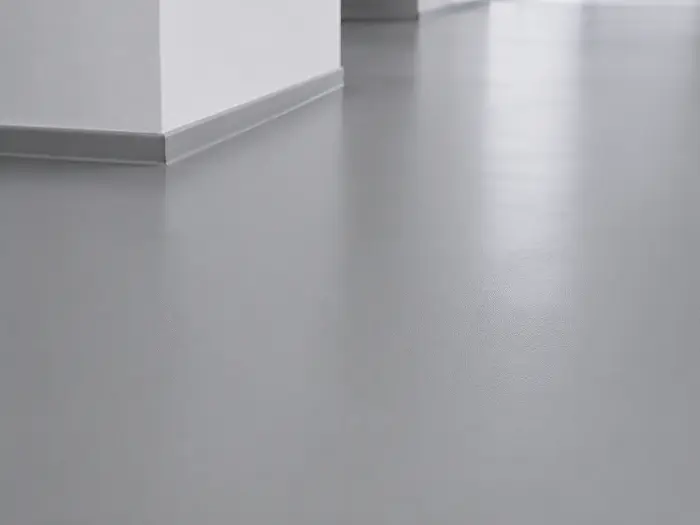
Epoxy Flooring in Dubai & Abu Dhabi
Continuous, jointless epoxy and resin flooring in metallic, flake, 3D, industrial and polyurethane finishes, for homes, showrooms, garages and warehouses. Supplied and fitted by one team since 2013, with free site visits across the UAE.
- Established 2013
- 10,000+ Projects
- Jointless & Hard-Wearing
- Decorative & Industrial
- Free Site Visit
Or call +971 56 689 9831
What Is Epoxy Flooring?
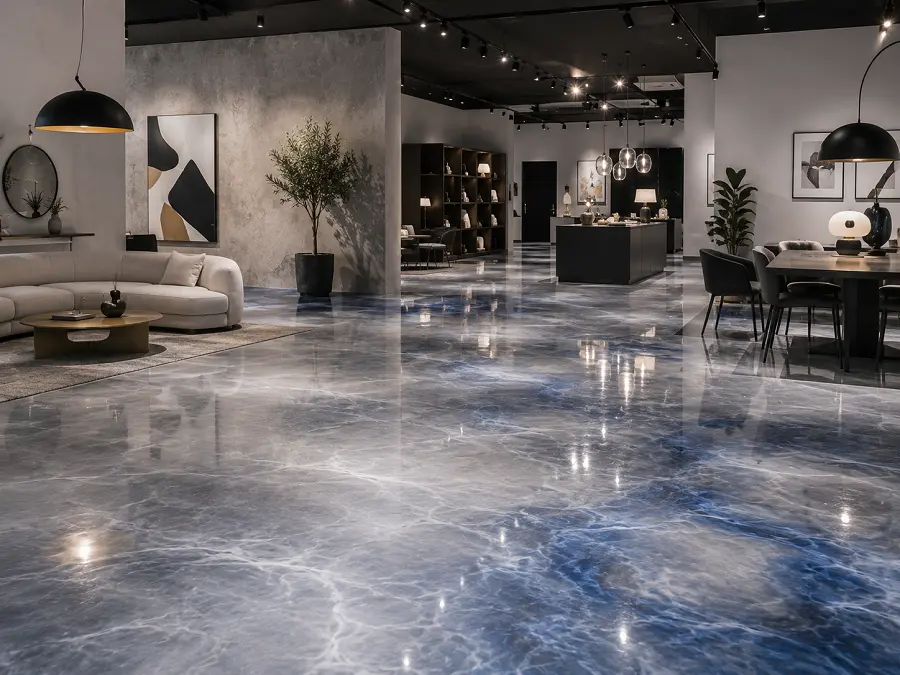
Epoxy flooring is a continuous, jointless resin coating applied over concrete to create a hard, jointless and hard-wearing surface. Epoxy is one type of resin floor, alongside polyurethane, and comes in decorative finishes like metallic and flake or heavy-duty industrial grades. Urban Flooring supplies and fits epoxy and resin flooring across Dubai and Abu Dhabi.
Because it is applied as a liquid and cures into one continuous surface, epoxy has no joints or grout lines for dirt to collect, which is why it suits everything from villas to warehouses. The rest of this page covers the finishes and how to choose.
Types of Epoxy and Resin Flooring
Epoxy comes in several finishes, from plain industrial coatings to high-end decorative floors. Here is the range we supply. Finishes come in a wide colour range, from solid white and black through greys to metallic and marble effects.
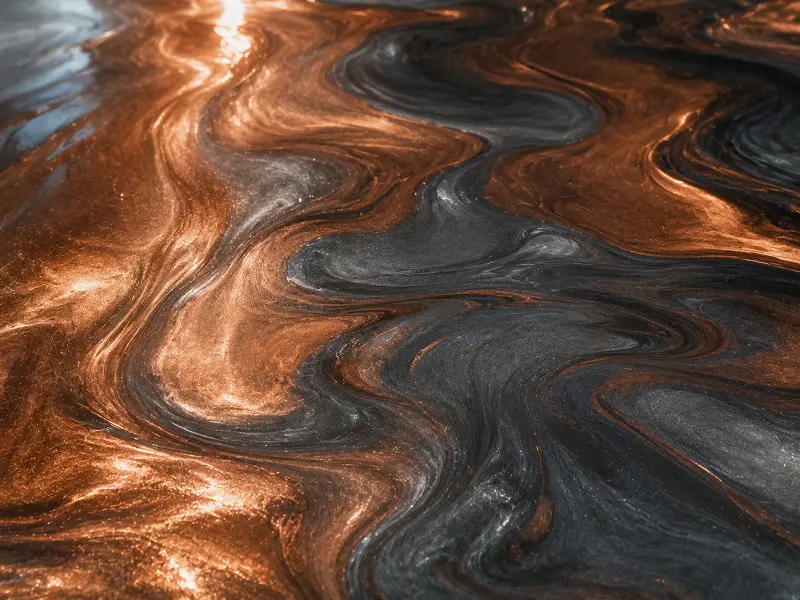
Metallic Epoxy
Marbled and reflective Pigments swirled into clear resin for a marbled, reflective, high-end look, popular in showrooms and villas. The pattern is made on site as the resin moves, so no two floors match and none can be sampled exactly in advance.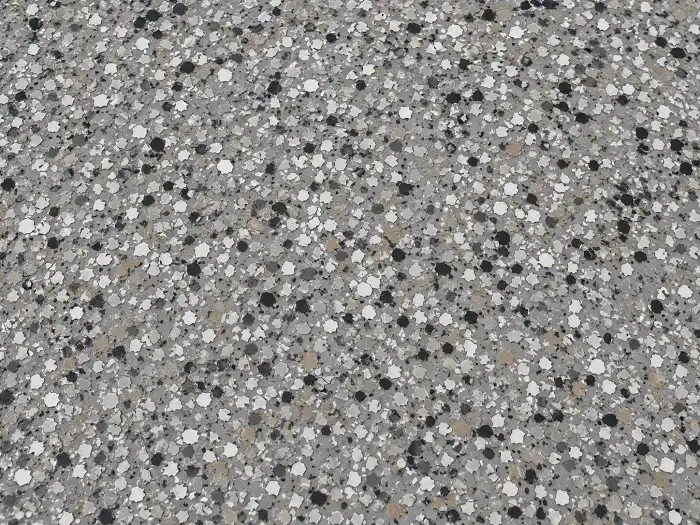
Epoxy Flake (Chip)
Textured and grippy Decorative flakes broadcast into the resin for texture, grip and a speckled finish. Quartz-filled versions add extra durability and slip resistance.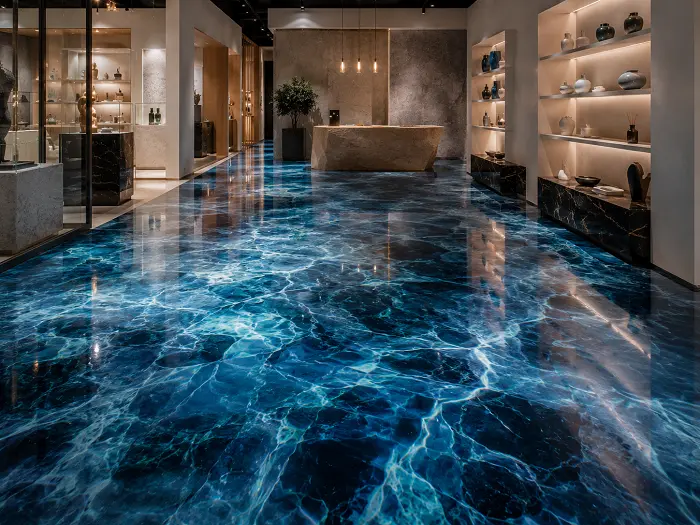
3D Epoxy
Statement feature floors A printed image set under clear resin for striking feature floors, used in retail, hotels and statement rooms. The image is printed to the room's dimensions, so the floor is designed once the measurements are fixed and cannot be reordered by the metre.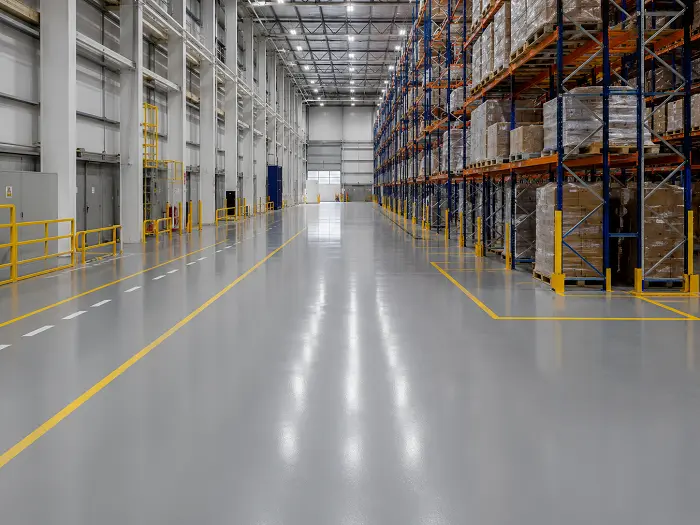
Industrial Epoxy
Heavy-duty and high-build High-build, heavy-duty coatings for warehouses, factories and workshops, made to take forklift traffic and impact. Built up to 3mm and beyond, these systems are specified on compressive strength and abrasion resistance rather than on finish, which is why the price gap against a thin coating is so wide.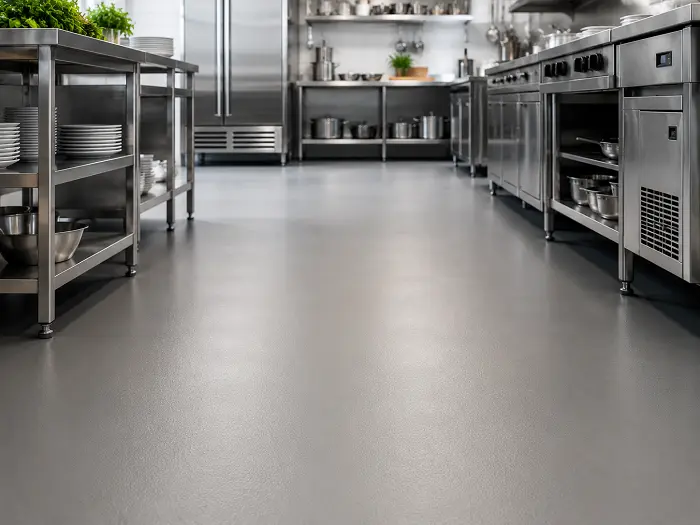
Polyurethane (PU) Resin
Flexible and UV-stable A flexible resin floor that resists UV, temperature swings and thermal shock, suited to kitchens, cold rooms and outdoor areas. Fast-cure polyaspartic systems are a PU option for quick turnarounds.Resin screeds are classified under EN 13813, the European standard for screed material and floor screeds, which grades a system on properties including compressive strength, wear resistance and surface hardness. A thin decorative coating and a high-build industrial screed sit at opposite ends of that scale, so ask which class a quoted system meets before comparing prices.
Epoxy, Polyurethane or Microcement?
Three resin and cement finishes that get confused. The honest difference: Epoxy is the hardest and most chemical resistant, which suits indoor industrial and decorative floors. Polyurethane is more flexible and UV stable, which suits kitchens, cold rooms and outdoor areas. Microcement is not a resin at all. It is a thin cement-based finish for a matt, stone-like look on floors and walls.
EpoxyThe hardest and most chemical-resistant, best for indoor industrial and decorative floors.
PolyurethaneMore flexible and UV-stable, better for temperature change, kitchens and outdoors.
Microcement A thin cement-based decorative finish, not a resin, for floors and walls with a matt, stone-like look. See our microcement flooring page, or the full epoxy vs microcement comparison to choose between them.
| Feature | Epoxy | Polyurethane | Microcement |
|---|---|---|---|
| Material | Resin | Resin | Cement-based |
| Hardness | Highest | Lower, flexible | Moderate |
| Chemical resistance | Highest | Good | Moderate |
| UV stability | Yellows in direct sun | UV stable | Stable |
| Finish | Gloss, metallic, flake | Matt to satin | Matt, stone-like |
| Typical thickness | 0.3mm to 3mm plus | 2mm to 4mm | 2mm to 3mm |
| Best for | Indoor industrial, decorative | Kitchens, cold rooms, outdoors | Walls and floors, decorative |
We match the system to the floor, the traffic and the exposure during your free site visit.
Why Choose Epoxy Flooring
Epoxy is chosen for one reason above the rest: it is continuous. With no joints or grout lines, there is nowhere for dirt, water or bacteria to collect, which is why it is specified for clinics, commercial kitchens and food areas. It also resists oils, chemicals and abrasion, takes forklift traffic, and can be finished decoratively or left plain industrial.
Continuous and JointlessNo joints for dirt to hide, easy to clean.
Chemical & Abrasion ResistantShrugs off oils and spills.
Hard-WearingTakes heavy traffic and impact for years.
Decorative or IndustrialFrom metallic art floors to plant rooms.
Anti-Slip OptionsAggregate added for grip where needed.
Heat-StableHigh-grade resin resists UAE indoor heat.
Applied from thin coatings to 3mm-plus high-build systems depending on use.
Where Epoxy Flooring Falls Short
Standard epoxy yellows and chalks under direct sun, so an open car park deck or a floor in strong daylight is the wrong place for it and we specify a polyurethane or a UV-stable topcoat instead. It is also the wrong finish for a matt, stone-like look, because epoxy runs gloss, metallic or flake. For that we fit microcement, and the free site visit settles which of the three a floor needs.
Where Epoxy Flooring Works
From a warehouse slab to a villa garage, the finish and grade are matched to the use. Industrially it goes into warehouses, factories, workshops, showrooms, commercial kitchens and car parks, where abrasion and constant traffic decide the specification. At home it goes into garages, kitchens, bathrooms, balconies, basements and feature rooms. We also form epoxy skirting and coving where a hygienic, easy-clean edge matters.
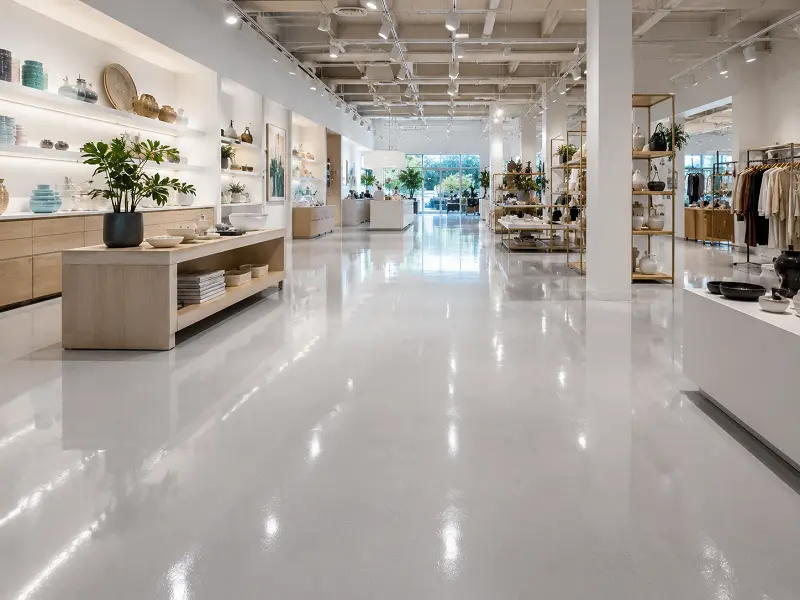
Industrial & Commercial
Built for heavy use Warehouses, factories, workshops, showrooms, commercial kitchens, clinics, retail and car parks. Epoxy is the default choice for warehouse & industrial flooring where abrasion and forklift traffic are constant. Its joint-free, hygienic finish also makes it a strong fit for clinic & healthcare flooring.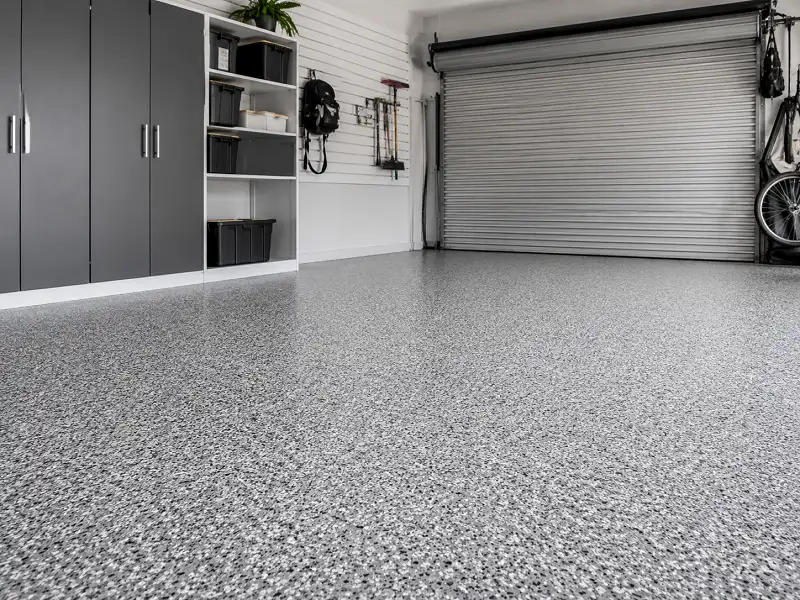
Residential
Practical and decorative at home Garages (see our garage flooring page), kitchens, bathrooms, balconies, feature rooms and basement floor coating. We also form epoxy skirting and coving where a hygienic, easy-clean edge is needed, common in kitchens and clinics.Epoxy Flooring Prices in Dubai
Epoxy flooring in Dubai runs from about AED 50 per sqm for a solid self-levelling floor to AED 250 per sqm for 3D epoxy, supplied and fitted. Price depends mainly on the finish, the thickness and how much preparation the slab needs. Indicative supply-and-fit guide by type:
| Type | Per sqm (AED) | Per sqft (AED approx) |
|---|---|---|
| Self-levelling (solid) | 50 to 110 | 4.6 to 10.2 |
| Flake / quartz | 65 to 120 | 6.0 to 11.1 |
| Polyurethane (PU) | 90 to 160 | 8.4 to 14.9 |
| Industrial / high-build | 100 to 180 | 9.3 to 16.7 |
| Metallic | 110 to 180 | 10.2 to 16.7 |
| 3D epoxy | 150 to 250 | 13.9 to 23.2 |
Surface preparation (grinding, crack repair) may add about AED 15 to 30/sqm. Large areas attract better rates.
Indicative supply-and-fit ranges for guidance only, subject to finish, thickness, floor condition and area. Request a free site visit for an exact quote.
How We Apply Epoxy Flooring
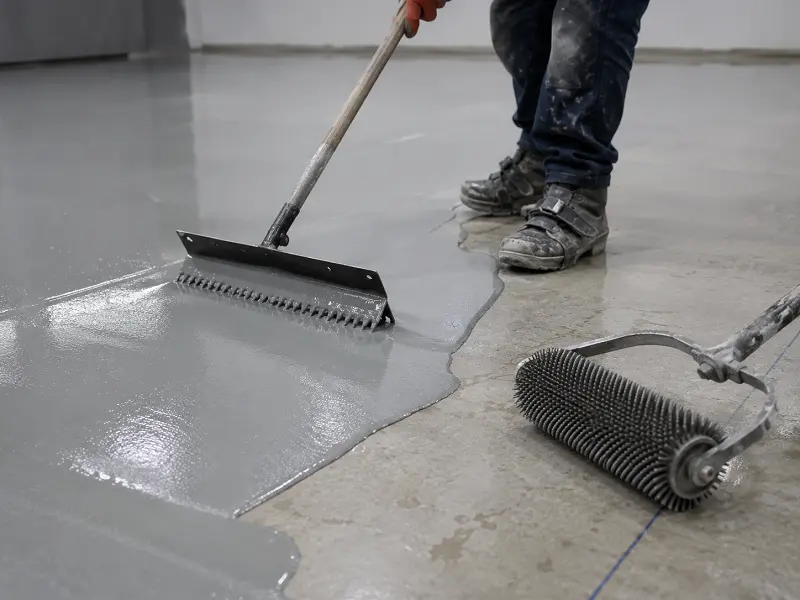
With epoxy, surface preparation is most of the job. A floor that is properly ground, dry and primed is what makes the coating last. Preparation means diamond grinding or shot-blasting the slab, a moisture check, crack and joint repair, then priming. Only then does the coating go down: a base coat, a decorative or flake layer if specified, and a sealing topcoat. Skipping the preparation is why coatings peel.
- Free consultationFinish, grade and use advice.
- Free site visit & measureFloor assessed, written quote.
- Surface preparationDiamond grinding or shot-blasting, a moisture check on the slab, crack and joint repair, then priming.
- ApplicationBase coat, decorative or flake layer, then a sealing topcoat, applied in controlled conditions.
- Cure & handoverFull cure before use, with aftercare advice.
Most floors are walk-ready in 24 to 48 hours and fully cured in a few days.
Our Resin Flooring Range
Alongside epoxy, covered on this page, we offer two related specialist floors, each with its own page. Microcement is the thin, matt, cement-based finish for floors and walls where the look matters more than chemical resistance. Garage flooring is epoxy and resin built for vehicle traffic, hot tyres and oil. Each has its own page with pricing and specification detail.
Epoxy Flooring Across the UAE
Dubai is our home market, including industrial hubs like Al Quoz, Dubai Investment Park and JAFZA, from home garages to full warehouses. Abu Dhabi is our second core market, including Mussafah, Saadiyat Island, Yas Island, Al Reem Island and Khalifa City.
Beyond the two, we supply and fit across all seven emirates, with free site visits throughout the areas we serve.
Epoxy Flooring FAQs
Is epoxy flooring good for the UAE climate and heat?
Yes, for indoor use. High-grade epoxy resists heat and does not soften or crack under normal UAE indoor conditions. Standard epoxy can yellow under prolonged direct sunlight, so for outdoor or high-UV areas we use polyurethane or a UV-stable topcoat instead. We advise on the right system during a free site visit.
What is resin flooring, and is it the same as epoxy?
Resin flooring is a poured floor made from liquid resin that cures into a continuous, jointless surface. Epoxy is the most common type of resin flooring, alongside polyurethane and polyaspartic. So epoxy is always a resin floor, but resin flooring is the wider family. In practice people use resin flooring and epoxy flooring to mean the same thing, a hard-wearing poured floor for homes, showrooms, garages and industrial spaces. We supply and fit the full range of resin flooring across Dubai and Abu Dhabi.
What is the difference between epoxy and polyurethane?
Both are resin floors. Epoxy is harder and more chemical resistant, ideal for industrial and decorative indoor floors. Polyurethane is more flexible and UV stable, better for temperature changes, kitchens, cold rooms and outdoor areas. We often combine them, an epoxy base with a PU topcoat, for the best of both.
How long does epoxy flooring last?
A professionally installed epoxy floor typically lasts around 10 to 15 years, and industrial-grade systems longer with maintenance. Lifespan depends on the traffic, the grade and, above all, the surface preparation. A well-prepared floor far outlasts a poorly prepared one, which is why we never rush prep.
Can an old epoxy floor be recoated?
Usually yes, and it is cheaper than starting again. A sound floor that has dulled or worn thin can be lightly ground to key the surface, then given a fresh topcoat. Floors that are peeling, contaminated with oil, or failing because moisture is coming up through the slab need the old coating removed and the cause fixed first. We tell you which you have at the free site visit.
How much does epoxy flooring cost in Dubai?
As an indicative guide, supply and fit runs from around AED 50/sqm (about AED 4.6/sqft) for a solid self-levelling floor up to AED 250/sqm (about AED 23.2/sqft) for 3D epoxy. Metallic and industrial finishes sit in between. Floor condition and area affect the price. Request a free site visit.
Is epoxy flooring slippery, and can it be made anti-slip?
Smooth epoxy can be slippery when wet, but we add anti-slip aggregate or use flake and quartz finishes to give grip where needed, such as kitchens, ramps and wet areas. Smooth, flake and aggregate finishes behave differently when wet, so we match the finish to the room rather than giving every floor the same anti-slip treatment.
How long does epoxy take to install and cure?
Most epoxy floors take two to five days to install depending on size, layers and preparation. The floor is usually walk-ready in 24 to 48 hours and fully cured for heavy use within a few days. We confirm the timeline and any access needs during the site visit.
How thick should an epoxy floor coating be?
Most epoxy floors are between 2mm and 3mm thick, though the right thickness depends on use. A thin roller coating runs 0.3mm to 0.5mm and suits light residential floors. Self-levelling epoxy is usually 2mm to 3mm. Heavy industrial and high-build systems that carry forklift traffic and impact go from 3mm up to 6mm or more. We match the thickness to your floor's traffic and load during a free site visit.
What is the difference between self-levelling epoxy and a standard epoxy coating?
The difference is how the epoxy is applied and how thick it goes. A standard epoxy coating is rolled on thin, around 0.3mm to 0.5mm, and follows the shape of the floor beneath it. Self-levelling epoxy is poured thicker, around 2mm to 3mm, and flows out to settle into a smooth, level surface that hides minor dips in the concrete. Self-levelling gives a flatter, more hard-wearing finish, which is why it suits showrooms and high-traffic floors. We advise which suits your floor during a free site visit.
What is the difference between epoxy and microcement?
Epoxy is a resin coating, hard and continuous, with glossy or decorative finishes. Microcement is a thin cement-based finish with a matt, stone-like look, used on floors and walls. Epoxy suits industrial and high-gloss spaces, microcement suits contemporary matt interiors. See our microcement page for more.
Do you supply only, or also install?
Both, though epoxy is an applied system that needs professional installation for a lasting result. Our team handles surface preparation, application and finishing, so there is a single point of accountability. We assess your floor and recommend the right system. Free site visit comes as standard.
Is epoxy flooring good for bathrooms?
Yes, epoxy works well in bathrooms because it cures into a continuous, non-porous surface with no grout lines for water to seep through. We add anti-slip aggregate for wet areas, and can carry the epoxy up the wall as a coved skirting for a hygienic, easy-clean edge. It suits bathrooms, wet rooms and shower areas when applied and sealed correctly. We assess the room and recommend the right system during a free site visit.
Can I just paint epoxy on myself, or do you apply it?
Epoxy painting kits exist, but a rolled-on epoxy paint is thin and wears through quickly compared with a professionally applied floor. We apply epoxy as a full system: proper surface grinding, primer, the epoxy build coats and a sealer, which is what makes it last for years rather than months. We do not supply epoxy paint on its own, we apply epoxy flooring as a complete, installed floor, ground back, primed and sealed by one team. Book a free site visit for a proper quote.
Can epoxy flooring be used outdoors in the UAE?
Standard epoxy is not ideal for open outdoor areas, because direct UV and heat can cause it to yellow and chalk over time. For outdoor floors we assess the site and specify a UV-stable system instead, often a polyurethane topcoat or a full PU build, matched to the exposure and use. So outdoor resin flooring is possible, but not with standard indoor epoxy. We recommend the right system for each location during a free site visit.
What should I look for in an epoxy flooring company?
Look for a company that grinds and prepares the substrate properly, since most epoxy failures come from poor preparation rather than the epoxy itself. Ask how many coats and what system they use, whether they offer a workmanship guarantee, and to see past floors. Urban Flooring has applied epoxy and resin floors across Dubai and Abu Dhabi since 2013, from villa garages to warehouses and clinics, with one team accountable from preparation to sealing.
Trusted by Leading UAE Hospitals
Since 2013 we have supplied and fitted durable, hygienic, hard-wearing floors for some of the UAE's leading hospitals. Our resin flooring has been installed for healthcare groups across the UAE including Aster Hospital, Fakeeh University Hospital, Quttainah Specialized Hospital and International Modern Hospital, where a jointless, easy-clean floor is a hygiene requirement rather than a preference.
Healthcare
Aster Hospital
Fakeeh University Hospital
Quttainah Specialized Hospital
International Modern Hospital
Get Your Free Epoxy Flooring Quote
From a home garage to a full warehouse or showroom, we supply and apply epoxy and resin flooring in every finish, with a free site visit and written quote before any work starts.
Or call +971 56 689 9831
Urban Flooring Maintenance and Decor Works 7 24A Street, Al Quoz Industrial First, Al Quoz, Dubai, UAESat to Thu 9:00 AM to 7:00 PM GST · Closed Friday
+971 56 689 9831 · info@urbanfloorings.com
Get Directions