
Reviewed for accuracy by Muhammad Gulbadin, founder and operations manager at Urban Flooring, 15+ years in UAE flooring.
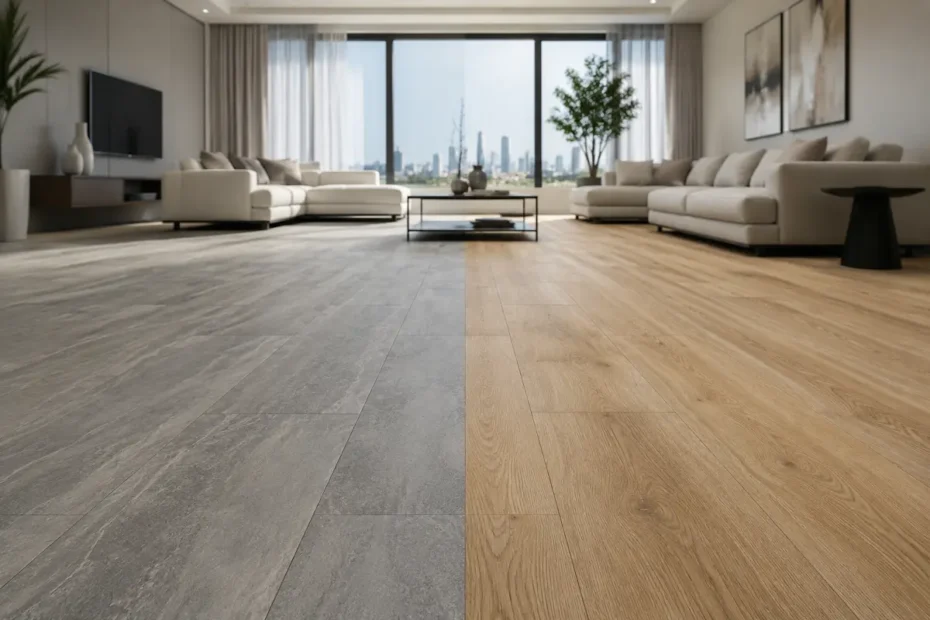
SPC and LVT are both vinyl floors with the same printed wood or stone surface; the difference sits in the core. SPC uses a rigid stone-composite core, so it is harder, more dent-resistant and more stable in heat. LVT uses a flexible PVC core, so it is softer, warmer and quieter underfoot. The right pick depends on the room, traffic and budget.
Both are types of vinyl flooring, so they share the same surface technology and waterproof build. The real choice between them comes down to those two cores, and that is what this guide breaks down for UAE homes and businesses.
What is SPC flooring?
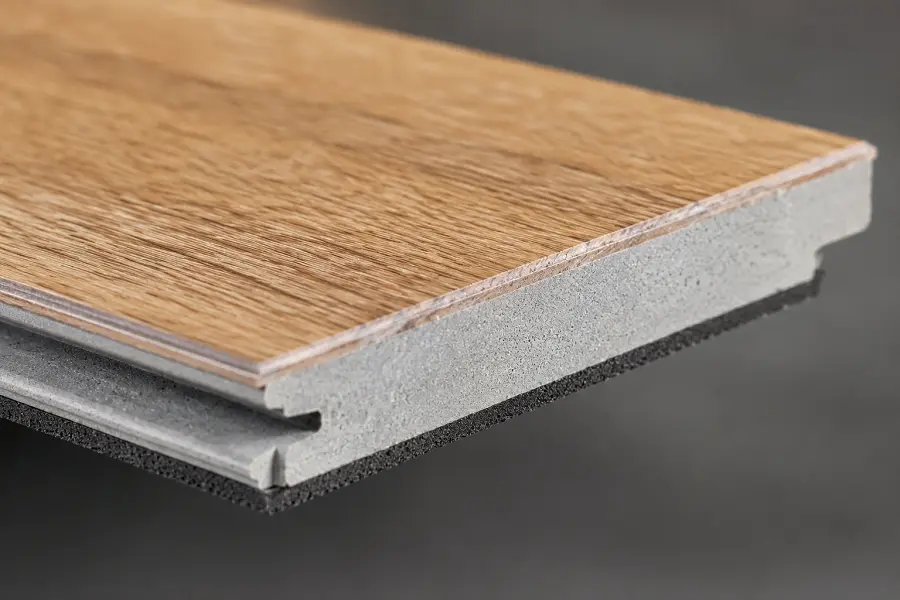
SPC stands for stone plastic composite. Its core is a rigid board made mostly of limestone powder bound with PVC, finished with a printed decor layer and a clear wear layer on top. That dense mineral core is what makes SPC flooring hard, dent-resistant and stable in heat. It clicks together as a floating floor and can often sit straight over existing hard floors.
What is LVT flooring?
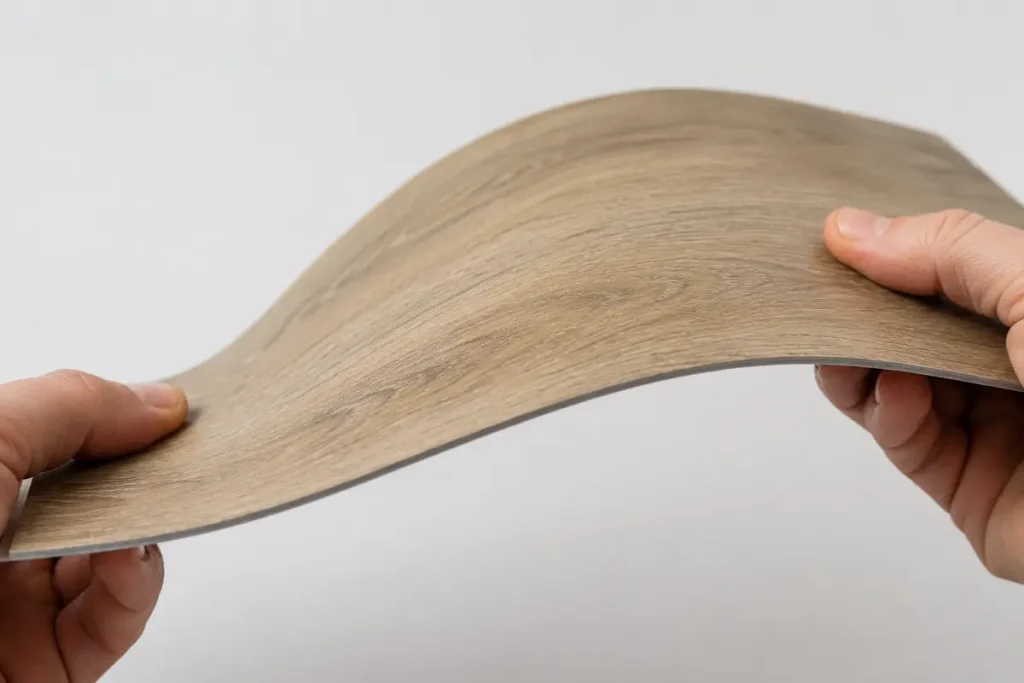
LVT stands for luxury vinyl tile. Here the core is flexible PVC rather than stone, carrying the same printed decor and clear wear layer. That softer core gives LVT flooring its warmth, cushioning and quiet feel. It is usually glued down to a smooth, level subfloor, which makes it strong for large bonded areas and intricate patterns.
SPC vs LVT: the key differences
Once fitted the two floors look almost identical, because both carry the same printed decor and clear wear layer. The difference is the core. SPC uses a rigid limestone-and-PVC board; LVT uses flexible PVC. That single change decides heat stability, dent resistance, comfort underfoot, noise, subfloor tolerance and how each floor is fitted. Here is the head-to-head.
| Feature | SPC | LVT |
|---|---|---|
| Core construction | Rigid stone-composite, 60 to 80% limestone powder plus PVC and stabilisers, dense at 1.9 to 2.05 g/cm3 | Flexible PVC core, PVC layers plus plasticisers, no stone filler |
| Thickness | 4 to 6mm typical, up to 8mm; thinner for the strength | Under 4mm typical; flexible glue-down often 2 to 3mm |
| Wear layer | 0.3 to 0.7mm (12 to 28 mil) | 0.3 to 0.7mm (12 to 28 mil); drives lifespan for both |
| Waterproof rating | Waterproof material with a rigid non-porous core; best in wet and standing-water areas and at the seams | Waterproof material; wipe spills promptly; glue-down relies on the adhesive bond |
| Durability and dent resistance | Higher; the rigid dense core resists heavy furniture, impact and high traffic | Lower against point loads; softer core dents more easily; a thick wear layer helps the surface |
| Comfort underfoot | Firmer, harder | Softer, more cushioned |
| Warmth | Cooler, the stone core does not hold heat | Warmer |
| Sound | Can sound hollow over an uneven subfloor; an acoustic pad helps | Quieter underfoot |
| Look and realism | HD print and emboss; equal to LVT at like quality | HD print and emboss; a slight edge at premium grade with deeper embossing |
| Installation | Click-lock floating; fast; floats over many existing hard floors including tiles; forgiving of minor unevenness; needs expansion gaps | Glue-down (also loose-lay or click); needs a smooth, level, prepped subfloor; telegraphs imperfections; strong for rolling loads and pattern work |
| Best for | Kitchens, bathrooms, hallways, whole-home schemes, commercial, sun-exposed rooms and villa glazing, install-over-tile refurbishments | Bedrooms, living rooms, comfort-led residential; large bonded commercial floors with contract LVT |
| Indicative UAE price (supply-only) | AED 35 to 90/sqm (about AED 3.3 to 8.4/sqft); premium to AED 120/sqm (about AED 11/sqft) | AED 45 to 110/sqm (about AED 4.2 to 10.2/sqft); premium or branded AED 150 to 350/sqm (about AED 14 to 32.5/sqft) |
| Lifespan | About 15 to 25 years residential, wear-layer dependent | About 10 to 20 years residential; commercial grade can match SPC |
Rigid-core vinyl like SPC has become the default for many specifiers. Globally, rigid-core LVT (SPC and WPC together) held about 74.8% of the luxury vinyl tile market in 2025 and is forecast to grow at roughly 9.3% a year through 2031, according to Mordor Intelligence, largely for its dimensional stability and easy click installation. Those figures are worldwide; no reliable UAE-specific share exists.
Where SPC wins over LVT
SPC is the tougher and more stable of the two, so it pulls ahead wherever a floor has to deal with water, heat or hard use. Its rigid mineral core is what does the work: it resists dents, barely moves with temperature, and stays flat where a flexible core would shift. Four situations where that matters most:
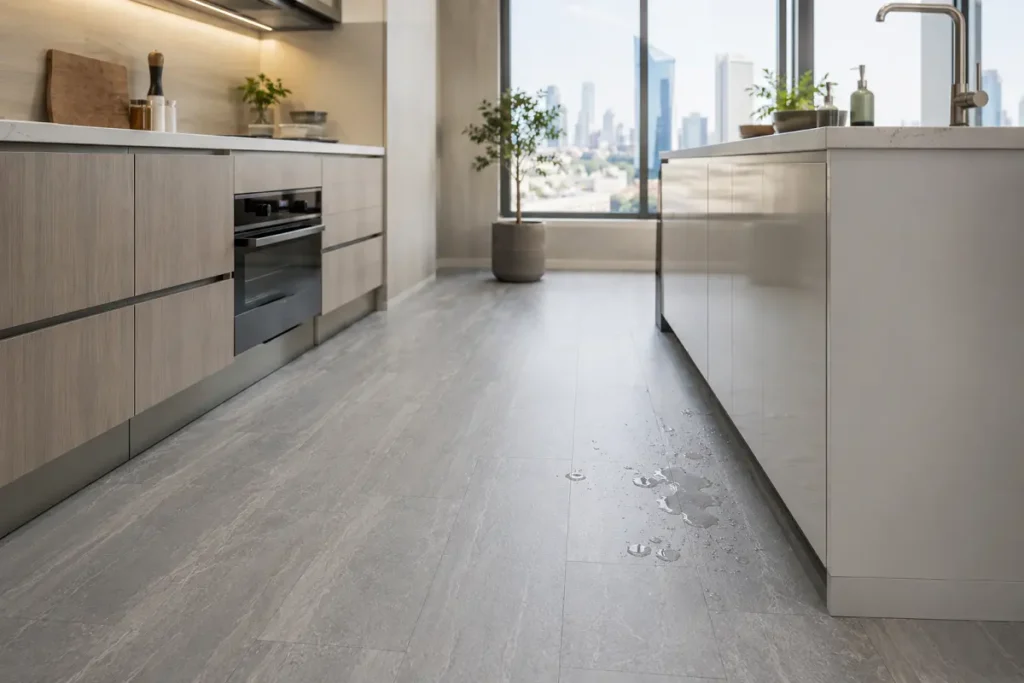
- Wet and splash-prone rooms. The rigid non-porous core holds up well around kitchens, bathrooms, laundries and AC-condensate zones, and it is more forgiving at the seams than flexible LVT.
- High-traffic and commercial spaces. Dent resistance and a fast click install suit busy hallways, majlis areas, offices, retail and hospitality.
- Sun-exposed rooms and large glazing. The dense mineral core barely moves with temperature, which matters a great deal in UAE villas and apartments with big windows.
- Uneven subfloors and refurbishments. A rigid plank bridges minor unevenness and can often float straight over sound existing hard floors, including tiles, with the right preparation.
If your priority list reads wet, hot, busy or whole-home, SPC flooring is usually the safer call.
Where LVT wins over SPC
LVT trades some of that toughness for comfort and finish, and in the right rooms that is exactly the better trade. Its flexible PVC core has more give, so the floor feels softer, warmer and quieter underfoot, and at the top of the range it carries deeper embossing and finer pattern detail than a rigid board allows. Four areas where LVT leads:
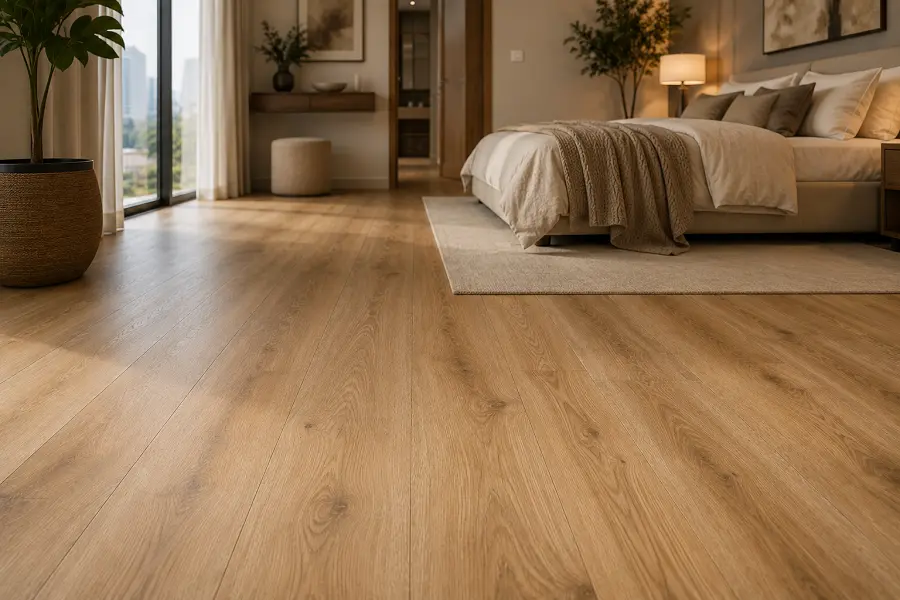
- Comfort and warmth. The flexible PVC core has more give, so it feels softer and warmer underfoot, which suits bedrooms and living rooms where people walk barefoot.
- Quieter underfoot. That softer core absorbs more impact sound, useful in apartments and upstairs rooms.
- Premium, realistic looks. At the top of the range, LVT offers deeper embossing and a wider design choice, with crisp pattern work like herringbone and borders.
- Large bonded commercial floors. Glue-down contract LVT bonded to a prepared subfloor takes rolling loads superbly, which is why specifiers reach for it on big open floors.
For comfort-led residential rooms and high-end finishes, LVT flooring is often the better fit.
SPC vs LVT for the UAE climate
Heat is the deciding factor in the UAE. SPC is the more heat-stable of the two and the safer pick for sun-facing rooms, villas and apartments with large glazing, because its rigid mineral core barely moves with temperature. Floating LVT is more sensitive and can shift or peak in strong direct sun, although glue-down LVT restrained by its adhesive performs much better. Neither is immune, and UV fade affects both.
SPC is the more dimensionally stable option and the safer pick for sun-facing rooms, villas and apartments with large glazing, and big open floors. The rigid mineral core moves very little with temperature. Dimensional stability after heat exposure is measured to EN ISO 23999, and rigid-core products are typically specified to stay within 0.15 to 0.25% linear change. Flexible floating LVT is more heat-sensitive and can shift or peak in strong direct sun if it is floated rather than bonded. Glue-down LVT, restrained by its adhesive, is much more stable, which is why contract LVT is specified for large sun-exposed commercial floors.
Here is the honest caveat, and it is the part most marketing skips: even SPC is not immune. Under sustained direct sun it can expand around 0.5mm per metre. Follow the gap your product specifies rather than the movement figure: 5 to 6mm at the perimeter is common, more over large areas, and long or wide runs need a control joint as well, often from about 9 metres. Cheap, over-filled SPC is more prone to gapping or bowing, and sustained surface temperatures above about 60C can cause peaking or gapping. For UAE sun-exposed rooms, the practical rules are the same whichever you pick: specify a UV-stable wear layer, leave proper expansion gaps, and use blinds or curtains on large glazing. Buy on density and wear-layer spec, not just the lowest price.
UV fade applies to both. UAE sun is intense, and a cheap product of either type will discolour near glazing without a UV-stable wear layer. Humidity and wet areas favour SPC for its rigid non-porous core, though neither floor is a substitute for proper wet-room waterproofing under the surface. Tracked-in sand is abrasive, so entrance mats and regular sweeping protect the wear layer on either floor. One point in everyone’s favour: most UAE homes run AC hard, which keeps interiors in a stable, moderate range and limits movement. The real risk zones are sun-facing, glazed or non-AC transitional spaces.
SPC vs LVT cost in the UAE
At entry and mid grade the two overlap heavily, so cost rarely decides the choice on its own. Supply-only SPC starts from around AED 35 per sqm and LVT from around AED 45 per sqm, with installation adding roughly AED 20 to 35 per sqm on top. Premium, imported and herringbone grades sit well above both. As an indicative guide:
- SPC, supply-only: about AED 35 to 90/sqm (about AED 3.3 to 8.4/sqft) for standard grades, with premium or herringbone up to around AED 120/sqm (about AED 11/sqft).
- LVT, supply-only: about AED 45 to 110/sqm (about AED 4.2 to 10.2/sqft) for common flexible grades, with premium or branded LVT reaching AED 150 to 350/sqm (about AED 14 to 32.5/sqft).
- Installation: adds roughly AED 20 to 35/sqm (about AED 1.9 to 3.3/sqft) on top of supply, depending on subfloor prep, old-floor removal and pattern.
All figures are indicative, exclude 5% VAT, and depend on area, subfloor condition and finish grade. An accurate number comes from a free site visit. The honest read on price: entry SPC is usually the cheapest rigid waterproof option in the UAE, premium or imported LVT is the dearest, and at like-for-like quality the two are close. For full pricing across every floor type, see our flooring cost guide.
SPC or LVT: which should you choose?
The right answer is room by room, not one floor for the whole property. Most UAE homes end up with both: SPC where water, heat and traffic are the pressures, LVT where comfort, quiet and finish matter more. Budget rarely forces the decision because the entry grades overlap. Use this as a starting map:
- Kitchens, bathrooms and laundries: SPC. Water stability and seam performance win here.
- Bedrooms and living rooms: either works. Choose LVT if comfort, warmth and quiet matter most.
- High-traffic and commercial: SPC for click-install durability, or glue-down contract LVT for large bonded floors with rolling loads. Many fit-outs mix both, SPC in hot and wet zones, LVT across the main floor.
- Tight budget: entry SPC is usually the lowest-cost rigid waterproof option; compare it against entry LVT on wear-layer thickness, not just headline price.
If you like the idea of a rigid, waterproof floor but find SPC too hard, cold or noisy underfoot, there is a genuine middle option. WPC flooring uses a foamed wood-polymer core that is warmer, softer and quieter than SPC while staying waterproof. It is less dent and heat resistant than SPC and costs a little more, so it is not better overall, just better for comfort-led rooms like bedrooms and upstairs living areas.
SPC vs LVT: frequently asked questions
SPC is usually the better choice for kitchens and bathrooms. Its rigid stone-composite core stays stable around water and handles spills and humidity at the seams more forgivingly than flexible LVT. LVT still works if spills are wiped promptly, but for wet, splash-prone UAE rooms SPC gives more peace of mind. Neither replaces proper wet-room waterproofing under the floor.
LVT is softer and warmer underfoot because its flexible PVC core has more give. SPC feels firmer and cooler thanks to its dense stone core. For bedrooms, living rooms or anywhere you stand barefoot, LVT or WPC is the more comfortable pick. An attached acoustic underlay softens SPC, but it will still feel harder than LVT.
They overlap. Entry-grade SPC is often the cheapest rigid waterproof option in Dubai, from around AED 35 to 55/sqm (about AED 3.3 to 5.1/sqft) supply-only. Common LVT runs about AED 45 to 110/sqm (about AED 4.2 to 10.2/sqft), with premium branded LVT reaching AED 150 to 350/sqm. At similar quality the two are close. Prices are indicative and exclude fitting and 5% VAT.
SPC typically lasts around 15 to 25 years in a home, a little longer than LVT at around 10 to 20 years, mainly because its rigid core resists denting and traffic better. For both, wear-layer thickness matters more than the core: a 0.5mm (20 mil) wear layer outlasts a 0.3mm (12 mil) one. Commercial-grade LVT can match SPC.
SPC is the more heat-stable choice. Its rigid mineral core barely expands with temperature, inside its 0.25% spec, so it suits sun-facing rooms and villas with large glazing better than floating LVT, which can move in strong direct sun. Even so, SPC still needs proper expansion gaps, a UV-stable wear layer and blinds on big windows in UAE conditions.
Often yes. Click-lock SPC floats over many existing hard floors, including ceramic tiles, as long as the surface is sound, within flatness limits and given proper expansion gaps; its rigid core bridges minor unevenness. Glue-down LVT can also go over tiles, but grout lines must be skimmed flush first or they show through. A site check confirms suitability.
Both are used commercially, in different ways. SPC suits high-traffic retail, offices and hospitality for its dent resistance and fast click installation. For large bonded floors with rolling loads like chairs and trolleys, commercial glue-down LVT is the specifier’s choice because the adhesive bond keeps it rock-solid. Many fit-outs use SPC in hot or wet zones and glue-down LVT elsewhere.
SPC is generally better for homes with pets and children. The rigid core resists dents from dropped toys and scratches from claws, and it copes easily with spills and accidents. Choose a 0.5mm (20 mil) or thicker wear layer for the best scratch resistance. LVT works too but dents more readily under point loads; if comfort matters more, consider WPC as a middle ground.
SPC or LVT: the bottom line
Neither floor is the universal winner, and any supplier who tells you otherwise is selling, not advising. SPC and LVT are both strong vinyls built on the same surface technology; the rigid stone core makes SPC harder, more waterproof in practice and more heat-stable, while the flexible core makes LVT softer, warmer and quieter. Match the floor to the room.
Choose SPC for kitchens, bathrooms, sun-exposed spaces and busy or commercial floors, choose LVT where comfort and finish lead, and look at WPC if you want a rigid waterproof floor that is gentler underfoot. The surest way to get it right across a whole property is a free site visit, where we measure up, check your subfloor and recommend the floor that actually suits each space.
Get honest UAE flooring advice before you decide
Still weighing up SPC against LVT for your rooms? Message us on WhatsApp and a flooring specialist will help you choose, with straight guidance on what suits your space, traffic and budget, including when the cheaper option is the right one.
- WhatsApp us: +971 56 689 9831
- Call: +971 56 689 9831
- Book a free site visit and measurement across Dubai and Abu Dhabi.
We have supplied and fitted both floors in homes and businesses across the UAE since 2013, with more than 10,000 projects completed by our in-house team.

Junaid Rana is a content strategist with over 10 years of experience in the interior and fit-out industry, writing on flooring, finishes and fit-out across UAE homes and commercial spaces. His guides are reviewed for accuracy by Urban Flooring’s in-house experts.