Gymnasium and Sports Hall Flooring in Dubai and Abu Dhabi
Specification and installation guidance on this page is overseen by Muhammad Gulbadin, our founder and operations manager, with 15+ years of hands-on flooring experience.
Gymnasium flooring is a hard-wearing indoor multi-sport surface, engineered for consistent ball bounce, controlled shock absorption and overlaid court line marking. The main options are sprung timber, polyurethane and sports vinyl. Urban Flooring supplies and installs sports hall flooring for schools, universities, sports centres and hotels across Dubai, Abu Dhabi and the UAE, specified to the sports and standard each venue requires.
The three main sports-hall surfaces are sprung timber, polyurethane (PU) and sports vinyl, with rubber and modular tiles used for specific zones rather than whole courts. Which one suits a hall depends on the sports played, the budget, and how the room is used beyond sport.
A gymnasium floor has to do two jobs at once: protect the player and perform for the ball. Too soft, and the ball dies and athletes lose their footing; too hard, and joints take the full impact of every landing. Every sports surface is a balance between those two demands, and that balance is what the surface types differ on.
In the UAE, one local factor shapes the choice more than any other. Most school and community halls are multi-purpose: the same floor hosts assemblies, exams and events, taking stacked chairs, trolleys and staging as well as sport. That dual use makes durability under rolling loads and indentation as important as sporting performance, which is exactly what a proper sports-floor specification covers.
Types of Gymnasium and Sports Hall Flooring
Each surface suits different sports, budgets and levels of use. Sprung timber performs best for ball response and lasts over 20 years, at the highest cost. Polyurethane sits in the middle on cost, with very low maintenance. Sports vinyl is the lowest cost and lasts roughly a decade. Rubber and modular panels are chosen for parts of a hall, not for the playing area.
Sprung Timber Sports Floors
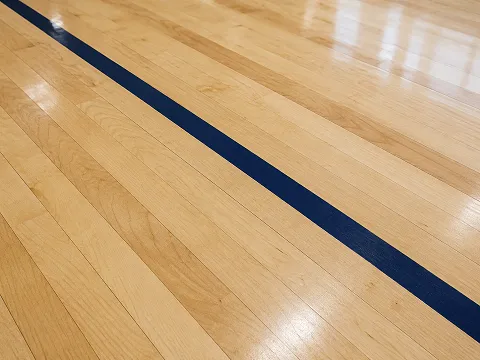
A sprung timber floor is hardwood, almost always maple for its hardness, laid on a sprung sub-structure that gives controlled deflection. It is the traditional premium choice, with the best ball response and feel, and it suits basketball, volleyball, badminton, squash and dance. It lasts over 20 years and can be re-lacquered roughly every decade under heavy use, and it carries the highest initial cost of the three.
Polyurethane (PU) Sports Floors
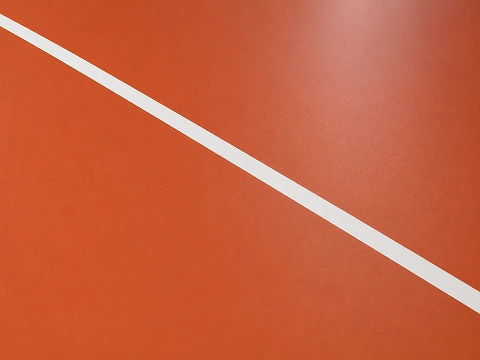
A polyurethane floor is a continuous, poured-in-place synthetic surface, commonly around a 2mm finished layer over a softer resilient underlayer. It is the most versatile multi-sport surface, with high slip and wear resistance, very low maintenance, and a wide colour range. Its lifespan is comparable to timber with far less upkeep, and it costs more than vinyl.
Sports Vinyl
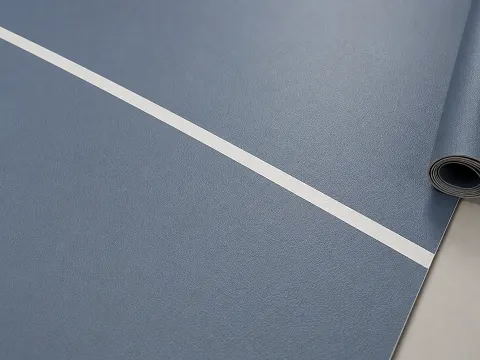
Sports vinyl is sheet vinyl engineered for sport, and it is the most affordable of the three. It gives good all-round performance and durability with customisable elastic characteristics, and lasts roughly a decade. Its top surface is more prone to abrasion than PU or timber, which is the trade-off for the lower cost. It is the budget-conscious multi-use choice.
Rubber Surfaces and Free-Weight Zones
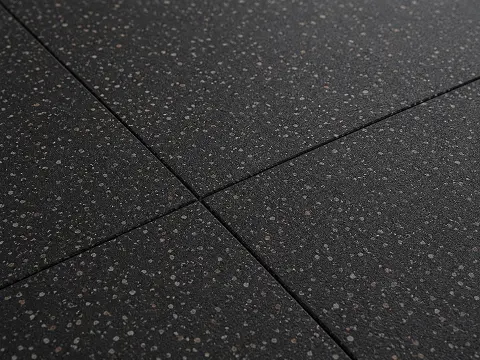
Rubber is for free-weight and functional-fitness zones within a hall, not for ball courts. It protects the substrate from dropped weights, but it gives inconsistent ball bounce, so it is a zone surface rather than a playing surface. Where a hall includes a weights or fitness area, rubber is the right choice for that zone. See our rubber flooring page.
Modular Sports Tiles
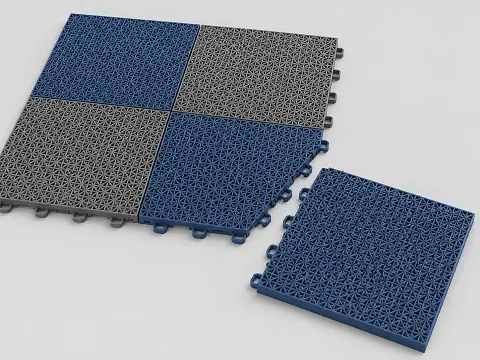
Modular sports tiles are interlocking, reconfigurable panels that suit flexible or temporary layouts and let a damaged section be replaced on its own. The trade-off is the seams, which can affect true ball roll, so they suit multi-use and flexible spaces more than a dedicated competition court.
Area Elastic, Point Elastic and Combined: What They Mean
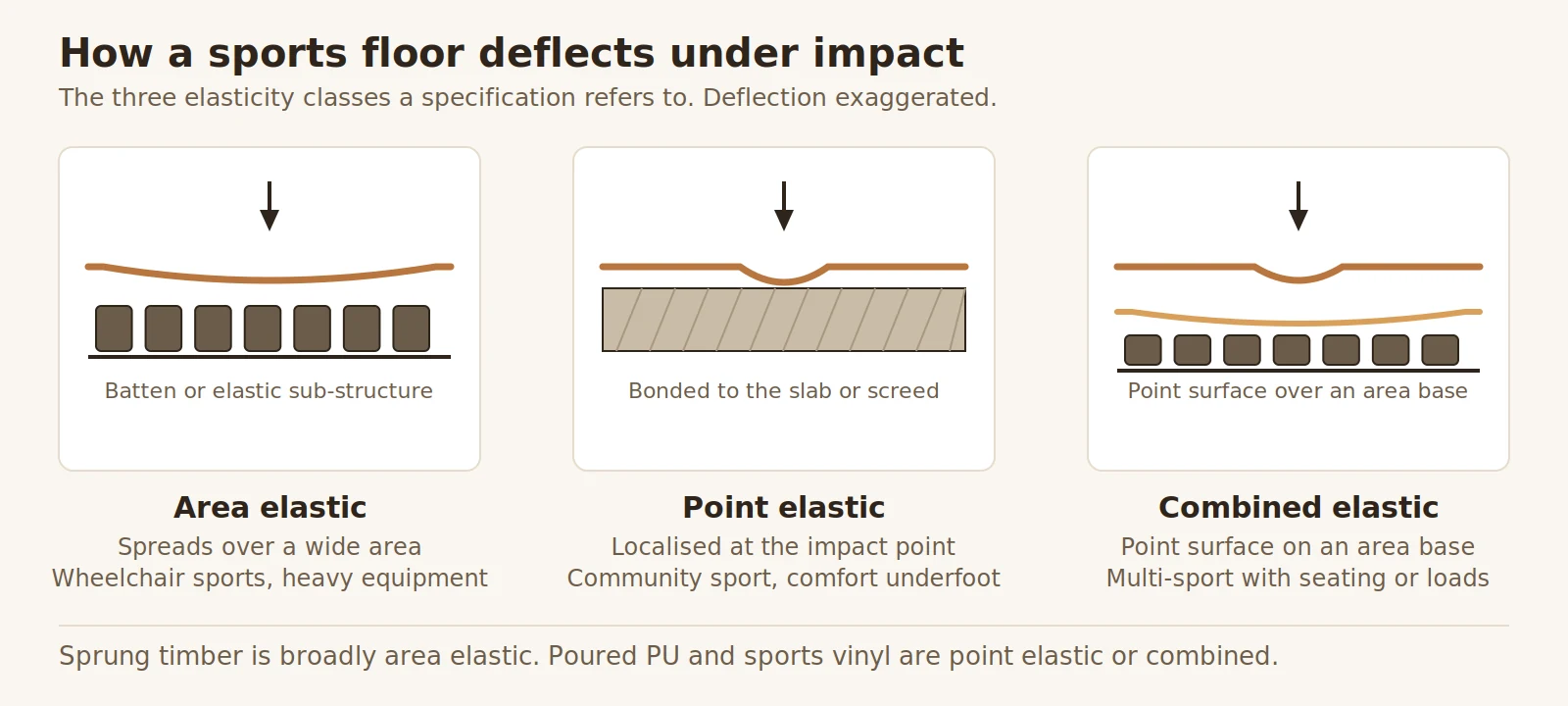
Sports floors are classified by how they deflect under impact, and this is the vocabulary a specification uses. Area elastic floors spread the deflection over a wide area. Point elastic floors deflect only where the impact lands. Combined systems layer the two, which is what multi-sport venues carrying seating or heavy equipment usually need.
Area elastic floors deflect over a wide area around each impact, built from timber battens or elastic layers beneath the surface. They suit wheelchair sports and halls with heavy equipment, because the load spreads rather than concentrating.
Point elastic floors absorb at the point of impact only, with a small localised deflection, and are usually bonded directly to the slab or a levelling screed. They suit community-level and sitting sports and feel comfortable underfoot.
Combined elastic floors put a point elastic playing surface over an area elastic base. They give high indentation resistance, which suits multi-sport venues that also take retractable seating or heavy equipment, exactly the multi-purpose UAE hall.
The three elasticity classes, side by side. Deflection exaggerated.
Elasticity type
How it deflects
Typically suits
Area elastic
Spreads over a wide area
Wheelchair sports, halls with heavy equipment
Point elastic
Localised at the impact point
Community and sitting sports, comfort underfoot
Combined elastic
Point elastic surface on an area elastic base
Multi-sport venues with seating or heavy loads
In broad terms, sprung timber is area elastic, poured PU and sports vinyl are usually point elastic or combined depending on the build-up, which is one reason the surface choice and the elasticity requirement are decided together.
Sports Floor Standards and Testing
The recognised European standard for indoor multi-sport surfaces is EN 14904, and it is what a specification should reference. It groups its tests into performance, safety and construction, so a floor has to satisfy all three rather than score well on ball behaviour alone. That is why a tender should ask for the full test report, not a single figure.
Test group
What is measured
Performance
Shock absorption, vertical deformation, ball behaviour (whether the ball bounces true), and slip resistance measured by a pendulum test.
Safety
Reaction to fire and formaldehyde emissions.
Construction
Surface evenness, rolling load resistance (whether a loaded trolley or seating unit can cross the floor without damage), and impact and indentation resistance.
DIN 18032-2 is a related German standard often cited alongside it. We do not claim a blanket certification for our products. Instead, we supply to the standard your specification requires and confirm certification with the manufacturer on the specific project, so a tender can reference the right compliance.
Court Marking and Multi-Sport Layouts
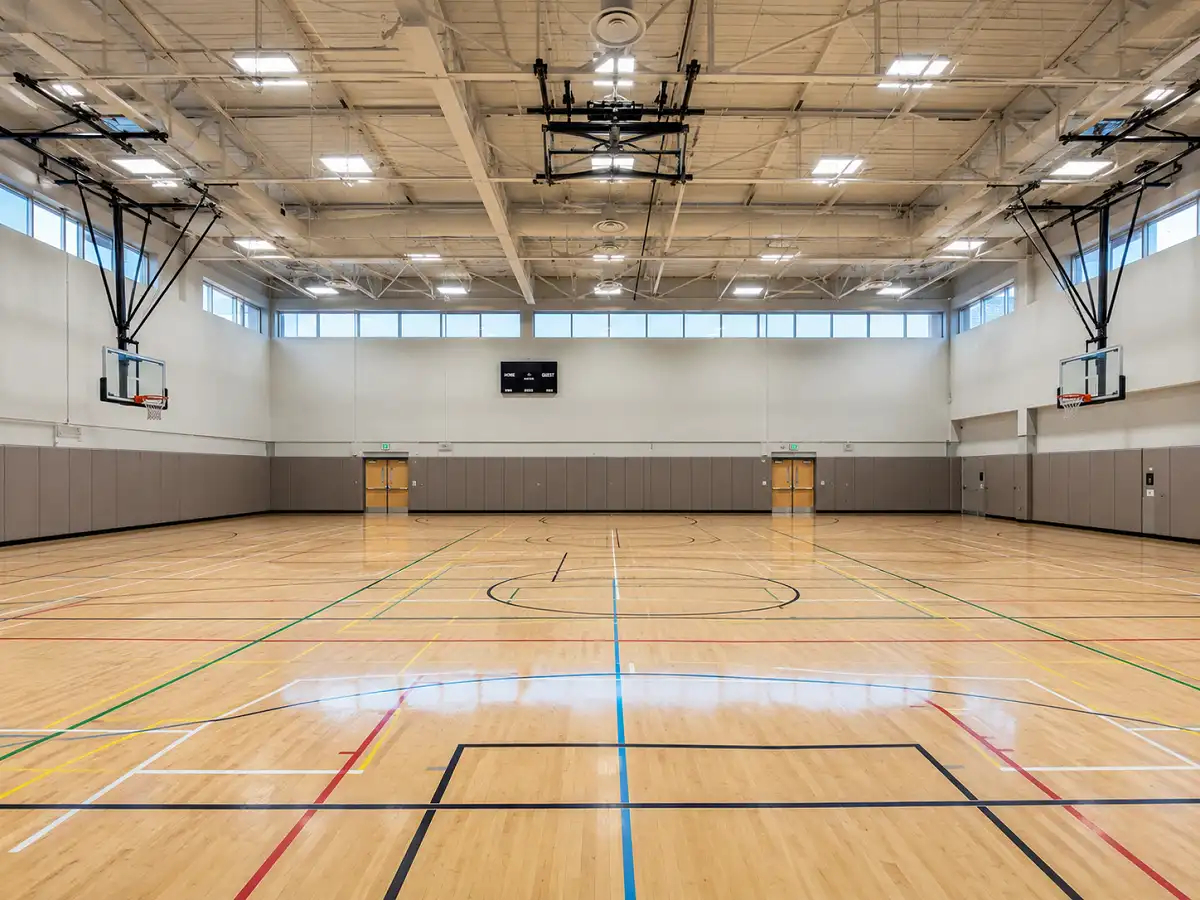
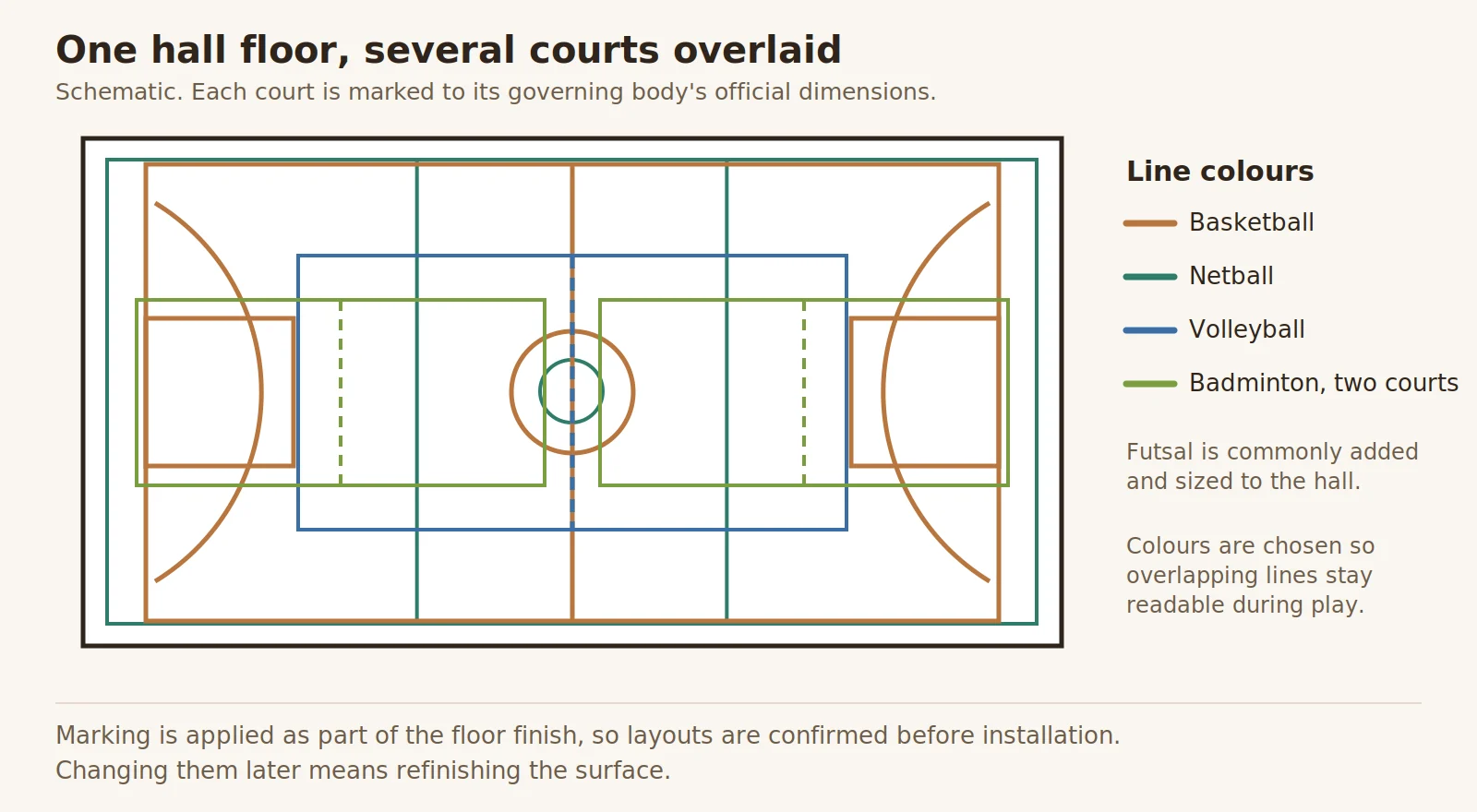
A gymnasium usually carries several courts overlaid on one floor in different colours: basketball, badminton, volleyball, netball and futsal are the common set. Each is marked out to its governing body's official court dimensions. How many courts a hall can carry is set by its clear floor dimensions, so the layout is worked out from the room before any line colour is chosen.
Several courts on one floor, each in its own line colour.
The practical points matter here. Colours are chosen so overlapping courts stay readable and players are not confused by lines from another sport. Marking is applied as part of the floor finish, not added on afterwards, so the layouts must be confirmed before installation, because changing them later means refinishing the surface. We agree the full set of courts and colours with you at specification stage.
Choosing a Sports Hall Floor
Match the floor to the venue and how hard the room works beyond sport. A school hall on a budget suits sports vinyl. A multi-purpose community centre suits PU for its versatility and low upkeep. A competition venue suits sprung timber for its ball response. A mixed hall running assemblies and exams needs strong rolling load and indentation resistance, because chairs, trolleys and staging do more damage than the sport.
On cost, the order is consistent: sports vinyl is lowest, PU sits in the middle, and sprung timber is highest. Lifespan and maintenance change the real total, though, since timber and PU both outlast vinyl, so the cheapest floor to install is not always the cheapest over twenty years. We set this out honestly for your specific hall.
Surface
Lifespan
Maintenance
Relative cost
Sprung timber
Over 20 years
Re-lacquer roughly every decade under heavy use
Highest
Polyurethane (PU)
Comparable to timber
Very low
Middle
Sports vinyl
Roughly a decade
Top surface more prone to abrasion
Lowest
Installation and Subfloor
A sports hall floor is specified from the room, so we start by establishing the hall dimensions, the existing subfloor with its level and moisture state, the sports to be played, the court layouts required, whether the hall takes seating or vehicles, and the build-up height available.
A sprung timber system in particular needs a known build-up height, because it sits on a sprung undercarriage that raises the floor, and that height affects door thresholds and fixed equipment. Most UAE work is a fit-out over an existing concrete slab, so subfloor level and moisture are the practical constraints rather than climate, since halls are air-conditioned. We carry out a free site visit and provide a written specification before any work is agreed.
Gymnasium Flooring FAQs
What is the best flooring for a school sports hall?
For most UAE school halls, polyurethane or sports vinyl is the practical choice: both are durable, multi-sport, and cope with the assemblies, exams and events a school hall also hosts. Sprung timber suits higher-level sport where ball response matters most. The deciding factor is usually the mix of sport and non-sport use, and the budget, which we assess on site.
What is the difference between gymnasium flooring and gymnastics flooring?
A gymnasium is the room, a multi-sport hall, so its floor is a hard, durable, line-marked surface where a ball bounces true, usually sprung timber, PU or sports vinyl. Gymnastics flooring is for the sport of gymnastics: foam and sprung surfaces that cushion an athlete landing. A hall might host gymnastics occasionally, but its floor is specified for court sport. See our gymnastics flooring page.
What is EN 14904?
EN 14904 is the European standard for indoor multi-sport surfaces. It tests a floor across three groups: performance (shock absorption, vertical deformation, ball behaviour and slip resistance), safety (fire reaction and formaldehyde emissions), and construction (surface evenness, rolling load resistance, and impact and indentation resistance). A specification should reference it, and we supply to the standard the specification requires.
What is the difference between area elastic and point elastic?
Area elastic floors deflect over a wide area around each impact, built on timber battens or elastic layers, and suit wheelchair sports and heavy equipment. Point elastic floors absorb only at the point of impact with a small local deflection, are usually bonded to the slab, and suit community sport and comfort underfoot. Combined elastic puts a point elastic surface on an area elastic base.
How long does a sports hall floor last?
It depends on the surface. Sprung timber lasts over 20 years and can be re-lacquered roughly every decade under heavy use. Polyurethane has a comparable lifespan with far less maintenance. Sports vinyl lasts roughly a decade, with its top surface more prone to abrasion. Lifespan and upkeep, not just install cost, decide the real long-term value.
Is sprung timber or vinyl better for a gymnasium?
Neither is simply better; they suit different venues. Sprung timber gives the best ball response and feel and lasts longest, at the highest cost, ideal for serious court sport. Sports vinyl is far more affordable and a strong all-rounder for multi-use school and community halls, with a shorter life. Budget, level of sport and mixed use decide which fits.
Can you mark out multiple courts on one floor?
Yes. A gymnasium floor commonly carries several courts overlaid, basketball, badminton, volleyball, netball and futsal, each marked to its official court dimensions, in colours chosen so overlapping lines stay readable. Marking is applied as part of the floor finish, so the layouts are confirmed before installation, since changing them later means refinishing. We agree the full set with you at specification stage.
Do you supply and install for schools and sports centres?
Yes. Urban Flooring supplies and installs gymnasium and sports hall flooring for schools, universities, community sports centres and hotels across the UAE. We carry out a free site visit, assess the hall and subfloor, and provide a written specification and quote suited to the sports, the court layouts and the standard your project requires.
Get a Gymnasium Flooring Quote
Tell us the hall, the sports to be played and the court layouts you need, and we will arrange a free site visit and a written specification for your tender or project. Sprung timber, polyurethane or sports vinyl, marked out and installed across Dubai, Abu Dhabi and the UAE.