Specification and installation guidance on this page is overseen by Muhammad Gulbadin, our founder and operations manager, with 15+ years of hands-on flooring experience.
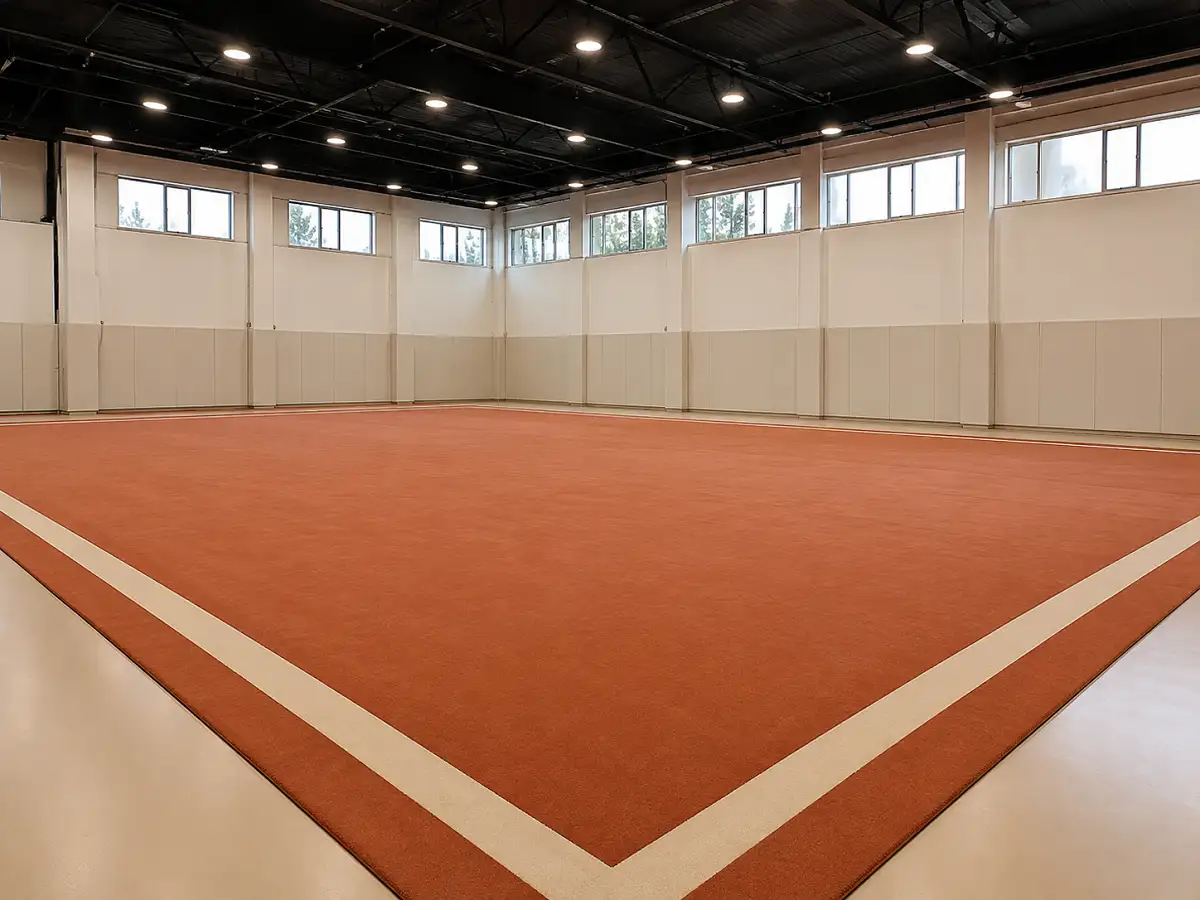
Gymnastics flooring is a shock-absorbing surface system built from a sprung or foam sub-structure, foam layers and bonded mats, designed to protect an athlete landing rather than to protect the floor from equipment. It gives the cushioning and rebound a gymnast needs for tumbling and dismounts. Urban Flooring supplies and installs gymnastics flooring for clubs, schools and academies across Dubai, Abu Dhabi and the UAE.
A sprung floor is a gymnastics surface that flexes under load to absorb impact and return energy for rebound. It is what separates a proper gymnastics floor from a mat laid on concrete, which cushions a landing but gives nothing back.
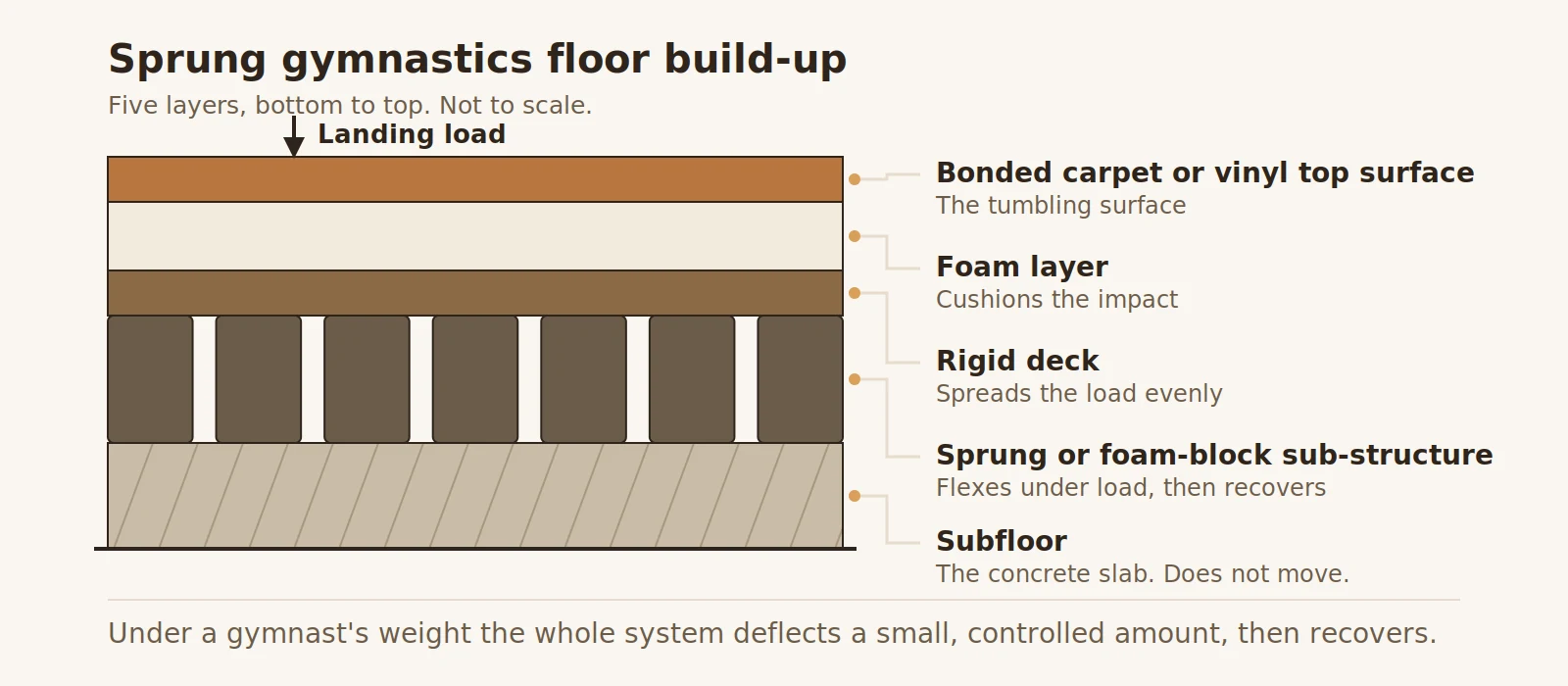
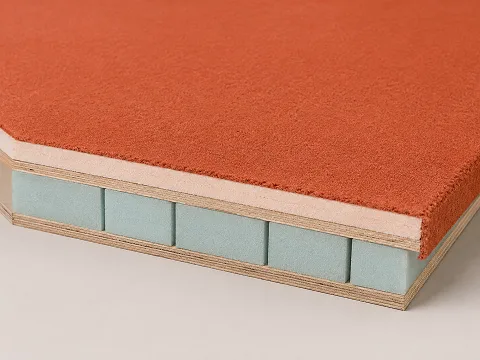
The build-up, from the bottom up, is a sprung or foam-block sub-structure sitting on the subfloor, a rigid deck laid over it, a foam layer on top of the deck, and a bonded carpet or vinyl top surface. Under a gymnast's weight the whole system deflects a small, controlled amount, then recovers. That deflection reduces the shock travelling into ankles, knees and spine on repeated landings, and the recovery gives the spring a gymnast uses to tumble.
The five layers of a sprung floor, bottom to top.
Contrast that with a single mat on a hard floor. The mat absorbs some impact, but the concrete beneath does not move, so there is no rebound and far less protection over a long training session. A sprung floor is an engineered system, not just a soft top layer.
Competition floor dimensions. The standard artistic gymnastics competition floor is 12m x 12m (about 40 x 40ft), usually with a safety border around the perimeter. That is the competition specification. In practice, most club and training floors are sized to the room they go in rather than to full competition dimensions, which is one of the first things we establish on site.
Types of Gymnastics Flooring and Mats
Gymnastics surfaces range from permanent sprung floors to portable mats, and the thickness of each is matched to what it is for. A sprung floor is built in and stays. Carpet-bonded foam gives a purpose-made tumbling top. Roll-out and folding panel mats clear away so a shared hall serves other uses. EVA tiles suit home practice within honest limits.
Sprung Floors
A permanent, engineered floor for competition and serious club training, using the full sprung sub-structure, deck, foam and bonded top surface described above. It is the highest-performance option for tumbling, and it is a fixed installation rather than something that clears away.
Carpet-Bonded Foam
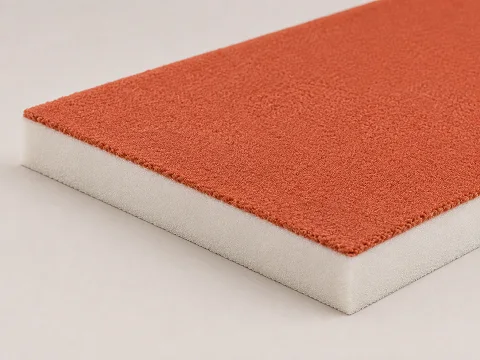
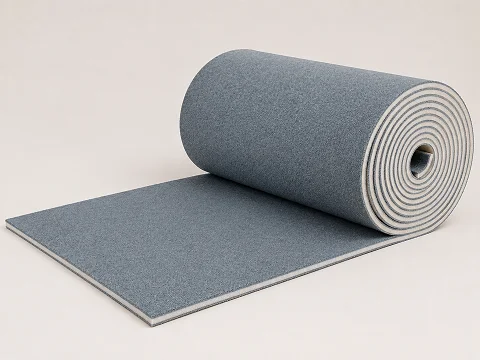
Carpet-bonded foam is high-performance sports foam with a needle-punch carpet surface bonded to it, the standard tumbling surface. It comes as roll-out for portability or fixed for a permanent floor. It gives a consistent, purpose-made tumbling top, whether laid over a sprung base or as a surface in its own right.
Roll-Out Tumbling Mats
Portable tumbling mats, typically around 3.5cm (1 3/8in) of foam under a bonded carpet top, in common widths around 1.5m (5ft), that roll out for training and roll away for storage. They suit a club or hall that needs a tumbling strip but cannot commit the space permanently.
Folding Panel Mats
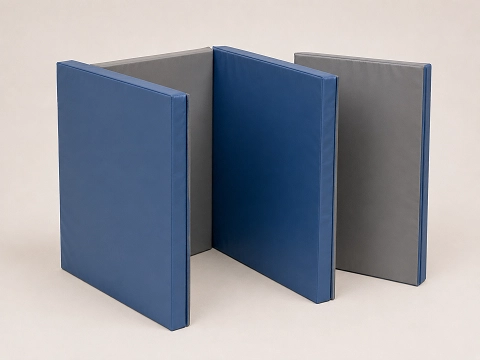
The general-purpose club mat, commonly 5cm (2in) thick, hinged so it folds for storage and carrying. It is the workhorse mat for general training, floor work and skill practice, not a landing surface for high aerial work.
Landing and Crash Mats
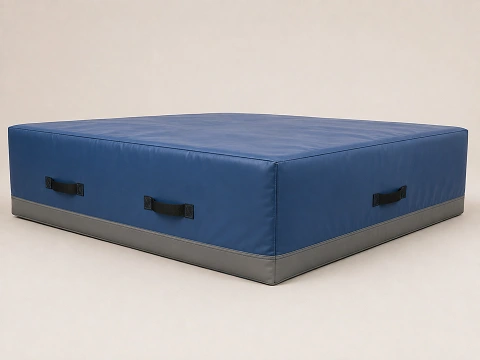
Thick, soft mats for dismounts and aerial work, commonly around 20cm (8in) and deeper. Their job is to absorb a body falling from height, so they are deliberately soft and deep, which also makes them unstable to stand or tumble on. They are for landing, not for take-off.
Incline and Cheese Wedge Mats
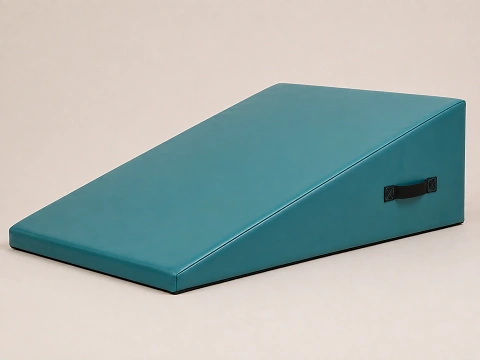
Wedge-shaped mats, a cheese mat is the barrel-shaped wedge, used for skill progression: rolls, handsprings and walkovers. They are training aids for learning a movement, not impact-protection mats, and they suit coaching a skill in stages.
EVA Foam Tiles
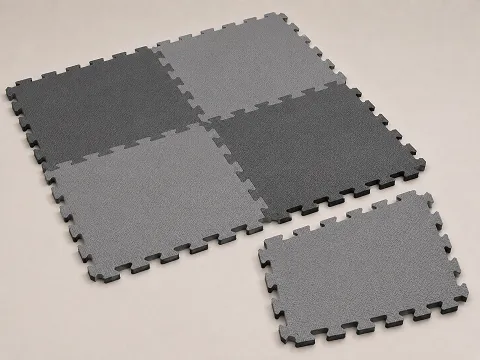
Interlocking foam tiles, typically 2ft x 2ft (about 60 x 60cm), for home practice rooms and warm-up areas. They are useful for stretching, conditioning and basic work, but they are not a tumbling or landing surface and should not be used for high-level tumbling, where a proper foam or sprung floor is needed.
Choosing the Right Gymnastics Floor for Your Facility
Match the floor to your level of use and whether the space is dedicated or shared. A competition or high-level club needs a permanent sprung floor; a general club needs a carpet-bonded foam surface plus mats; a school or multi-use hall usually needs portable mats that clear away; a home practice space is served by EVA tiles and folding mats within honest limits.
Use level
Recommended surface
Why
Competition / high-level club
Permanent sprung floor
Cushioning plus rebound for repeated tumbling and dismounts
General club training
Carpet-bonded foam + folding and landing mats
Purpose-made tumbling top with mats for specific skills
School / multi-use hall
Roll-out tumbling and folding panel mats
Portable, clears away so the hall serves other uses
Home practice
EVA tiles + folding mats
Fine for conditioning and basics, not for high-level tumbling
One honest point for a serious buyer: a foam-tile floor is not a substitute for a sprung floor for real tumbling. EVA tiles suit warm-up, conditioning and basic skills, but they do not give the controlled deflection and rebound of a sprung floor, and using them for high-level work is a false economy. We will tell you plainly which level of floor your programme actually needs.
Safety and Standards
The core function of every gymnastics surface is impact absorption, and the right choice comes from matching mat thickness to the skill and the fall height, not from assuming thicker is always safer. A thin mat gives firm footing for floor work; a thick crash mat gives depth for a dismount from height. Correct installation matters as much as the mats, with no gaps where a foot could catch.
International gymnastics apparatus and floor specifications are set by the sport's governing bodies, and competition-grade equipment is manufactured to those approved specifications. This is context every club should be aware of when specifying a floor. We supply to the specification your club or programme requires, and confirm any approvals with the manufacturer on the specific project rather than claiming them in the abstract.
EN 12503 is the European standard for sports mats. It sorts mats into types by what they are for, from general gymnastics mats through to landing and vaulting mats, and it sets the test methods for shock absorption, stability underfoot and how the surface behaves as a foot lands. Ask which EN 12503 type a mat corresponds to rather than judging it on thickness alone, because a thicker mat of the wrong type is not the safer choice.
Installation and Subfloor
A gymnastics floor is specified from the room, so the first step is measuring it. We need the room dimensions, the ceiling height for aerial and apparatus clearance, the existing subfloor and how level it is, and whether the floor is permanent or must clear away for other uses.
A sprung floor in particular needs a sound, level subfloor and a known build-up height, because that height affects door thresholds and clearance into the room, and it has to be measured before the floor is specified rather than assumed. This matters especially in UAE fit-out units, where the floor works around an existing concrete subfloor and a fixed ceiling. We carry out a free site visit and provide a written specification before any work is agreed.
Gymnastics Flooring FAQs
What is a sprung floor in gymnastics?
A sprung floor is a gymnastics surface that flexes under load, then recovers, using a sprung or foam-block sub-structure beneath a rigid deck, foam and a bonded top surface. The controlled deflection reduces impact on joints during repeated landings, and the recovery gives the rebound needed for tumbling. It is an engineered system, not just a soft mat on the floor.
What is the difference between gymnastics flooring and gym flooring?
They solve opposite problems. Gymnastics flooring is foam and sprung surfaces that protect the athlete landing on it, with cushioning and rebound for tumbling. Fitness gym flooring is rubber that protects the floor and subfloor from dropped weights and heavy equipment. One protects the person from the floor; the other protects the floor from the equipment. See our gym flooring page for fitness gyms.
What thickness should a gymnastics landing mat be?
Landing and crash mats for dismounts and aerial work are commonly around 20cm (8in) and deeper, because they absorb a body falling from height. Thinner mats give firmer footing for floor work, so thickness is matched to the skill and the fall height rather than always going thicker. We advise on the right thickness for each use in your programme.
What size is a gymnastics competition floor?
The standard artistic gymnastics competition floor is 12m x 12m (about 40 x 40ft), usually with a safety border around the perimeter. That is the competition dimension. Club and training floors, though, are commonly sized to the room rather than to full competition dimensions, which we establish during the site visit.
Can you use foam tiles for gymnastics at home?
EVA foam tiles, typically 2ft x 2ft (about 60 x 60cm), suit a home practice space for stretching, conditioning and basic skills, but they are not a tumbling or landing surface. They do not give the controlled deflection and rebound of a sprung floor, so they should not be used for high-level tumbling. For that, a proper foam or sprung floor is needed.
What is carpet-bonded foam?
Carpet-bonded foam is high-performance sports foam with a needle-punch carpet surface bonded to it, the standard tumbling surface in gymnastics. It comes as roll-out for portability or fixed for a permanent floor, and it can be laid over a sprung base or used as a purpose-made tumbling top in its own right. It gives a consistent surface for floor work and tumbling.
Do you supply and install for clubs and schools?
Yes. Urban Flooring supplies and installs gymnastics flooring for clubs, schools, academies and sports facilities across the UAE, with our own in-house team. We carry out a free site visit, measure the space and subfloor, and provide a written specification. We supply to the specification your programme requires rather than a one-size-fits-all package.
How much does gymnastics flooring cost in the UAE?
Cost is project-specific, so we quote it in writing rather than as a rough figure. It depends on the floor area, whether the floor is a permanent sprung system or portable mats, the build-up required, and the level of use it must support. Tell us your room size and programme, and we will arrange a site visit and a written specification and quote.
Get a Gymnastics Flooring Quote
Tell us your facility, the room dimensions and the level you train at, and we will arrange a free site visit and a written specification. Whether you need a permanent sprung floor or portable mats that clear away, we supply and install across Dubai, Abu Dhabi and the UAE.