
Padel Court Flooring in Dubai
Padel is played on short, sand-filled artificial turf, and the surface decides how the ball sits up and how far a foot slides. We supply and fit padel turf and its infill onto a base that is already prepared, for new courts and re-turfs alike.
Or call +971 56 689 9831
What Padel Court Flooring Is
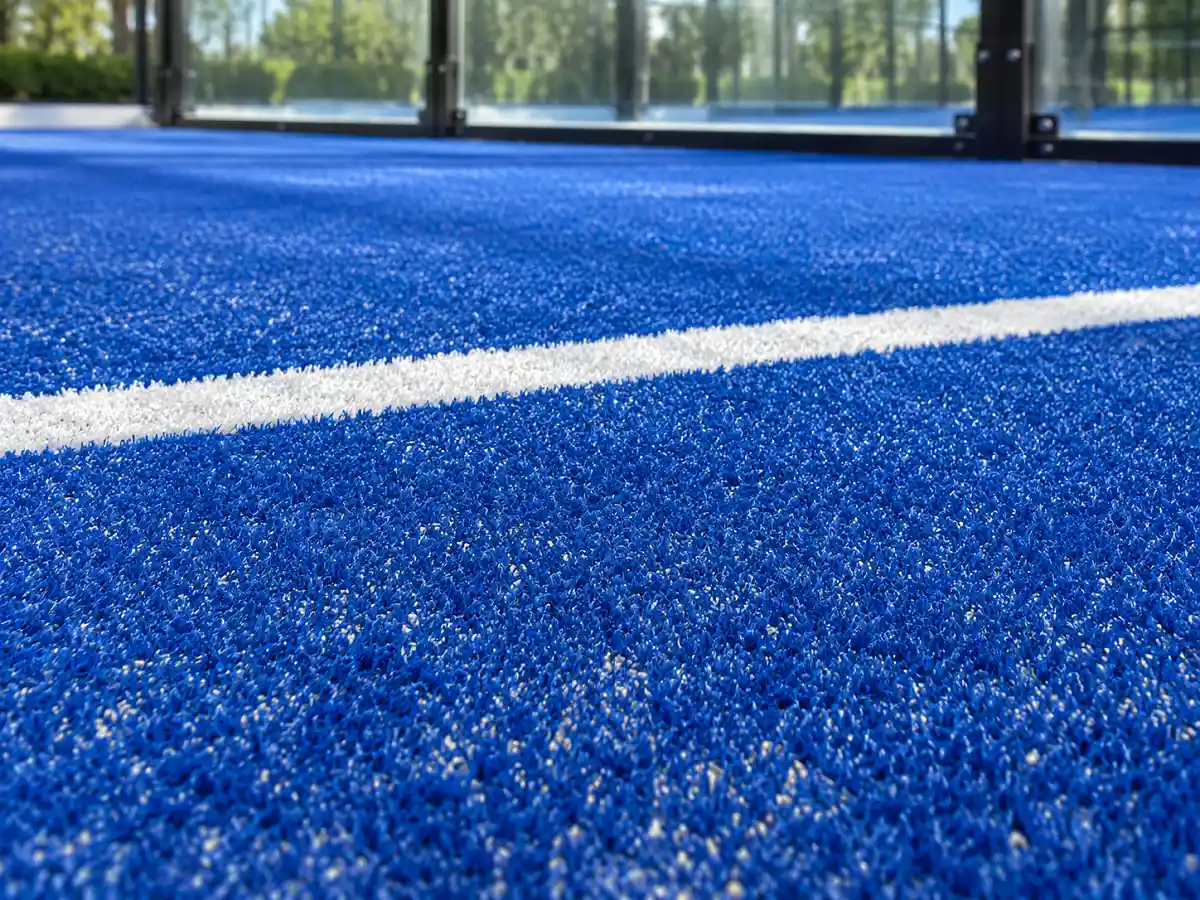
Padel court flooring is sand-filled turf laid over a base prepared by others. A padel court is surfaced with turf rather than with acrylic or clay, and the sand brushed into the pile is what controls how the ball sits and how a player slides, which is why the surface is specified more like sports turf than like a hard court.
We supply and fit the surface. The slab, the glass, the posts, the net and the lighting are a court builder's work, and we are the specialist a court builder brings in for the floor. Clubs re-turfing a court they already own are the same job from the other direction.
The material is a sports grade of artificial grass, specified for ball behaviour instead of for how a lawn looks. Everything from the fibre to the infill is chosen against how the court will play.
What a Padel Surface Has to Do
Four demands decide a padel surface, and they pull against each other.
Ball behaviour. The ball has to come off the turf predictably, because padel is played off the back glass and a dead or skidding bounce ruins the rally. Fibre shape and infill level set this, and they set it together.
Controlled slide. A player slides into a shot and stops. Too much grip and the knee takes the load, too little and the foot goes. The surface has to let a foot move a short distance and then hold.
Drainage. Water has to leave through the turf and off the base, so a court is playable soon after it is washed down rather than hours later.
UV. An outdoor court in this region takes direct sun most of the year. Fibre that is not stabilised for it goes brittle and loses colour, and no amount of brushing brings that back.
Padel Turf Types and Pile
Padel turf comes in two fibre constructions, and the choice changes how the court plays more than any other decision on this page.

Monofilament is built from single straight fibres standing separately. The pile stays open, the ball comes off faster and a foot slides further. It is the construction used on club and competition courts, where players expect pace.
Fibrillated is built from fibres cut into a split mesh that opens out and knits together underfoot. The pile holds the sand more tightly, the ball comes off slower and footing is firmer. It suits a club mixing coaching with casual play, where a slower ball keeps rallies alive.
Pile and colour. A shorter pile plays faster and holds less sand, a longer pile does the opposite, and the two decisions are made together rather than one after the other. Blue, green and terracotta are the colours padel is played on, and the choice is about glare and how the ball reads against the floor rather than about looks alone.
Sand Infill and Why It Decides the Game
The sand is not a filler. It is the part of the surface the ball and the foot actually meet.
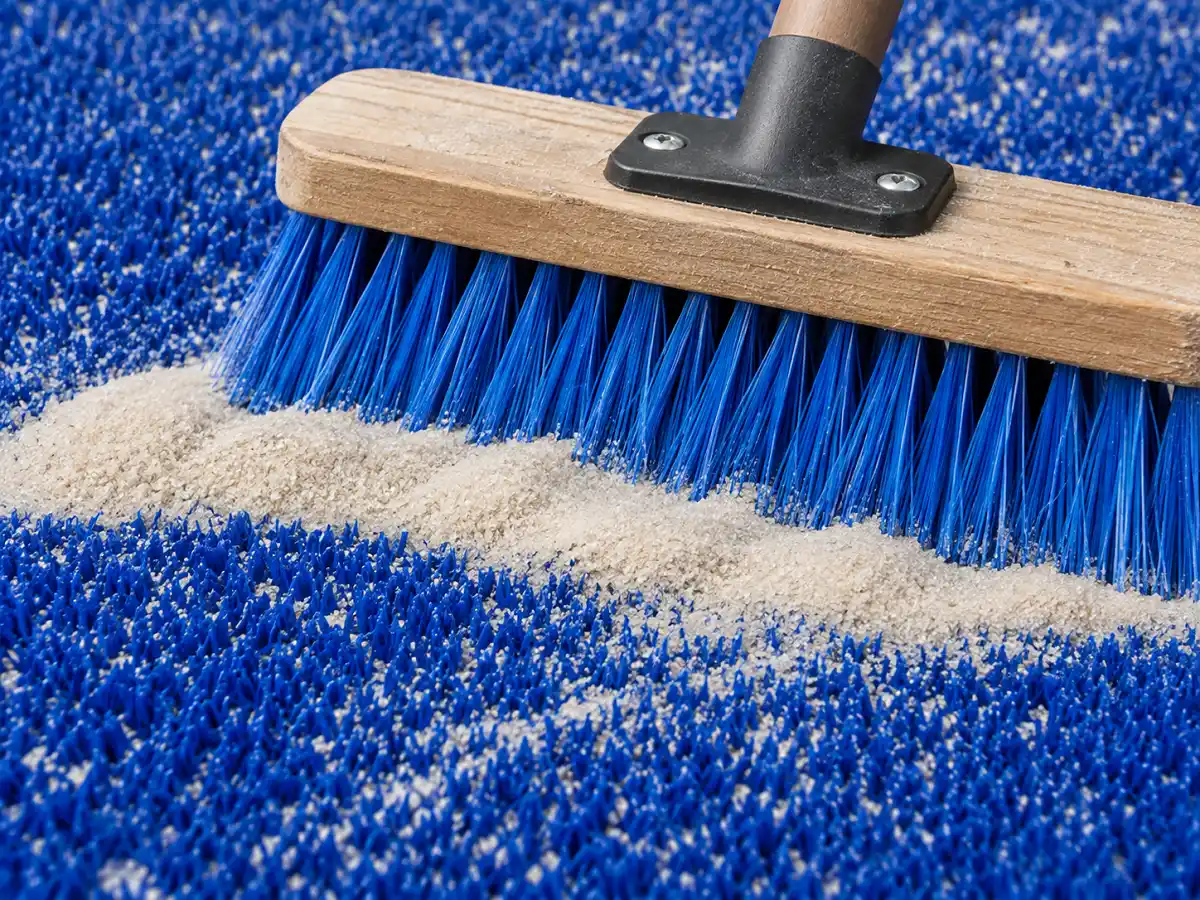
Rounded silica sand is brushed into the pile in layers rather than tipped on, and the brushing is what carries it down to the backing instead of leaving it sitting on top. Grade matters as much as quantity: sand that is too fine compacts and holds water, and sand with sharp edges grinds at the fibre every time somebody slides.
A court running low on infill shows it before anyone measures anything. The ball starts dying on the bounce, the pile lies flat in the play lines and the foot grips where it used to slide. That is a top-up and a brush, not a new surface, and it is the cheapest maintenance in the sport if it is caught early.
The Base Underneath, and What We Need From It
The base is prepared by others, and the surface is only as good as what it is laid on.
Padel turf is laid over concrete or asphalt. Either works. What the base has to be, before we arrive, is flat enough that the turf does not telegraph every dip, laid to a fall that moves water off rather than ponding it, and cured and dry. A base that holds water under the turf stays damp, and damp sand stops behaving like sand.
We check the base at the free site visit and say plainly whether it is ready. Where it is not, the correction is the court builder's or the contractor's work, not ours, and it is better found before the turf is cut than after. The slab, the glass, the posts, the net and the lighting sit with them throughout.

Re-Turfing an Existing Court
A worn court is re-turfed, not rebuilt, and it is the job we are best placed to take on.

The old turf and its sand come up, which is the messy part and the part that tells you the most, because an uncovered base shows every crack and every low spot the turf had been hiding. The base gets checked and, where it needs work, that work is specified before anything new goes down. Then the new turf is laid, seamed, cut in and infilled.
The court keeps its glass, its posts, its net and its lighting throughout. Nothing structural is touched. For a club, that is the difference between a surface renewal and a capital project, and it is why a re-turf is worth pricing before anybody talks about replacing a court.
Outdoor Tennis, Basketball and Other Courts
Outdoor tennis and basketball courts are a different surface from padel, and we are straight about which part of them we do.
Those courts are hard surfaces rather than turf, so a padel turf specification does not transfer to them. Indoor basketball, volleyball and badminton run on sprung timber, polyurethane or sports vinyl, and those systems are set out on our gymnasium flooring page. Outdoor play and fall surfacing is wet pour rubber, which is on our EPDM flooring page.
Padel turf, with its sand infill, is what this page covers. Tell us what the court is and we will say whether it is ours to fit.
Looking After a Padel Surface
Brushing is the whole job, and the courts that last are the ones where somebody does it.
Regular brushing lifts the pile and redistributes sand away from the lines where play concentrates, which is where a court wears first. Top up the infill when the bounce tells you to rather than on a calendar. Keep leaves, grit and drink spills off the surface, because organic debris holds moisture in the pile and grit works like an abrasive underfoot.
What shortens a padel surface is sun on unstabilised fibre, sand that was never the right grade, and a base that holds water. What extends it is brushing, clean infill and a court that drains. None of that is expensive. All of it is the difference between a surface that plays well for years and one that goes flat and stays flat.
Padel Court Flooring FAQs
Do you build the whole court or only the surface?
Only the surface, and that is deliberate. We supply the padel turf and its sand infill and we fit it to a base somebody else has prepared. The slab, glass, posts, net, fencing and lighting are a court builder's scope. Padel court installation, in the sense of the floor, is what we do.
What surface is a padel court made of?
Sand-filled artificial turf over a concrete or asphalt base. Padel is not played on acrylic or on clay. The turf provides the pile and the colour, and the silica sand brushed into it is what the ball bounces off and what a player's foot slides on, so the two are specified as one system.
Can an existing padel court be re-turfed without rebuilding it?
Yes, and that is the usual answer for a worn court. The old turf and sand come up, the base is checked and corrected where it needs it, and new turf is laid and infilled. The glass, posts, net and lighting stay where they are. Nothing structural is disturbed.
How long does padel turf last in UAE sun?
It depends on the fibre and on the upkeep rather than on a number we could print here. Fibre stabilised for ultraviolet exposure holds its colour and its spring far longer than fibre that is not. Brushing, clean infill of the right grade and a base that drains all extend it. Sun on unstabilised fibre shortens it fastest.
What does the base need to be before the turf goes down?
Flat, laid to a fall, and dry. Concrete or asphalt both work. Flat matters because turf shows every dip underneath it, the fall matters because water has to leave rather than pond, and dry matters because a base holding moisture keeps the infill damp. We check all three at the site visit before anything is cut.
Why does a padel court need sand in the turf?
Because the sand is the playing surface. It holds the fibres upright, gives the ball something consistent to come off, and lets a foot slide a controlled distance and then stop. Turf without infill plays dead and flattens quickly. The grade of the sand matters as much as how much of it is in there.
Get a Free Site Visit for Your Padel Court
Tell us whether the court is new or being re-turfed, and where the base has got to. We will come and look at it. Message us on WhatsApp or book a free site visit. Supplying and fitting flooring across the UAE since 2013.
Or call +971 56 689 9831
Urban Flooring Maintenance and Decor Works 7 24A Street, Al Quoz Industrial First, Al Quoz, Dubai, UAESat to Thu 9:00 AM to 7:00 PM GST · Closed Friday
+971 56 689 9831 · info@urbanfloorings.com
Get Directions