
Flooring Underlay in Dubai and the UAE
Urban Flooring supplies foam and EPE grades, combination grades with an integral barrier, fibreboard panels, rubber crumb, felt and cork underlay, matched to the floor going above it and the slab going below. The grade is specified on the free site visit and comes within the flooring quote rather than as a separate order you place yourself.
- Grade specified on the site visit
- Included in the flooring quote
- Supply and fitting across all seven emirates
Or call +971 56 689 9831

Underlay grades we supply
Six grades cover the floors we fit, and each one is specified for a particular job rather than offered as an upgrade. The grade is chosen for you on the site visit, so the list below is what we hold rather than a menu you have to work through.
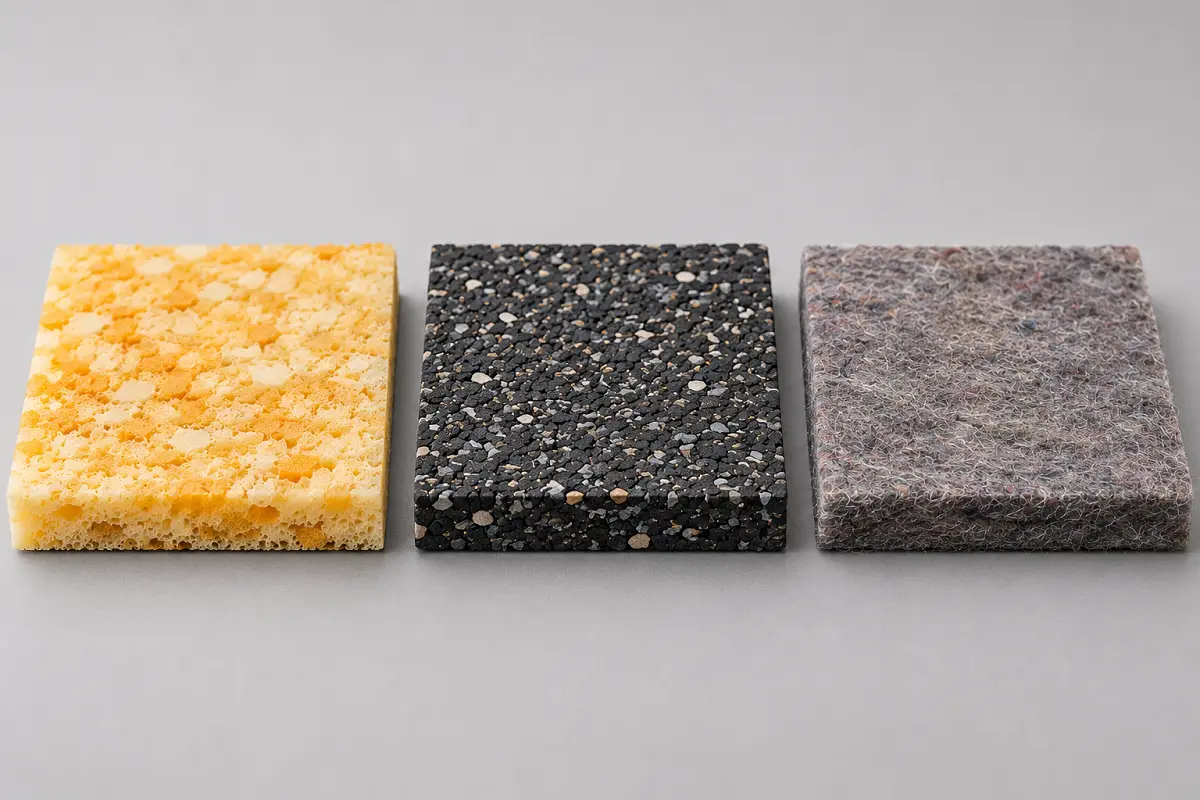
- Foam and EPE grades. The standard separate layer under a floating floor in a dry room.
- Combination grades with an integral barrier. One product doing two jobs, specified where the floor is going onto a concrete slab.
- Fibreboard panels. A rigid board grade, specified where a floating floor needs a firmer base than a foam roll gives it.
- Rubber crumb grades. Dense grades, specified for apartment and commercial projects.
- Felt and felt-backed grades. Specified under carpet, and the heavier weights under broadloom.
- Cork underlay. A natural grade, specified where a client asks for one. It is a different product from the floor covering of the same name, which has its own page.
Rubber crumb is also a different product from a rubber flooring finish, and the two are not interchangeable.
Floors that arrive with underlay attached, and floors that need it laid separately
This is the first thing to establish, because it decides whether a separate grade is quoted at all. Most of the SPC flooring and WPC flooring we supply arrives with underlay bonded to the back of the plank, so no separate layer is specified. Those pages set out what is attached and what that means for the floor.

Laminate flooring and floating engineered wood take a separate grade, laid loose over the slab before the floor goes down. Carpet always takes its own separate underlay, which is a different product family and has its own section below.
Underlay grades specified over a concrete slab
On a concrete slab we specify a combination grade with an integral barrier, or we lay a separate membrane first and a plain grade over it. Which of the two we use is decided on site, and it is settled before the floor is ordered rather than on fitting day. The reason behind the rule is set out in our flooring installation guide.
One boundary is worth stating plainly, because it is the most common thing buyers get wrong about underlay. An uneven slab is a levelling job, not an underlay job. No grade and no thickness will take out a dip or a high spot, and laying a floor over one in the hope that underlay absorbs it produces a floor that flexes and joints that work loose. If the slab is out, it goes to floor levelling and screeding first, and the underlay goes down afterwards.
Acoustic grades, and where a building asks for one
Acoustic grades are a product family of their own, and dense rubber crumb grades are the ones we specify from it. They are heavier and firmer than a standard foam roll, and they cost more, which is why they are specified where a project calls for them rather than fitted as standard.
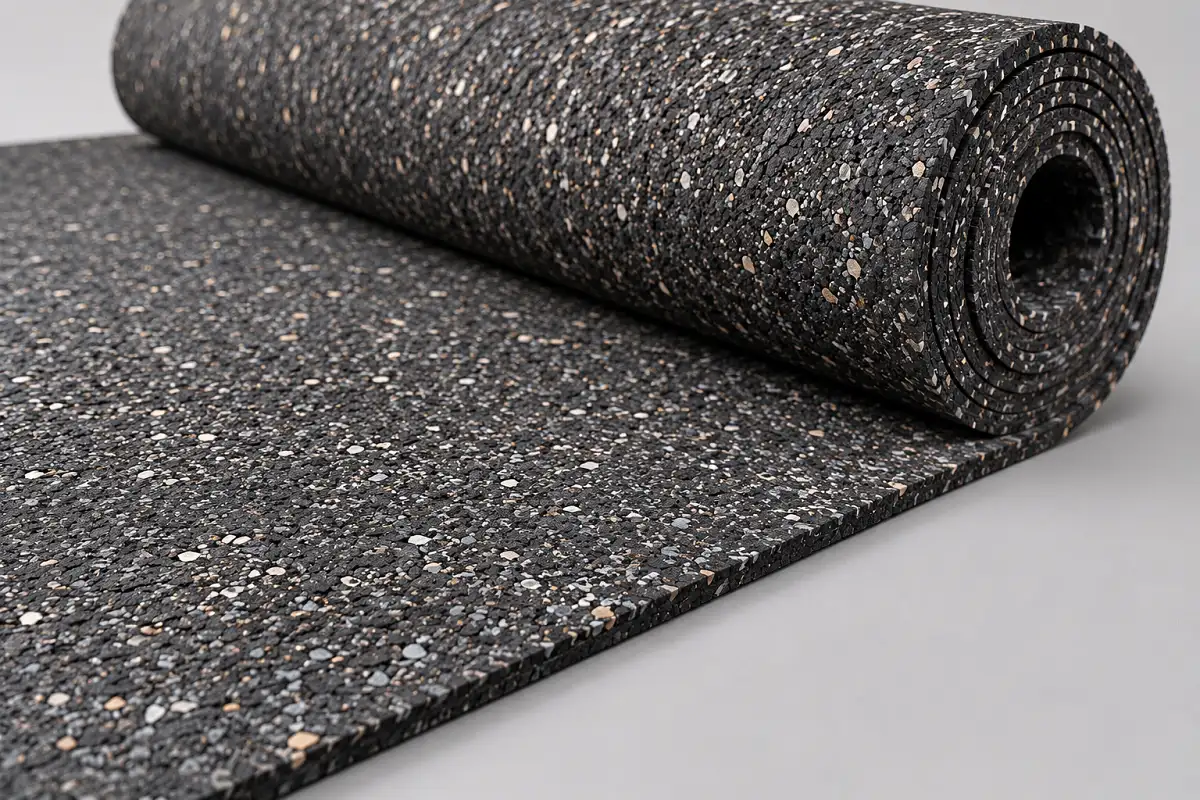
Apartment and tower projects are where that happens. A fit-out in a managed building is the usual case, and a contractor or a consultant will state the grade required as part of the specification rather than leaving it to the flooring supplier to choose. Send us the specification and we will supply to it. Where no grade is specified, we say so rather than assuming one.
Carpet underlay, a different product from floating-floor underlay
Carpet underlay is a separate family and the two are not swapped for each other. It works with the perimeter gripper rather than sitting loose, it is specified by weight and density rather than by the floor going over it, and it comes in PU foam, rubber crumb and felt. A grade intended for a floating floor does not do that job and is not used for it.
Carpets covers the carpet itself and the fitting process. Stairs take a heavier grade than the same carpet laid flat, and the reasons sit on stair carpet rather than here.
Matching the grade to the floor and the room
This is the specification in one table, and it is what we work to on site. The site visit confirms each row against the slab and the building you are in rather than changing it, so the grade you are quoted for is the grade that goes down. Where a row says no separate layer, nothing is laid over the attached backing.
| Floor | Grade we specify | Separate layer needed |
|---|---|---|
| SPC, most ranges | Attached to the plank | No |
| WPC, most ranges | Attached to the plank | No |
| Laminate, dry room | Foam or EPE | Yes |
| Laminate, on a slab | Combination grade with an integral barrier | Yes |
| Floating engineered wood | Foam, EPE or fibreboard panel | Yes |
| Any floating floor, apartment project | Rubber crumb acoustic grade, or the specified grade | Yes |
| Broadloom carpet | Felt or PU foam, specified by weight | Yes |
| Stair carpet | Heavier grade than the same carpet laid flat | Yes |
Where a floor arrives with underlay attached, nothing separate is laid over it. That is the one rule on this table that gets broken most by buyers specifying their own materials.
What to ask before you buy underlay
Five questions separate a specified product from a roll of whatever was in the van, and they work on any supplier rather than only on us. Ask them before you compare two quotes, because the answers are where the difference between those quotes sits, and a supplier who cannot answer the density question is not specifying anything.
- Is it attached to the plank or a separate layer? This decides whether you are buying underlay at all.
- Is there a barrier in it, or is a separate membrane being laid? On a slab, one of the two has to be happening.
- What density or weight is it? This is the number that distinguishes grades within a family, and a supplier who cannot tell you is not specifying.
- Is it inside the quoted price, or a separate line? Ask before you compare two quotes, because the cheaper one may have left it out.
- Who lays it, and is that in the same price? Supply and fitting are two costs and should be stated as such.
The fuller background on how a floor is built up is in our flooring installation guide.
How underlay is quoted and supplied with your floor
Underlay sits inside the flooring quote. It is not a line you are surprised by later, and it is not something you source yourself and we fit around. We specify the grade on the free site visit against the floor you have chosen and the slab it is going on, and it is supplied and laid by the same team that lays the floor.
If you are comparing our quote against another, the thing worth checking is whether the other one includes it. Published floor prices are in the flooring cost guide, and where a floor is going over existing tiles the build-up changes, which is covered in laying a new floor over existing tiles.
Frequently asked questions
What underlay do you supply for laminate flooring?
Laminate takes a separate grade, because it does not arrive with one attached. In a dry room that is a foam or EPE grade. Where the laminate is going onto a concrete slab we specify a combination grade with an integral barrier instead, or lay a separate membrane and a plain grade over it. The choice is made on the site visit.
Is underlay included in the flooring quote?
Yes. It is specified and priced inside the flooring quote rather than added afterwards, and the same team supplies and lays it. If you are comparing quotes from two suppliers, check whether the other one has included it, because a quote that leaves underlay out looks cheaper than one that puts it in.
Can I use the underlay I already have under a new floor?
Sometimes, and it is worth asking rather than assuming either way. We look at what is down, what condition it is in and whether it suits the new floor, and we tell you on the site visit. Where the existing grade is sound and the right family for the floor going on, reusing it saves you the material cost.
What is the difference between carpet underlay and floating-floor underlay?
They are separate product families. Carpet underlay works with the perimeter gripper and is specified by weight and density. Floating-floor underlay is laid loose under a plank floor and is specified against that floor and the slab. One does not substitute for the other, so a grade bought for a plank floor is not used under carpet.
How is underlay specified for an apartment?
Managed buildings and tower fit-outs come with a specification from the contractor or the consultant, naming the grade required. Where that exists, send it to us and we supply to it. Where it does not, we specify a dense rubber crumb acoustic grade or a standard grade according to the project, and we tell you which one we have allowed for.
Can underlay be laid over existing tiles?
Yes, and the grade is specified for the tiled surface rather than for a bare slab, because the starting point is different. The wider question of what changes when a floor goes over tiles, including the build-up, is covered on laying a new floor over existing tiles.
What underlay goes under engineered wood?
Floating engineered wood takes a separate grade: foam, EPE, or a fibreboard panel where the floor needs a firmer base beneath it. On a slab it takes a combination grade with an integral barrier, or a separate membrane first. Glued-down engineered wood is bonded to the slab and takes no underlay at all.
Do you lay the underlay, or only supply it?
We supply and lay it as part of the flooring job, by the same team that lays the floor, so there is no second trade to arrange and no gap in responsibility if something is wrong. It is specified on the site visit and sits inside the flooring quote rather than being ordered separately.
Tell us the floor you have chosen
Tell us the floor you have chosen and we will specify the grade on a free visit.
Or call +971 56 689 9831