
Reviewed for accuracy by Muhammad Gulbadin, founder and operations manager at Urban Flooring, 15+ years in UAE flooring.
LVT is luxury vinyl tile, a realistic wood or stone look with a wear layer, comfortable underfoot, water-resistant and mop-and-go. VCT is vinyl composition tile, cheaper and very tough, but porous, so it needs regular stripping, waxing and sealing. LVT suits homes and front-of-house; VCT suits budget-driven, high-traffic commercial floors. Cheaper upfront often costs more to maintain.
What is the difference between LVT and VCT flooring?
They sound like near-cousins, but they sit in different tiers of price, look and upkeep, and the difference starts with what each tile actually is. LVT, luxury vinyl tile, is a multi-layer tile: a stable backing and core, a photographic décor layer that reproduces wood or stone, and a clear factory wear layer over the top. That build makes it realistic, comfortable and low-maintenance.
VCT, vinyl composition tile, is a single-layer composition tile made from limestone filler, a vinyl binder and pigment, with the colour running all the way through. That makes it hard and cheap, but porous, so it has to be sealed with wax and kept sealed. So the short version: LVT is the realistic, low-upkeep premium tile; VCT is the tough, cheap, high-upkeep commercial tile. Almost every other difference follows from that.
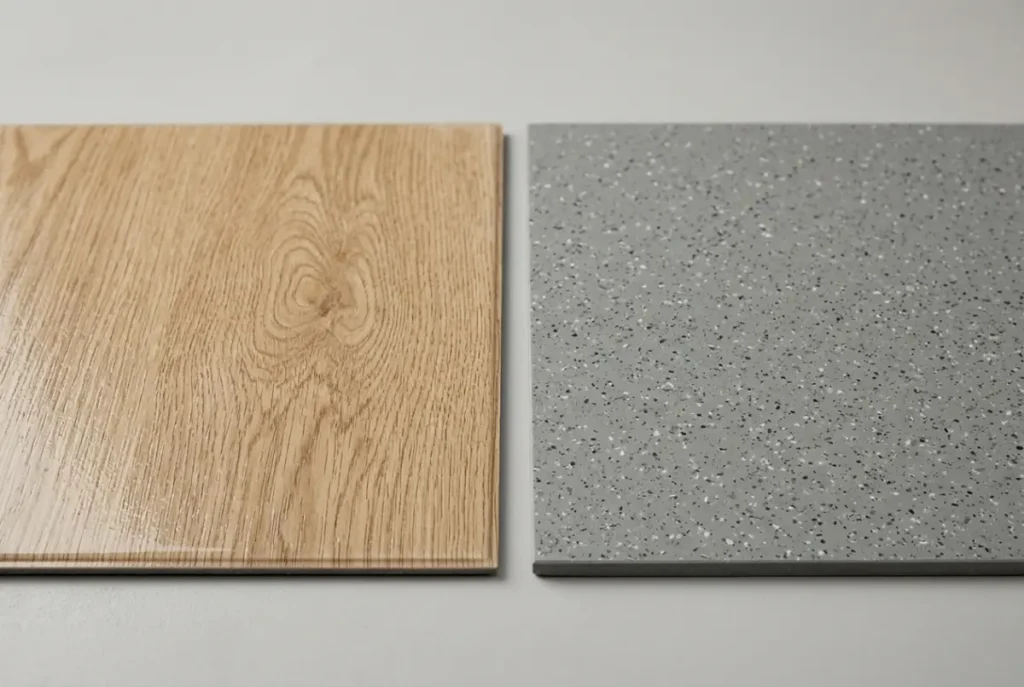
LVT vs VCT at a glance: the full comparison table
The table sets the two side by side across the things that actually decide the choice: what each tile is, look, comfort underfoot, water resistance, maintenance routine, upfront and lifetime cost, toughness, repair, installation and best setting. LVT leads on look and upkeep, VCT on price and raw hardness.
| Feature | LVT (luxury vinyl tile) | VCT (vinyl composition tile) |
|---|---|---|
| What it is | Multi-layer printed luxury tile with a wear layer | Colour-through composition tile |
| Look | Realistic wood / stone / custom | Utilitarian, solid colours / speckle |
| Comfort underfoot | Warmer, softer, quieter | Hard, cold, noisy |
| Water resistance | Water-resistant to waterproof | Porous, needs sealing |
| Maintenance | Mop-and-go, no waxing | Strip, wax and reseal periodically |
| Upfront cost | Higher | Lowest |
| Lifetime / maintenance cost | Lower (low upkeep) | Higher (ongoing wax / seal labour) |
| Impact / abrasion toughness | High | Very high (hard, brittle) |
| Repair | Swap a plank / tile | Swap a tile, patchable |
| Installation | Click or glue-down | Glue-down |
| Cost (supply and fit) | AED 45-350/sqm (4.2-32.5/sqft) | AED 45-140/sqm (4.2-13.0/sqft) |
| Best for | Homes, front-of-house, design-led commercial | Schools, hospitals, supermarkets, back-of-house |
How LVT and VCT are made, and why it changes everything
The way each tile is built is not a technicality, it is the thing that decides how each looks, feels, resists water and, above all, what it costs you to keep. LVT is 100% vinyl in layers: a dimensionally stable backing, a core, a high-resolution photographic décor film, and a clear urethane wear layer that takes the daily traffic.
Because the protective layer is built in at the factory, LVT needs no site-applied coating. VCT is a homogeneous tile: limestone and stone filler bound with vinyl resins and pigment, pressed into a hard, dense, slightly brittle tile with the colour running through. That homogeneity is why a VCT tile can be sanded or patched, but the same composition is porous, so out of the box VCT is not sealed against water or stains, which is exactly why it has to be waxed and kept waxed. One tile has its protection built in; the other needs protection applied and reapplied for life. Hold on to that, because it drives the whole cost story below.
Look, comfort and feel underfoot: where LVT leads
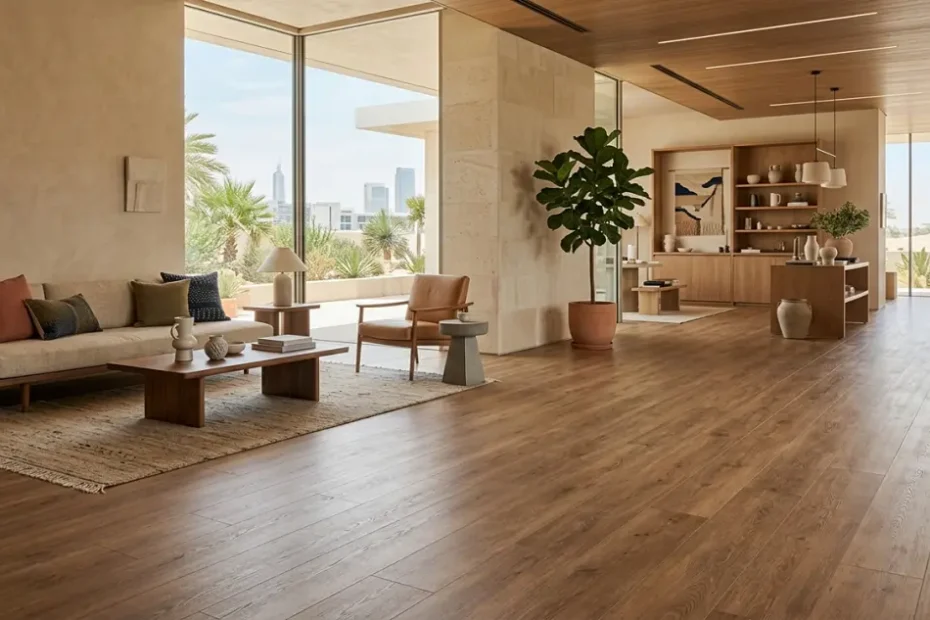
On looks and feel, this is not a close contest, and it is worth saying plainly. LVT flooring uses a photographic décor layer that reproduces wood grain and natural stone with real depth and variation, in planks and tiles that suit a design-led space.
It is warmer, softer and quieter underfoot than a hard composition tile, and being solid vinyl it is water-resistant, so it copes with moisture that would trouble VCT. VCT, by design, is utilitarian: solid colours or a speckled pattern, a hard and cold surface, and a more clinical, institutional look. For a home, a shop’s sales floor, an office reception or any customer-facing space, LVT wins the look-and-feel decision comfortably.
Maintenance: the strip-and-wax cost VCT carries and LVT does not
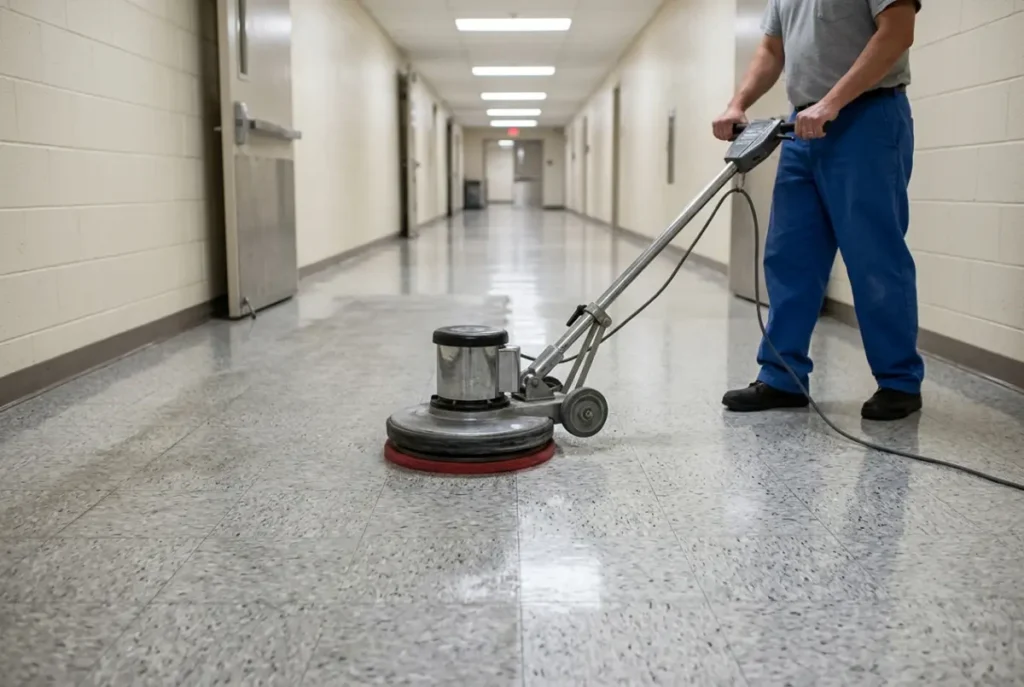
This is the single most important difference between the two, and the one buyers most often overlook: VCT carries a lifetime maintenance burden that LVT simply does not. Because VCT is porous, it has to be stripped back, re-waxed and buffed on a schedule, typically three to six times a year in a busy setting, and as often as twice a month on very high-traffic older floors, to stay sealed, presentable and protected.
Skip that routine and the tile goes dull, porous and prone to staining. LVT has its wear layer built in at the factory, so it needs no waxing at all, just sweeping and a damp mop with a neutral cleaner. That is the core divide: VCT is strip-and-wax for life, LVT is mop-and-go. And treating one like the other backfires, waxing LVT causes buildup, while treating VCT like a no-wax floor leads to rapid deterioration.
Durability and where VCT still earns its place
Now the other side of the ledger, because VCT is not the poor relation, it genuinely leads in places and deserves its due. VCT is dense and hard from its high limestone content, so it takes impact and abrasion extremely well, and because the colour runs all the way through, a damaged tile can be patched or refinished tile-by-tile without a visible repair.
That toughness and easy patchability is exactly why schools, hospitals, supermarkets and industrial back-of-house floors still specify it, where a floor takes a beating and a maintenance team is on hand. VCT flooring earns its place there on merit. LVT answers durability differently: a commercial wear layer of 20 to 40 mil resists the everyday scratches and scuffs, it is water-resistant, and it is far more comfortable, all with none of the waxing. So VCT wins raw toughness and patch-repair; LVT wins wear-layer durability, water resistance and low upkeep.
Cost: upfront price vs lifetime cost of ownership
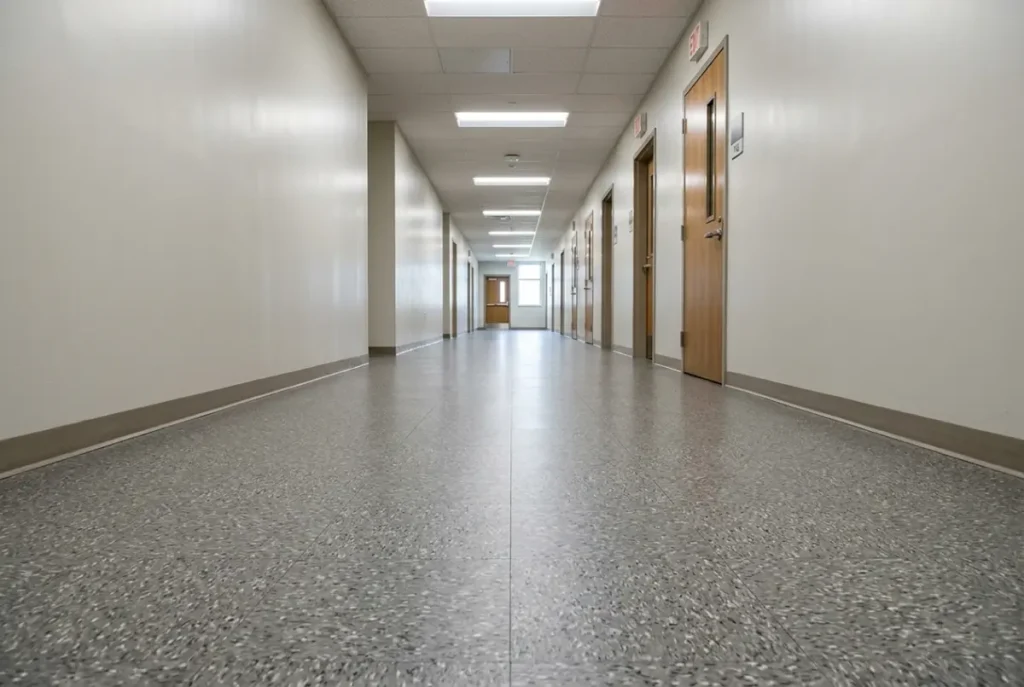
Here is where the obvious answer flips, and it is the point most buyers miss. On the sticker, VCT is cheaper. Supplied and fitted, VCT runs about AED 45 to 140/sqm (about AED 4.2 to 13.0/sqft) and covers large commercial areas cheaply, while LVT runs about AED 45 to 350/sqm (about AED 4.2 to 32.5/sqft). But the purchase price is only part of what a floor costs.
Add the lifetime strip-and-wax labour and the picture changes. Strip-and-wax labour is the bulk of what VCT costs to keep, so the tile that is cheaper to buy often carries the larger bill over the life of the floor, and LVT’s higher purchase price is offset by maintenance it never needs. On a busy floor, the cheaper tile can quietly cost more to keep. So the honest way to judge these two is on lifetime cost, not the headline price. For the full breakdown across every floor type, see our flooring cost guide.
Should you choose LVT or VCT for your space?
The honest resolution is by setting, not by declaring one tile better, because each is built for a different job. LVT belongs where people see and feel the floor. VCT belongs where a maintenance team keeps it sealed and the budget rules. The three cases below cover almost every specification.
- A home: LVT flooring, for the realistic look, the comfort and the mop-and-go upkeep. VCT’s hard, cold surface and its strip-and-wax routine are not built for households.
- Design-led or front-of-house commercial (shop sales floor, office reception, hospitality, healthcare): LVT, for the look, the comfort and the hygiene of a no-wax surface.
- Budget-driven, high-abrasion, maintenance-staffed commercial (aisles, stockrooms, schools, industrial): VCT flooring, where lowest upfront cost, toughness and easy patching win and a team handles the waxing.
If you are actually weighing LVT against a rigid core rather than VCT, that is a different decision, and our SPC vs LVT comparison covers it. For how this premium-versus-budget split plays out zone by zone in a store, see our retail flooring guide. Both tiles sit within the wider vinyl flooring family.
LVT vs VCT flooring: frequently asked questions
What is the difference between LVT and VCT flooring?
LVT (luxury vinyl tile) is a multi-layer tile with a photographic wood or stone décor layer and a clear factory wear layer, realistic, comfortable and low-maintenance. VCT (vinyl composition tile) is a harder composition tile of limestone, vinyl binder and pigment with the colour running through, cheaper and tough, but porous, so it needs regular waxing and sealing. Different price and upkeep tiers.
Is LVT or VCT cheaper?
VCT is cheaper upfront, especially over large commercial areas. LVT costs more to buy but is cheaper to maintain, with no waxing. Over a floor’s life the gap narrows or flips: the strip-and-wax labour VCT needs and LVT does not is the larger cost, so on a busy floor over years the cheaper tile can cost more to keep.
Does VCT need waxing and LVT not?
Yes. VCT is porous, so it must be stripped, waxed and buffed regularly, typically three to six times a year in busy settings, to stay sealed and presentable. LVT has a built-in factory wear layer and needs no waxing at all, just sweeping and damp mopping with a neutral cleaner. This is the core maintenance difference between the two.
Which is more durable, LVT or VCT?
Both are tough in different ways. VCT is very hard and resists impact and abrasion, and because its colour runs through, individual tiles patch easily, which is why institutions use it. LVT’s thick wear layer handles daily scratches and scuffs, and it is more comfortable and water-resistant. VCT wins raw toughness; LVT wins wear-layer durability with far less upkeep.
Which looks more realistic, LVT or VCT?
LVT, clearly. Its photographic décor layer reproduces wood grain and stone with real depth and variation, and it comes in planks and tiles for design-led spaces. VCT is utilitarian, offering solid colours or speckled patterns rather than realistic wood or stone. For a home or any design-led or customer-facing area, LVT wins on looks easily.
Is VCT still used?
Yes. VCT remains common in budget-driven, high-traffic commercial settings, schools, hospitals, supermarkets and back-of-house areas, where low upfront cost, impact toughness and easy tile patching matter and a cleaning team handles the waxing. It is slowly being displaced by LVT where hygiene and low maintenance matter more, but it still earns its place on a tight fit-out budget.
Which is better for a home, LVT or VCT?
LVT. It is realistic, warm and quiet underfoot, water-resistant and mop-and-go, all of which suit a home. VCT’s hard, cold surface and its regular strip-and-wax routine are built for maintenance-staffed commercial floors, not households. For a residential floor that looks like wood or stone and needs little upkeep, LVT is the clear choice.
Which lasts longer, LVT or VCT?
Both last well when maintained. VCT can last decades if its strip-and-wax routine is kept up, but it deteriorates quickly if that lapses. Quality LVT lasts around 10 to 20 years and holds its look with far less effort thanks to its wear layer. Lifespan depends more on maintenance commitment than on the material itself.
The bottom line: LVT or VCT?
LVT and VCT are not really rivals so much as tiles built for different jobs. LVT is the realistic, comfortable, water-resistant, mop-and-go tile that suits homes and any design-led or front-of-house space, and it is favoured where hygiene and low upkeep matter.
VCT is the cheap, dense, very tough composition tile that still earns its place in budget-driven, high-abrasion commercial floors, schools, hospitals, supermarkets and back-of-house, where a maintenance team keeps up the strip-and-wax routine. The one thing not to do is choose on the sticker price alone: VCT is cheaper to buy but carries a lifetime waxing cost, and over ten years LVT’s total cost of ownership tends to run lower. Judge on the whole-life cost and the setting, and a free site visit will confirm the right tile for your floor.
Get the right vinyl floor with a free site visit
Choosing between LVT and VCT for a home or commercial space in Dubai or across the UAE? Message us on WhatsApp and a flooring specialist will recommend the right tile for your setting and traffic, LVT for a realistic, low-maintenance finish, or VCT where a tough, budget commercial floor with a maintenance routine makes sense, with honest lifetime-cost advice, not just the sticker price.
- WhatsApp us: +971 56 689 9831
- Call: +971 56 689 9831
- Request a free site visit and quote across Dubai and Abu Dhabi.
We have supplied and fitted vinyl floors across the UAE since 2013, with more than 10,000 projects completed by our in-house team.

Junaid Rana is a content strategist with over 10 years of experience in the interior and fit-out industry, writing on flooring, finishes and fit-out across UAE homes and commercial spaces. His guides are reviewed for accuracy by Urban Flooring’s in-house experts.