
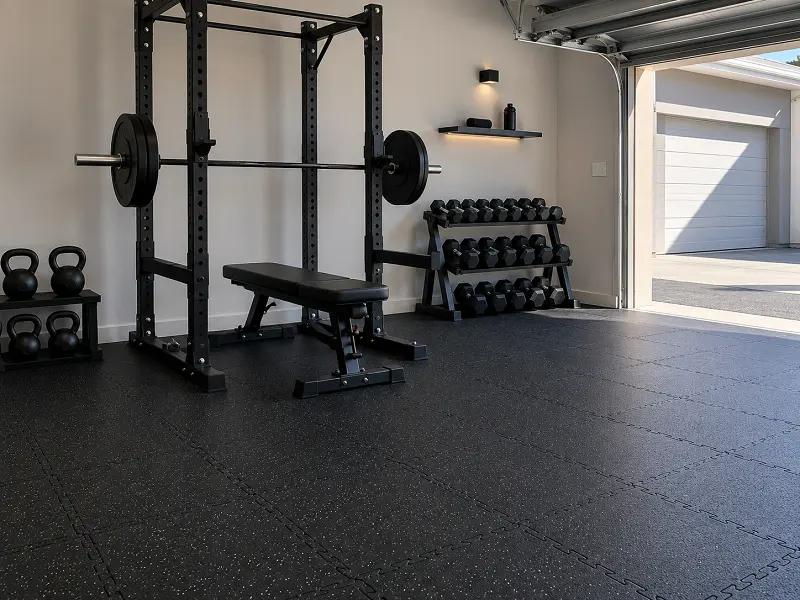
Gym Flooring in Dubai & Abu Dhabi
Durable rubber gym flooring in interlocking tiles, rolls and lifting mats, for home and commercial gyms, sized to protect your floor, your equipment and your neighbours. Supplied and fitted by one team since 2013, with free site visits across the UAE.
- Established 2013
- 10,000+ Projects
- Home & Commercial
- Dropped-Weight Protection
- Free Site Visit
Or call +971 56 689 9831
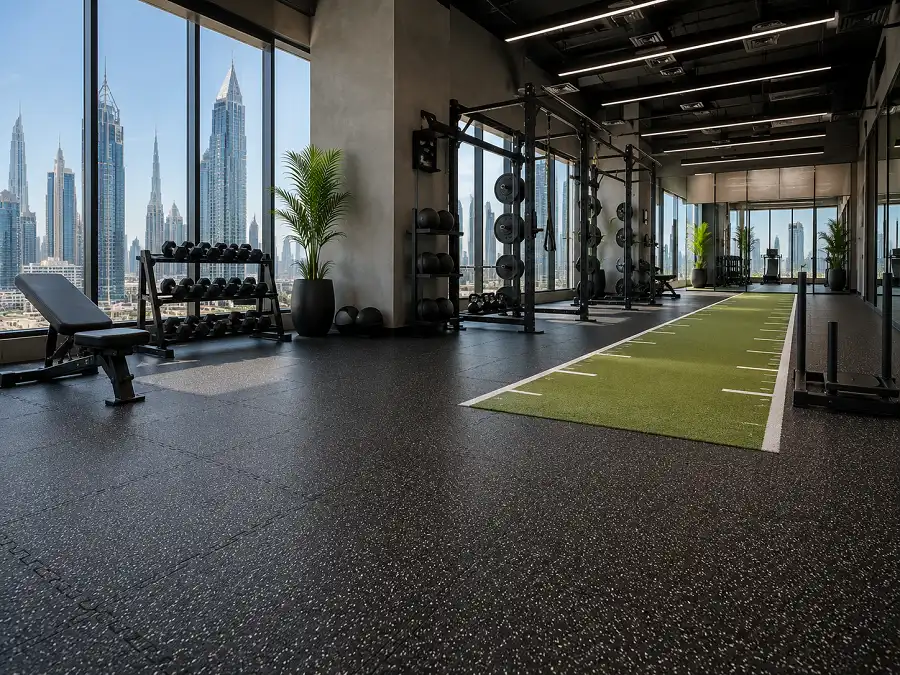
What Is Gym Flooring?
Gym flooring, also called gym mats, gym floor mats or rubber gym mats, is durable, shock-absorbing rubber gym flooring, supplied as interlocking tiles, rolls or heavy lifting mats, that protects the subfloor and equipment, cushions dropped weights, and deadens noise. The right thickness depends on how you train. Urban Flooring supplies and fits gym flooring across Dubai and Abu Dhabi.
It is one use of rubber flooring, specified for the demands of training. The single biggest decision, thickness, comes down to what actually happens on the floor, covered below.
Home and Commercial Gym Flooring
The right gym floor starts with the setting. Home and commercial gyms ask different things of the floor. Home gyms in garages, spare rooms and villas usually take interlocking rubber tiles, which lay in an afternoon, lift again and extend when the gym grows. Commercial floors in studios, hotel gyms and CrossFit boxes take heavy-duty rolls or dense tiles built for constant traffic and dropped weights.
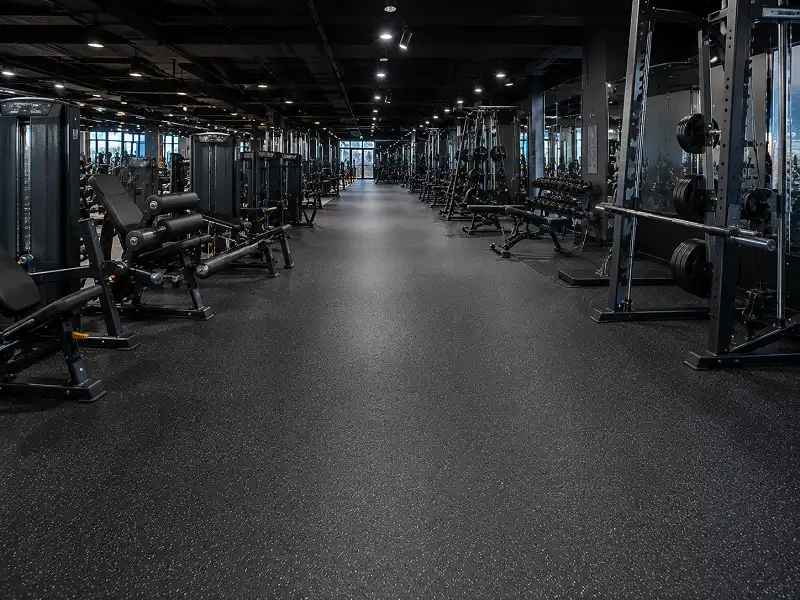
Commercial Gym Flooring
Heavy-duty rolls and dense tiles For fitness studios, hotel and building gyms, PT studios and CrossFit boxes. Heavy-duty rolls or dense tiles handle constant traffic, heavy equipment and dropped weights.Rubber is the material behind both, see our rubber flooring page for the full range.
How Thick Should Gym Flooring Be?
The single most important choice is thickness, and it depends on what happens on the floor. Cardio, yoga and functional zones need 4mm to 8mm. General free-weight areas need 8mm to 15mm. Commercial lifting areas with dropped barbells need 20mm to 25mm, and Olympic platforms 30mm to 40mm or more.
Cardio, yoga and functional zones4mm to 8mm is enough for comfort and grip.
General free-weights areas8mm to 15mm to cushion equipment and the occasional dropped dumbbell.
Heavy lifting, dropped barbells and platforms20mm to 25mm for commercial gyms, and 30mm to 40mm or more for Olympic lifting and repeated heavy drops, or dense shock mats and built lifting platforms, to protect the subfloor and cut noise.
| Training zone | Thickness | Typical format | Why |
|---|---|---|---|
| Cardio, yoga, functional | 4 to 8mm | Tiles or rolls | Comfort and grip, no impact load |
| General free weights | 8 to 15mm | Tiles or rolls | Cushions equipment and the occasional dropped dumbbell |
| Commercial lifting | 20 to 25mm | Dense tiles or heavy mats | Repeated barbell drops in a busy gym |
| Olympic lifting platforms | 30 to 40mm+ | Dense shock mats, built platform | Protects the slab under repeated heavy drops |
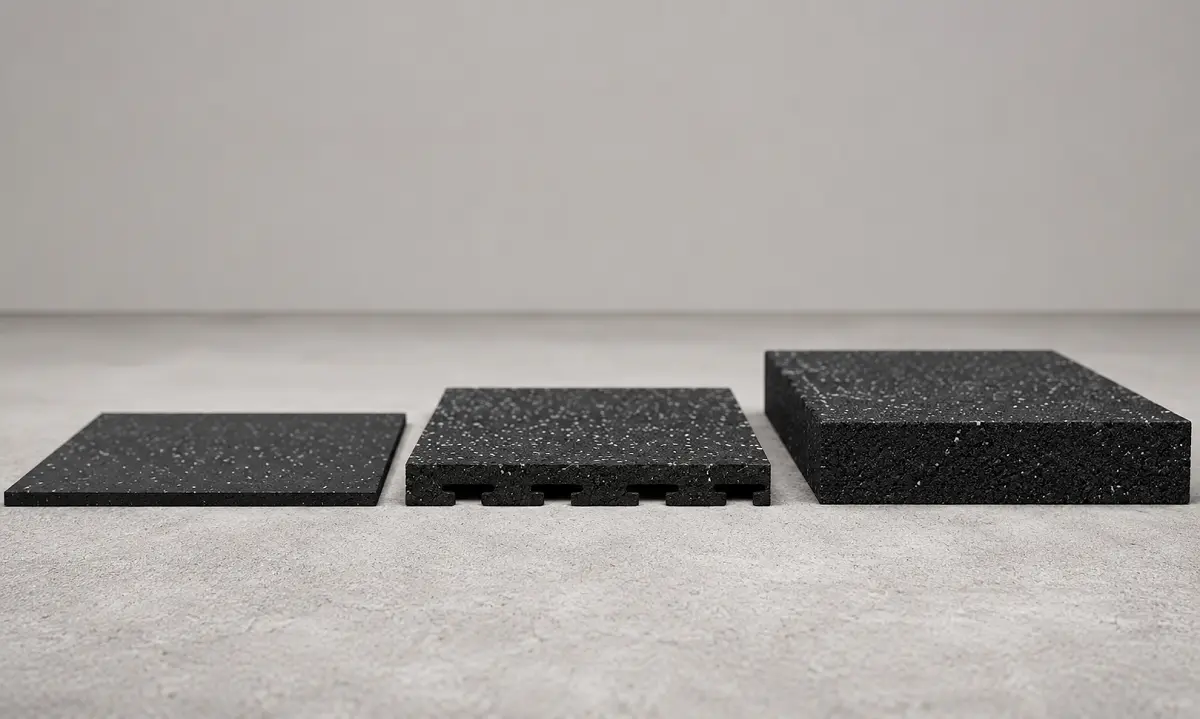
In our experience, matching thickness to the zone is what protects both the slab and the budget. You do not need 20mm under a treadmill.
Thickness is only half of it. How hard the rubber is decides whether a dropped barbell sinks in or bounces back, and that is measured on the Shore A scale under ASTM D2240, pressing a calibrated indenter into the surface and reading the resistance. Softer rubber cushions more and dents more; harder rubber holds its shape under equipment feet. Ask for the Shore A rating alongside the thickness.
Gym Flooring Formats
Three formats cover gym floors, and most gyms use a mix matched to each zone. We also supply rolled rubber gym flooring and, where a lighter surface suits, vinyl gym flooring. Interlocking tiles use a puzzle edge and no glue, so they suit home and garage gyms. Rolls give a continuous commercial surface with fewer joins. Dense mats and built platforms take the free-weight and Olympic zones where impact is heaviest.
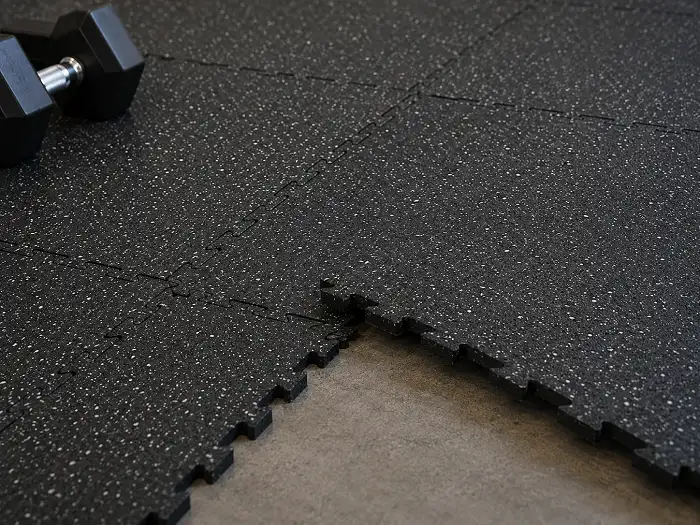
Interlocking Tiles
No glue, easy to move Puzzle-edge rubber tiles, no glue, ideal for home and garage gyms and easy to lay or move.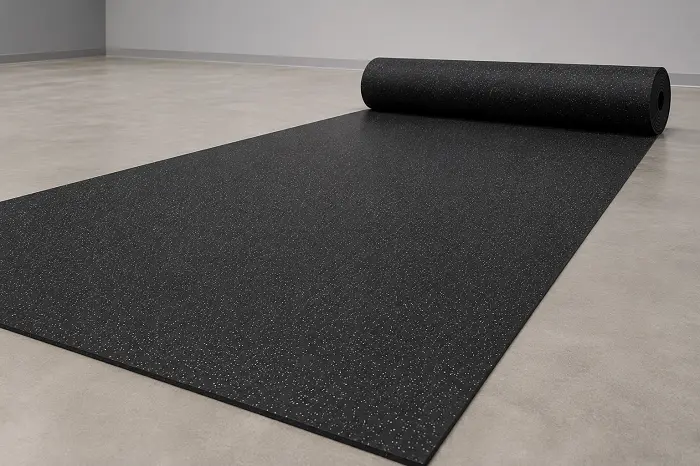
Rubber Rolls
Smooth commercial cover Continuous rolls for large commercial floors, fewer joins and a clean, even finish.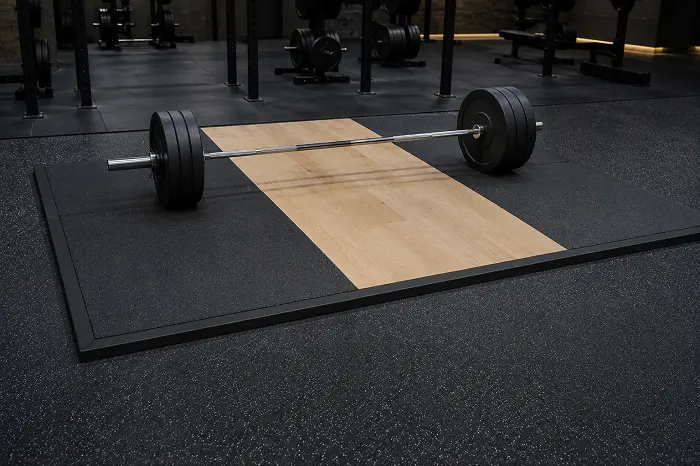
Mats & Lifting Platforms
The thickest build-up we fit Dense heavy mats and built platforms for free-weight and Olympic lifting zones, where barbells are dropped repeatedly.Material note: most gym rubber is hard-wearing recycled rubber, which carries a rubber odour for the first few weeks in a closed, unventilated room, so a small home gym is worth airing. Coloured EPDM-topped tiles are available where you want a flecked or branded finish, see our EPDM flooring page.
Why the Right Gym Floor Matters
The right floor protects your slab, absorbs impact and keeps training noise down, and the correct spec depends on how you train. Our how to choose the best gym flooring guide walks through thickness, format and where each works.
Protects the SubfloorStops dropped weights cracking the concrete or tile beneath.
Resilient UnderfootRubber compresses underfoot rather than staying rigid like tile or concrete.
Handles Dropped WeightsDense rubber takes barbell impact.
Reduces NoiseVital in apartment and villa gyms, cuts vibration to rooms and neighbours below.
Matt Textured SurfaceA matt, textured rubber surface rather than a sealed gloss finish.
Easy to CleanWipes down, suited to shared gyms.
Where Gym Flooring Works
Home and garage gyms, villa gyms, fitness studios, hotel and residential-tower gyms, PT studios, CrossFit boxes, physio and rehab spaces. Home and garage gyms take liftable tiles. Commercial studios, hotel and tower gyms take rolls or dense tiles. CrossFit boxes and lifting areas take the heaviest build. For school and university sports halls, which need a purpose-built sports surface rather than rubber, see our gymnasium flooring page.
Gym Flooring Prices in Dubai
Gym floor cost depends on the format and thickness, which follow how you train. Supplied and fitted, commercial rubber rolls run from around AED 60/sqm (about AED 5.6/sqft), interlocking home-gym tiles from AED 70/sqm, and heavy mats or built lifting platforms from AED 110 to 200/sqm (about AED 10.2 to 18.6/sqft). Thicker lifting zones sit at the top. Indicative supply-and-fit guide:
| Type | Per sqm (AED) | Per sqft (AED approx) |
|---|---|---|
| Rubber rolls (commercial) | 60 to 130 | 5.6 to 12.1 |
| Interlocking tiles (home gym) | 70 to 130 | 6.5 to 12.1 |
| Heavy mats / lifting platforms | 110 to 200 | 10.2 to 18.6 |
Thicker heavy-lifting zones and built platforms sit at the upper end; larger areas attract better rates.
Indicative supply-and-fit ranges for guidance only, subject to format, thickness, finish and area. Request a free site visit for an exact quote.
How We Fit Gym Flooring
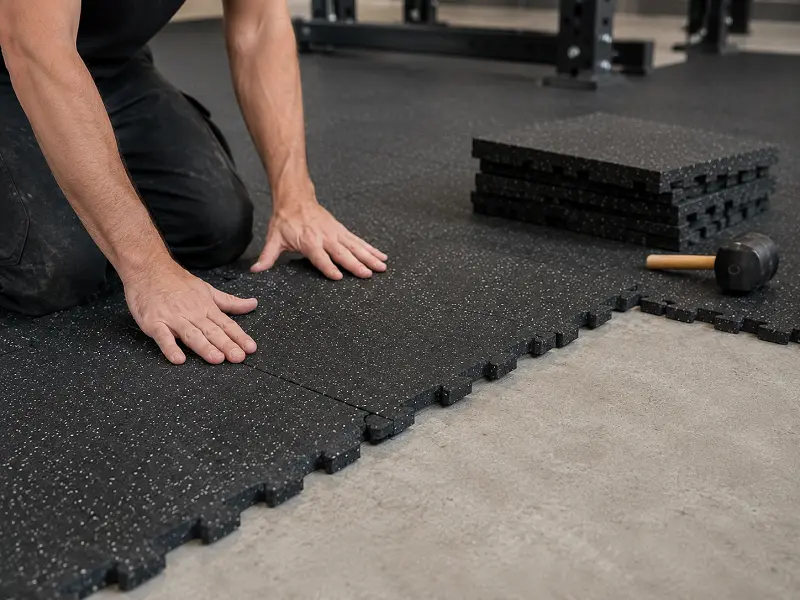
Gym flooring is matched to the zone and laid for the use. We set thickness by zone on the site visit, then prepare and level the subfloor. Interlocking tiles are loose-laid so they can be lifted or extended later. Rolls are laid and either seamed or glued for a continuous surface. Heavy mats and lifting platforms are built where the drops happen.
- Free consultationTraining type, thickness and format advice.
- Free site visit & measureArea and zones assessed, quote.
- Subfloor preparationClean and level the base.
- InstallationInterlocking tiles loose-laid, rolls laid and seamed or glued, heavy mats and lifting platforms built where needed, thickness set by zone.
- Aftercare adviceSimple cleaning and care guidance.
Gym Flooring Across the UAE
Dubai is our home market, from garage and villa home gyms to commercial fitness fit-outs. Abu Dhabi is our second core market, including Saadiyat Island, Yas Island, Al Reem Island, Al Raha Beach and Khalifa City.
Beyond the two, we supply and fit across all seven emirates, with free site visits throughout the areas we serve.
Gym Flooring FAQs
What is the best flooring for a home gym?
For most home gyms, interlocking rubber tiles are the best choice: they cushion weights and cardio, protect the floor beneath, lay without glue and are easy to extend or move. A thickness of 8mm to 15mm suits typical home training. We help you pick the right tile during a free site visit.
How thick should gym flooring be?
It depends on how you train. Cardio, yoga and functional zones suit 4mm to 8mm, general free-weights areas 8mm to 15mm, and heavy lifting or dropped-barbell zones 20mm to 25mm or built platforms. Matching thickness to the zone protects the floor without over-spending. We advise per area.
Gym tiles or rolls, which is better?
Interlocking tiles suit home and garage gyms, easy to lay, liftable and simple to extend. Rubber rolls suit large commercial floors, giving a smoother cover with fewer joins. Many gyms use both, tiles in flexible areas and rolls across main floors. We recommend the right mix.
How much does gym flooring cost in Dubai?
As an indicative guide, supply and fit runs from around AED 60/sqm (about AED 5.6/sqft) for rubber rolls and home tiles up to AED 200/sqm (about AED 18.6/sqft) for heavy lifting mats and platforms. Thickness and format drive the price. Request a free site visit.
Will gym flooring protect my floor from dropped weights?
Yes, that is one of its main jobs. The right thickness of rubber absorbs the impact of dropped dumbbells and barbells and stops them cracking the concrete or tile beneath. For serious lifting we use thick mats or a built platform in the lifting zone for full protection.
Does gym flooring reduce noise in apartments and villas?
Yes, and it matters in the UAE. Dense rubber flooring absorbs impact and vibration, cutting the noise and disturbance that carries to rooms and neighbours below, a real concern in towers and villas. Thicker flooring in lifting zones gives the best sound and vibration control.
Can I install gym flooring myself, or over existing tiles?
Interlocking tiles are designed for simple DIY laying and can go over a sound, level existing floor such as tiles. For large rolls, lifting platforms or uneven subfloors, professional fitting gives a flatter result with tighter seams. We supply tiles for DIY or fit the whole floor for you.
Do you supply only, or also install?
Both. Urban Flooring is a supply-and-installation company. One team handles format, thickness and zone advice, measurement and fitting, so there is a single point of accountability. Supply-only orders, including interlocking tiles for DIY, are possible. Free site visit comes as standard.
What is the difference between gym flooring and gymnastics flooring?
They solve opposite problems. Gym flooring is rubber that protects the floor and subfloor from dropped weights and heavy equipment. Gymnastics flooring is foam and sprung surfaces built for landings, with cushioning and rebound for tumbling. One protects the floor from the equipment; the other protects the person from the floor. See our gymnastics flooring page for clubs and schools.
Get Your Free Gym Flooring Quote
From a garage home gym to a full commercial fit-out, we supply and fit rubber gym flooring in tiles, rolls and lifting mats, sized to how you train, with a free site visit and written quote before any work starts.
Or call +971 56 689 9831
Urban Flooring Maintenance and Decor Works 7 24A Street, Al Quoz Industrial First, Al Quoz, Dubai, UAESat to Thu 9:00 AM to 7:00 PM GST · Closed Friday
+971 56 689 9831 · info@urbanfloorings.com
Get Directions