
Reviewed for accuracy by Muhammad Gulbadin, founder and operations manager at Urban Flooring, 15+ years in UAE flooring.
Book a Free Site Visit · Ask About Your Unit on WhatsApp · Call us on +971 56 689 9831
What Flooring Works Best in a Holiday Home
A floor you can repair in place, between bookings, without closing the unit. In practice that means a modular or click format: LVT, SPC or carpet tiles, laid so a damaged piece lifts out and a spare drops in. The specification question for a let is how fast a fix happens, not how long the floor lasts.
That inverts the usual order of priorities. In a home you choose a floor and then live with it. In a let the floor is a working part of a business that has to be photographable and occupiable on a known date, so the question that matters is what happens on the morning you find a mark and have a guest arriving at four.
LVT, SPC and carpet tiles all answer that question the same way, because all three are made of separate pieces. A damaged piece is a piece, not a floor. Sheet vinyl, glued planks and tiled floors answer it badly, for the reason set out in section 3.
This post is written for the owner of the unit. If you rent the property yourself and want to change the floor, that is a different question with a different answer, and it is covered in our guide to flooring a rented apartment.
Why This Is a Downtime Question, Not a Durability One
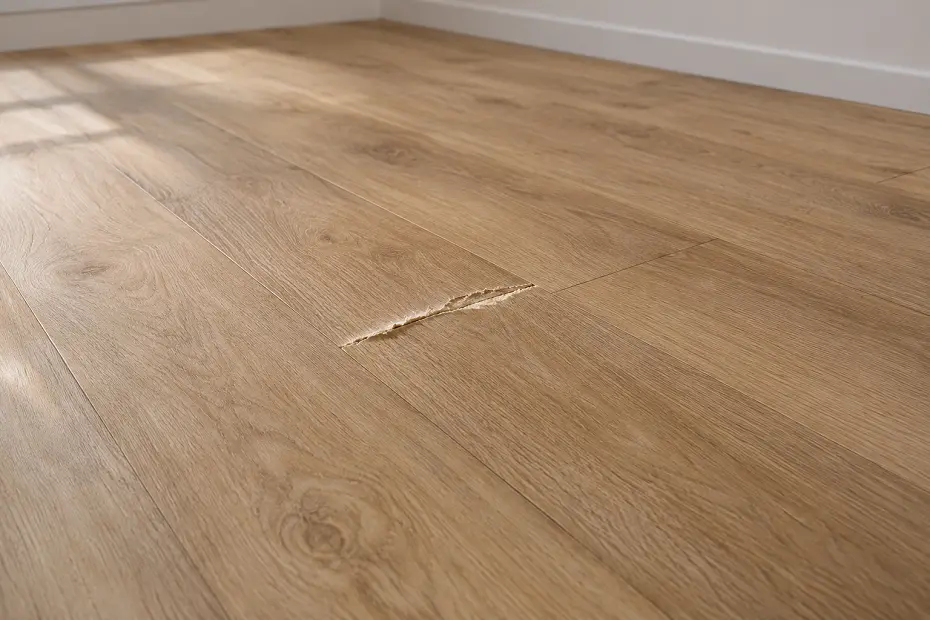
A damaged floor in a let is a property off the market, and that is the cost. A gouge in one plank does not stop a floor working, it stops the unit being photographed, listed and occupied until it is dealt with. Lost nights in season are worth more than the floor was.
Durability still matters, and it matters as a means rather than an end: a tougher floor takes fewer hits, so the unit comes off the market fewer times. How floors compare on hardness and wear is covered across the site and is not rebuilt here. What is not covered anywhere is the thing an owner actually loses, which is nights.
Downtime here means the gap between two bookings, not the fit-out. Closing a restaurant or a shop for a week to lay a new floor is a different problem with its own solutions, and we treat it separately. The problem in a let is that the floor is already down, already working, and one damaged piece has taken the unit off the market.
Follow that through and it cuts against the instinct to specify up. For a let, the cheapest adequate modular floor beats a premium one, precisely because it is replaceable. A premium floor damaged in month three is a premium repair, a longer wait for a matching piece, and the same lost nights. A mid-range modular floor with a box of spares in the cupboard is back in service the same day. Specify for recovery rather than for the brochure.
The one specification that fails this test outright is any floor that has to be refinished to be repaired. Sanding and refinishing takes the unit offline for days, which is the whole cost this post is about. How refinishing works, and which wood floors need it, is covered in our comparison of laminate and engineered wood.
Which Floors Can Be Repaired in Place
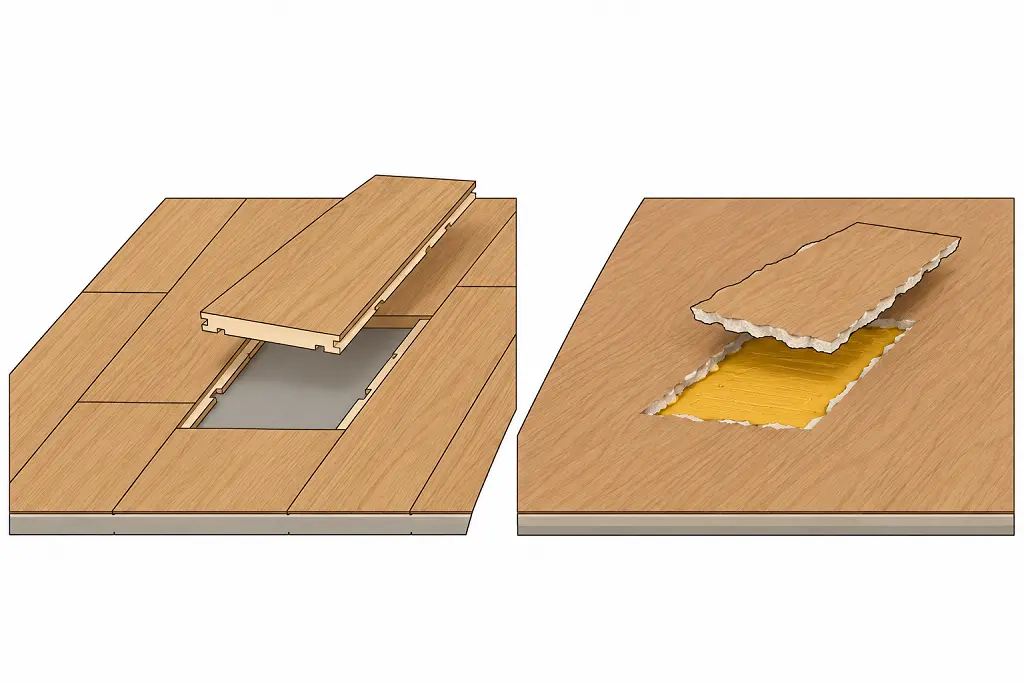
Modular floors can be repaired in place and bonded floors cannot. A click plank or a loose-laid tile is a separate unit that lifts out on its own, so one damaged piece is one piece replaced. Sheet vinyl, glued planks and tiled floors have to be cut into, patched or relaid, and all three close the unit.
| Floor format | Repairable in place | What the fix takes | What it means for a booking |
|---|---|---|---|
| Click LVT, SPC or laminate | Yes | Unclip back to the damaged plank, swap it, re-clip | Same day, walkable at once |
| Loose-lay vinyl planks | Yes | Lift the piece out, drop a spare in | Under an hour |
| Carpet tiles, interlocking or loose-laid | Yes | Lift one square, drop a spare in | Under an hour |
| Glued LVT or vinyl planks | Partly | Cut the plank out, scrape the bed, bond a new one, let it set | Room out of use while it cures |
| Sheet vinyl | No | Cut a patch in, which shows, or relay the room | Room or unit closed |
| Broadloom carpet | No | Patch, which shows, or relay the room | Room closed, and drying time after cleaning |
| Ceramic or porcelain tile | Partly | Break the tile out, re-bed, re-grout, let it set | Room out of use for a day or more |
| Any floor needing refinishing | No | Sand and refinish the whole room | Unit closed for days |
Click and modular formats
A click floor is held together by its own joints and held down by nothing, so a damaged plank is reachable. The fix runs backwards from the nearest wall: lift the skirting beading, unclip the rows back to the damaged piece, take it out, put the spare in, and clip the rows forward again. A plank in the middle of a large room is more work than one near an edge, which is a reason to keep spares rather than a reason to choose a different floor.
Sheet and bonded floors
A bonded floor has no separate pieces, so there is nothing to remove without cutting. A patch in sheet vinyl is a visible seam in the middle of a floor that a guest photographs, and a glued plank cut out of a bed leaves adhesive that has to be scraped back before the replacement will sit flat. Both work as repairs in a house. Neither works between two bookings.
Tile, and why it is still worth having in a bathroom
Tile is the exception that earns its place despite failing the repair test. A cracked tile is a day’s work with curing time, which is bad, but a tiled bathroom floor in a let is damaged far less than anything else in the unit, because nobody rolls a suitcase through a bathroom. Specify tile where water decides the material and accept the repair profile that comes with it.
Buy the Spares at Fit-Out, Not When You Need Them
Order the spare material with the floor and store it in the unit. Our standing advice on carpet tiles and vinyl is to keep spares from the original order so a replacement matches years later, and in a let that advice earns its keep faster. Spares bought at fit-out cost the delivery. Spares bought later might not exist.
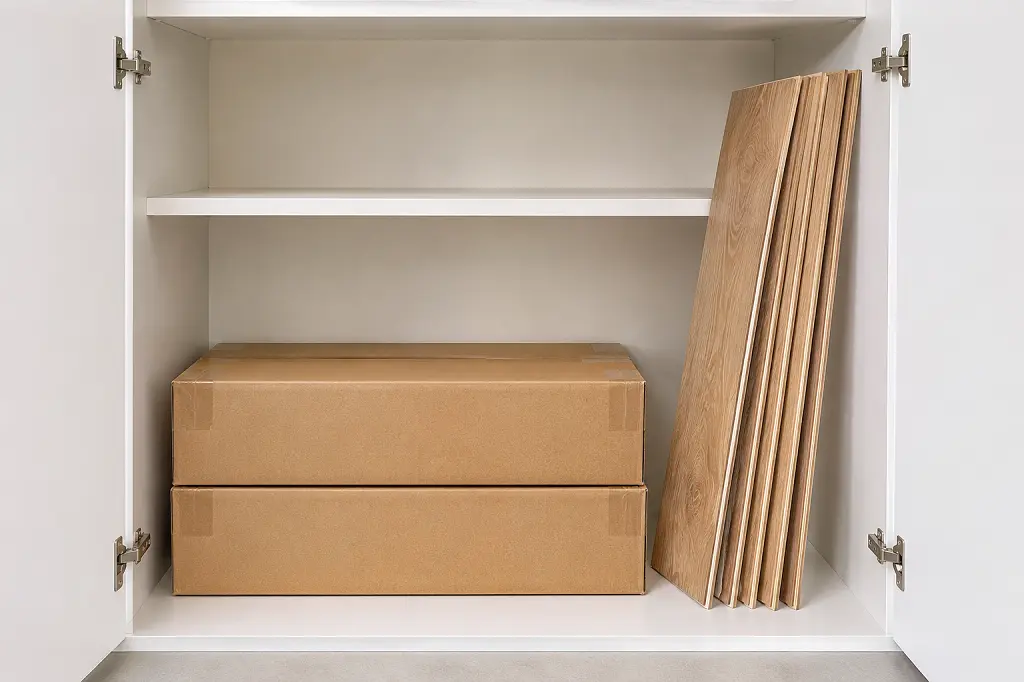
This is the cheapest thing on this page and the one that decides everything else on it. A modular floor is only repairable in place if there is something to put in the place. Without a spare, a floor that could have been fixed in an hour becomes an order, a lead time, a batch question and a unit that cannot be let in the meantime. The floor did not fail. The supply chain did.
How much to keep. A full unopened box of each floor type in the unit, plus the usable offcuts from the fit-out. A box covers the repairs a unit is likely to need across the life of the floor, and offcuts cover the small cuts at thresholds and around pipework that are hardest to recreate later. Our vinyl flooring and carpet tiles pages both carry the same recommendation for a home, and a let is the case where it matters most.
Where to keep it. In the unit, not in your own home or a warehouse across town. The point of a spare is that whoever is standing in the property at the time can fix the floor without you being involved, and a box in a bedroom cupboard achieves that. Store planks flat rather than on edge, and keep them out of direct sun, because a plank stored badly will not match even if it is the right product.
If you run more than one unit. Specify the same floor across every unit you own and keep one shared spare stock. A portfolio on one product turns several small spare boxes into one useful one, makes every repair a known procedure, and means a discontinued product is a problem you solve once rather than per property.
What Guests Damage That Tenants Do Not
Guests damage floors in ways long-term tenants do not, because they arrive with wheeled luggage and leave within days. Cases are rolled in over a threshold, furniture is dragged rather than lifted, and nobody staying a weekend has a reason to be careful. The damage is concentrated at doorways and under furniture.
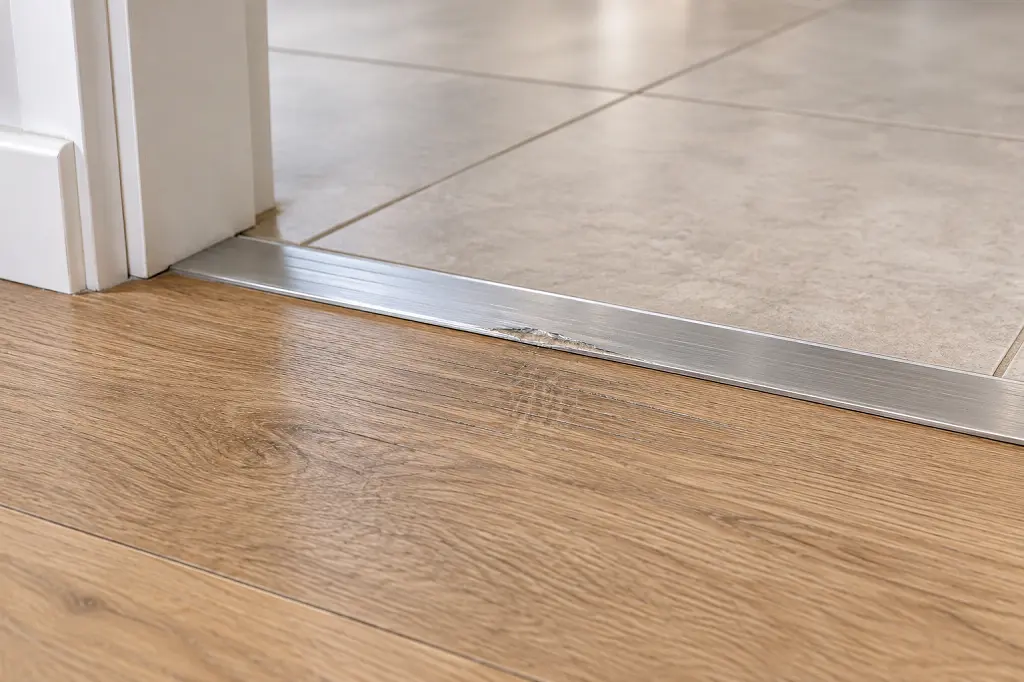
The pattern is what makes this worth specifying for. Damage in a let is not spread evenly across a floor the way ordinary wear is. It appears in a few predictable places, caused by a few predictable events, which means it can be designed against and checked for.
Wheeled luggage
Wheeled cases are the single biggest cause of floor damage in a short let, and they do it at thresholds. A case is lifted over a step, dropped on the far side, and dragged across the transition profile, and a hard small wheel carrying a loaded case concentrates a lot of weight on a very small contact patch. The marks appear as a narrow band of parallel scuffing at every doorway on the route from the front door to the bedrooms, and the transition bars themselves chip at the centre where everyone crosses.
Dragged furniture
Guests move furniture and do not lift it. A dining chair pulled out and pushed back twenty times a week, a sofa shifted to reach a socket, a bed moved to look for something underneath: all of it drags. Felt pads on every leg are the cheapest intervention available in a let, and they are worth checking at changeover because they fall off.
Nobody who stays has a stake in it
A tenant living somewhere for two years treats the floor as theirs. A guest staying four nights has no reason to, and no mechanism by which small damage gets reported. That is not a complaint about guests, it is a design constraint: assume damage will happen, assume it will not be mentioned, and specify a floor and a check that cope with both.
Cleaning Between Guests
A hard floor is cleaned and dry before the next guest arrives, and that is what a changeover needs. Vinyl, LVT, SPC and tile all take a damp mop and are walkable straight after. Carpet in a living area cannot be cleaned to the same standard in the same window, which is the practical case against it.
The constraint in a let is the window, not the method. A changeover gives a cleaner a few hours between one guest leaving and the next arriving, and whatever the floor needs has to fit inside it with drying time included. A floor that is clean and dry in twenty minutes fits. A floor that needs to dry for several hours does not, and the unit either goes out damp or goes out late.
Frequent wet cleaning is its own specification question, because a floor mopped several times a week ages differently from one mopped occasionally. Waterproof modular floors with sealed joints take it without complaint. Laminate takes it least well of the hard floors, because water at an unsealed joint swells the core. Which floors tolerate repeated wet cleaning, and the detail behind why, is set out on our healthcare flooring page, where it matters even more than it does here.
How the Floor Photographs for the Listing
A floor photographs well for a listing when it hides marks rather than collects them, and mid-tone matt finishes do that best. Very dark floors show dust and footprints in a photograph. Very light floors show hair and scuffs. High-gloss finishes show both, plus the flash and the window.
A listing photograph is taken once and then works for a year, so it is taken after a deep clean in good light. The problem is every photograph after it. A guest sends a picture, a cleaner sends a picture, you take one yourself to check something, and a floor that shows every mark makes an ordinary unit look neglected in all of them.
Mid-tone is the practical answer and it is a narrow range: dark enough that hair, dust and light scuffing do not read, light enough that footprints and shoe marks do not. Matt or low-sheen rather than gloss, because a gloss floor reflects the camera flash as a hard white patch and reflects a window as a second window. A light grain or a subtle pattern across the plank hides small damage better than a flat even colour does.
None of this is about making a room look good, which is a separate subject and one our living room flooring guide already covers. It is about how little work the floor needs before it can be photographed, which in a let is the same thing as how quickly the unit can go back on the market.
Matching Across the Unit, and What Happens When a Floor Is Discontinued
Match the floor across the whole unit, because a let is photographed room by room and a mismatch reads as a repair. One floor throughout also means one spare stock covering every room. The risk is discontinuation: a product dropped from a line cannot be matched later, and a batch ordered years apart will not match exactly.
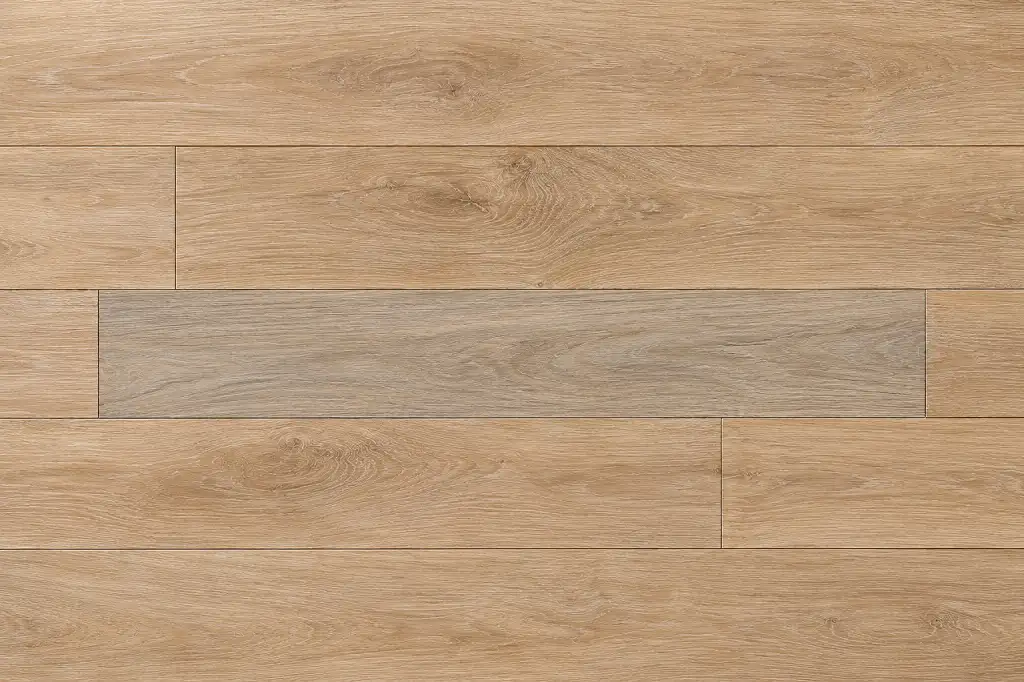
Matching matters more in a let than in a home for a reason that has nothing to do with taste. A home is seen by people who live in it and stop noticing. A let is seen by a stream of people who have just looked at photographs of it, and anything that reads as a patch reads as a property that is not maintained. A mismatch in a bedroom is a review.
Batch is the first problem and spares solve it. Two orders of the same product placed years apart come from different production runs, and a different run of a wood-look plank is a shade off even where the product code is identical. A spare from the original order matches because it is the original order. That is the whole argument for section 4.
Discontinuation is the second problem and spares are the only answer. A product withdrawn from a line cannot be matched at any price, and a floor fitted today will outlive the product it is made of. If the spares are gone and the product is gone, the realistic options are a close substitute that shows at the joint, a full room relaid, or moving an original plank out from under a wardrobe or a bed into the visible area and putting the substitute where nobody looks. That last one is a real technique and it buys a season.
Bathrooms are the sensible exception to matching. Tile in a wet room is expected to be different from the floor outside it, so a tiled bathroom does not break the look of the unit. Which tile suits a bathroom is covered on our bathroom flooring page.
What to Put Where in a Let
Put a hard modular floor in the living areas and the hallway, tile in the bathrooms, and either a hard floor or carpet in the bedrooms. Carpet in a living area is the wrong choice in a short let. In a bedroom it is reasonable, and a cheap one in a busy unit will still be replaced early.
Living areas and the hallway
These take the luggage route, the dragged furniture and most of the photographs, so they take the hardest-wearing modular floor in the specification. A click LVT or SPC in a mid-tone matt finish answers every requirement on this page at once: repairable in place, quick to clean and dry, and forgiving in a photograph. This is the one part of a let where spending slightly more is defensible, because it is the part that is damaged most.
Bedrooms, and whether carpet belongs in a let at all
Carpet belongs in a bedroom and nowhere else in a short let, and even there it comes with a condition. A bedroom sees no wheeled luggage, no dragged dining chairs and far less traffic, so carpet survives there and guests like it. But a cheap carpet in a high-turnover unit will be replaced inside a couple of years whatever you do, because turnover does to carpet what time does, only faster. Two honest options follow: specify a carpet good enough to last and accept the cost, or specify carpet tiles so a ruined square is a square. What we would not tell you is that a budget broadloom carpet in a short let is a saving. It is a deferred replacement. Carpet prices by type and grade are in our carpet cost guide.
Bathrooms and kitchens
Tile in both, and accept that tile is the one floor in the unit you cannot fix quickly. Water decides the material in a wet room and the repair profile comes second, which is the opposite of the rule everywhere else in this post. The compensation is that these are the rooms where guests do the least damage, so the slow repair is rarely needed.
What to Hand the Cleaning Company
Hand the cleaning company a written floor instruction and keep a copy in the unit. It should name the floor, say what to clean it with, say what not to use on it, and say who to tell when something is damaged. Then add the floor to the changeover check so damage is found between guests.
The instruction exists because cleaning companies change staff and the person in your property today may never have been in it before. Four lines on a laminated card in the utility cupboard outlast any briefing. Name the floor and where the spares are, say what it is cleaned with, say what must not be used on it, and give one contact for damage.
The changeover check is the part that saves nights. Add three floor items to whatever check already happens between guests: look along the floor towards the light in each room rather than down at it, check the threshold bars on the route from the front door, and check the felt pads under the furniture that moves. Damage found at a changeover is fixed in the gap that already exists. Damage found when the next guest reports it is fixed in a gap you have to create.
Ask for a photograph of anything found, not a description. A photograph tells you whether it is a plank to swap or nothing at all, which decides whether you need to do anything before the next arrival.
What a floor costs across a whole unit, and how a mix of materials is priced, is set out in our villa and apartment flooring cost guide.
Holiday Home Flooring FAQs
What is the best flooring for a holiday home in Dubai?
LVT or SPC in the living areas and hallway, tile in the bathrooms, and carpet tiles where you want something softer. Each of those is modular, so a damaged piece is replaced on its own. Choose a mid-tone matt finish, and order spare material with the floor rather than later.
Can a single damaged plank be replaced without redoing the floor?
Yes, on a click or loose-laid floor. The planks around it are unclipped back to the damaged one, the piece comes out and a spare goes in, and the floor is walkable the same day. On a glued or sheet floor the answer is no, because the repair means cutting into the surface.
How much spare flooring should I keep for a let?
Keep a full unopened box of each floor type in the unit, plus the usable offcuts from the fit-out. A box covers the repairs a unit is likely to need, and keeping it on site means a cleaner or a handyman can fix a plank without waiting for a delivery. Store it flat and dry.
Does carpet work in a short-let apartment?
In bedrooms, yes. In living areas and hallways, no. A short let sees heavy wheeled traffic and fast changeovers, and carpet in those areas cannot be cleaned and dried inside a changeover window. A cheap carpet in a busy unit will be replaced early, so carpet tiles are the better call where you want it.
Which flooring is fastest to clean between guests?
Vinyl, LVT, SPC and tile. All four take a damp mop, dry in minutes and are walkable straight after, which is what a same-day changeover needs. Carpet tiles are next, because a stained square is swapped rather than cleaned. Broadloom carpet is the slowest and the one that holds a changeover up.
Should a holiday home have the same floor throughout?
Yes, apart from the bathrooms. One floor across the living areas, hallway and bedrooms photographs better room by room, and it means one spare stock covers the whole unit. Bathrooms take tile, which nobody expects to match. A unit with four different floors needs four sets of spares and four matching problems.
What if my flooring has been discontinued?
Then the spares you kept are the only exact match left. Without them, the options are a close substitute that will show at the joint, a whole-room replacement, or moving a plank from a wardrobe or under a bed into the visible area and putting the substitute where nobody looks. The last one buys time.
Is a dark or light floor better for a rental listing?
Mid-tone, and matt rather than gloss. A very dark floor shows dust and every footprint in a photograph taken after cleaning. A very light floor shows hair and scuff marks. A mid-tone matt floor hides both, photographs evenly under a flash, and does not need a re-clean before a photo shoot.
Tell Us About the Unit
Send us the unit type, the rooms and how fast it turns over, and we will specify a floor you can repair between bookings, with the spare material quoted alongside it rather than forgotten. Message us on WhatsApp, or book a free site visit and we will measure and advise on what can be fixed in an hour.
Book a Free Site Visit · Ask About Your Unit on WhatsApp · Call us on +971 56 689 9831

Junaid Rana is a content strategist with over 10 years of experience in the interior and fit-out industry, writing on flooring, finishes and fit-out across UAE homes and commercial spaces. His guides are reviewed for accuracy by Urban Flooring’s in-house experts.