
Reviewed for accuracy by Muhammad Gulbadin, founder and operations manager at Urban Flooring, 15+ years in UAE flooring.
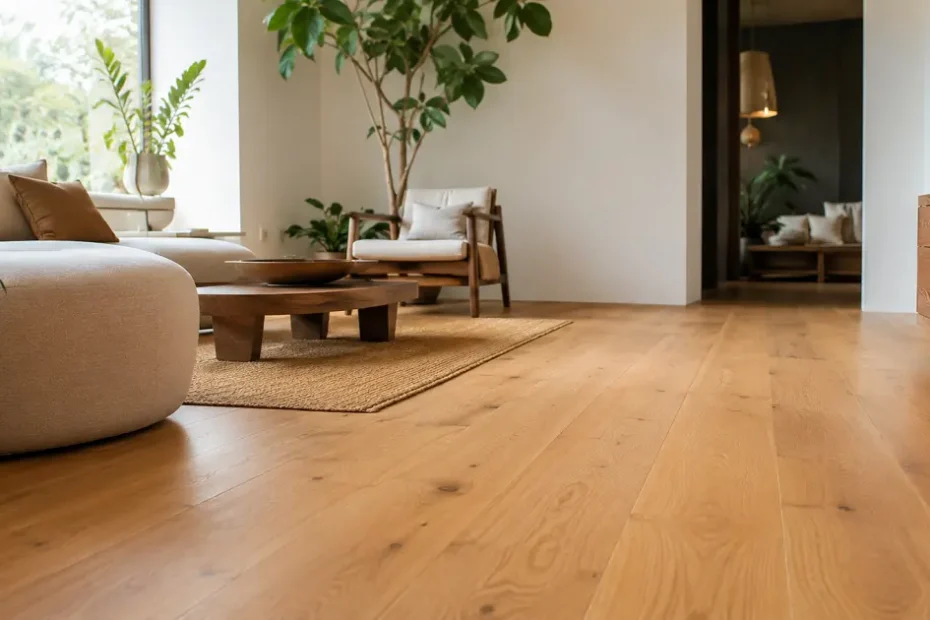
The most eco-friendly floors are cork, linoleum, bamboo and responsibly sourced (FSC) wood, natural, renewable materials with low emissions. But “natural” alone does not make a floor green: durability, low-VOC adhesives and sourcing matter as much as the material. A long-lasting, low-emission floor you keep for decades is often the greenest real choice. Match the eco option to your room.
What actually makes a floor eco-friendly?
Before naming any “green” floor, it helps to know what actually counts, because a real eco floor is judged on five things, not just whether the material sounds natural. The material is only the first of them, and the one that gets the most marketing. Here is what to weigh, in order:
- Renewable raw material: does it grow back quickly, like cork, bamboo or linoleum’s linseed base, or contain genuine recycled content, rather than being drawn from finite petroleum?
- Low VOC emissions: do the material, its adhesives and its finishes off-gas volatile organic compounds into your indoor air? This is the biggest health pitfall and the easiest to overlook.
- Durability and longevity: how long will it last before it needs replacing? A floor you keep for 25 years spares everything a replacement would cost the planet.
- Recyclability or biodegradability: at the end of its life, does it break down or get recycled, or sit in landfill for centuries?
- Sourcing and transport footprint: how far did it travel? In the UAE, where almost all flooring is imported, this applies to everything.
Certifications exist to verify these claims rather than take them on trust: FSC for responsible sourcing, FloorScore, GREENGUARD Gold and CARB Phase 2 for low emissions, Cradle to Cradle for whole-life design, and CRI Green Label Plus for carpet. Judge a floor against these five pillars, not the word “eco” on the box.
Why “natural” does not always mean green: the greenwashing trap
Eco flooring is the category most polluted by greenwashing, so this is the point worth internalising before you buy: natural does not automatically mean green. A bamboo floor flown halfway around the world and bonded with formaldehyde glue is not a clean floor, whatever the label says.
Vinyl marketed as “green” for its energy-efficient production is still plastic. A small percentage of recycled content does not redeem a floor that is otherwise petroleum-based. The single biggest real-world lever is usually the one the marketing ignores: longevity.
The greenest floor is often the one you never have to replace, because a durable, low-emission floor that lasts decades spares all the manufacturing, shipping and landfill of the replacements a cheap floor would need. So when you weigh options, read past the material name to the whole picture, how it is made, what it off-gasses, how long it lasts and how far it travelled. That is the honest test, and it is the one most eco guides skip.
The most eco-friendly flooring options, ranked and compared
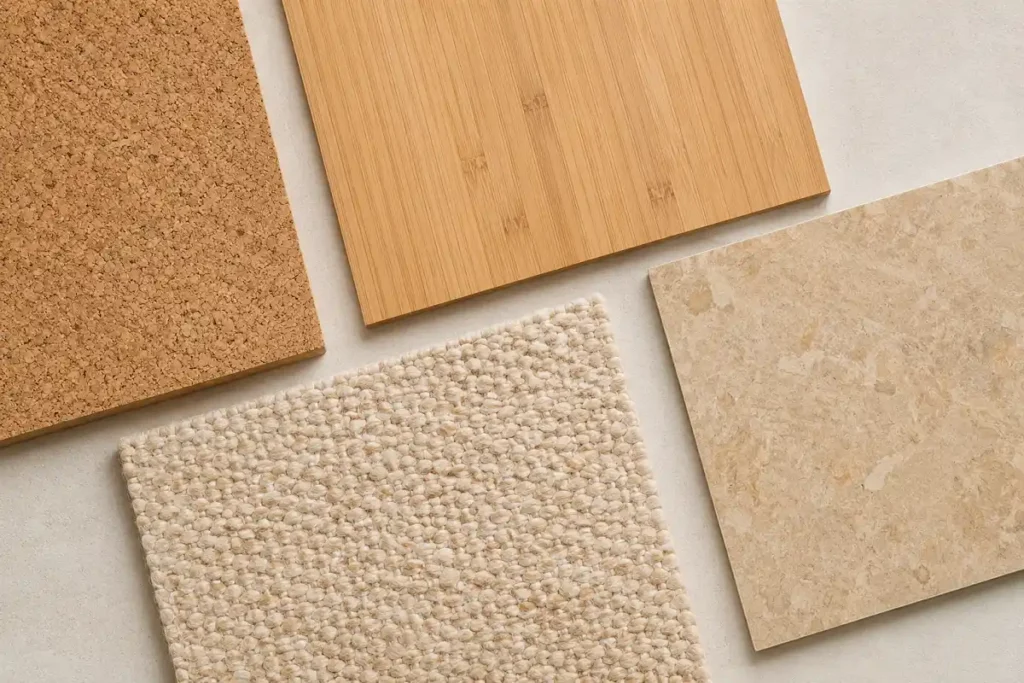
The table ranks the genuinely sustainable options against what makes each one green and its honest limit. Vinyl and laminate are included only to place them honestly, they are not eco picks. Read the caveat column before the green column, because that is where most eco choices are actually decided.
| Eco floor | What makes it green | Honest caveat | Best for |
|---|---|---|---|
| Cork | Bark regrows, tree survives; low-VOC; biodegradable | Soft, dents; not waterproof | Bedrooms, studies, comfort spaces |
| Linoleum | Natural (linseed, cork, jute); biodegradable; NOT vinyl | Often confused with vinyl; not waterproof | Kitchens, busy dry areas |
| Bamboo | Rapidly renewable grass (5-7 yrs) | Check for low-VOC glue; import footprint | Busy living areas, hallways |
| FSC wood (engineered / solid) | Responsibly sourced; refinishable; long life | Sourcing must be certified; not for wet rooms | Living areas, long-term floors |
| Wool / natural-fibre carpet | Natural, renewable, biodegradable | Maintenance; not for wet areas | Bedrooms, lounges |
| Vinyl / laminate | Not eco (petroleum-based) | Low-VOC options exist; longevity argument only | Practical / wet areas, not an eco pick |
Cork: renewable bark that leaves the tree standing
Cork flooring is one of the genuinely green choices, and its eco story is unusually clean. Cork is the bark of the cork oak, harvested by hand roughly every 9 years without felling the tree, which lives on, regrows its bark and keeps absorbing CO2.
It is naturally resistant to mould, pests and fire, warm and cushioned underfoot, and finished with a water-based low-VOC sealer it is a low-emission floor that biodegrades at end of life. The honest limit: it is soft, so it dents under heavy furniture, and it is not waterproof, so it stays out of wet rooms. For a dry bedroom, study or comfort space, cork is among the greenest floors you can lay.
Linoleum: the natural floor that is not vinyl
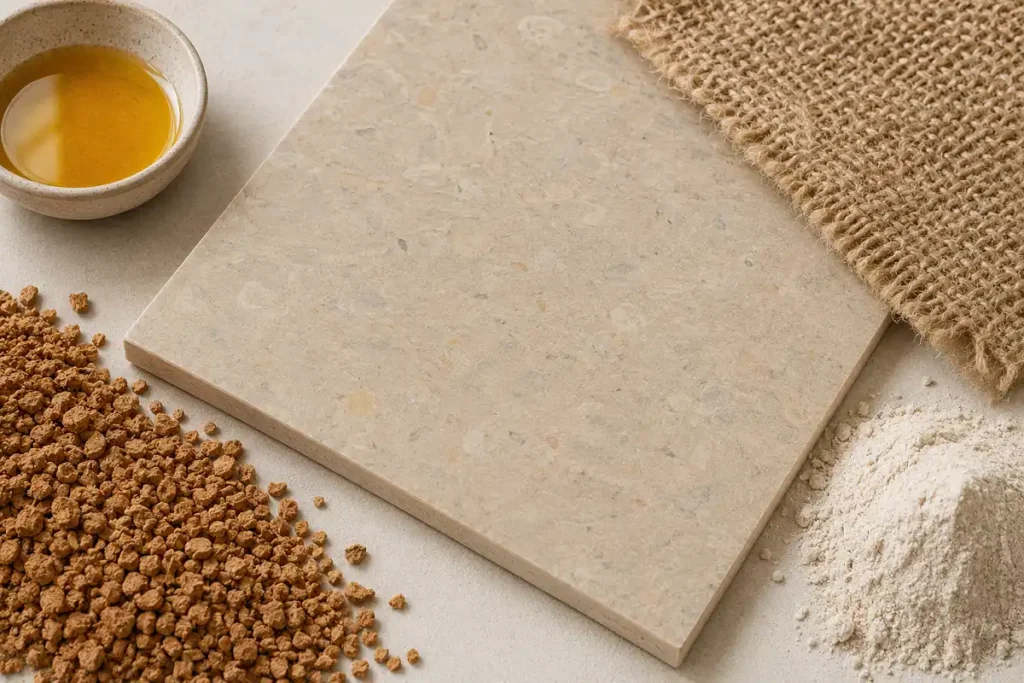
This is the correction that trips up almost every eco-flooring conversation, so it is worth stating flatly: genuine linoleum is a natural material, and it is not vinyl. Linoleum flooring, often sold under the Marmoleum name, is made from linseed oil, pine resin, wood flour, cork dust and ground limestone on a jute backing, around 97 to 98% natural and bio-based, biodegradable, and lasting 20 to 40 years.
Vinyl, by contrast, is petroleum-based PVC plastic. The two can look similar, and vinyl is loosely and wrongly called “lino” all the time, but they are completely different materials with opposite eco profiles. If sustainability is your goal, that distinction is the whole point.
Linoleum’s honest limit: it can trap moisture over concrete or in very humid rooms without a proper moisture barrier, it wants an occasional polish, and like the other organic floors it is not for wet rooms. For a kitchen or a busy dry area, it is a genuinely natural, hard-wearing choice.
Bamboo: rapidly renewable, with one honest caveat
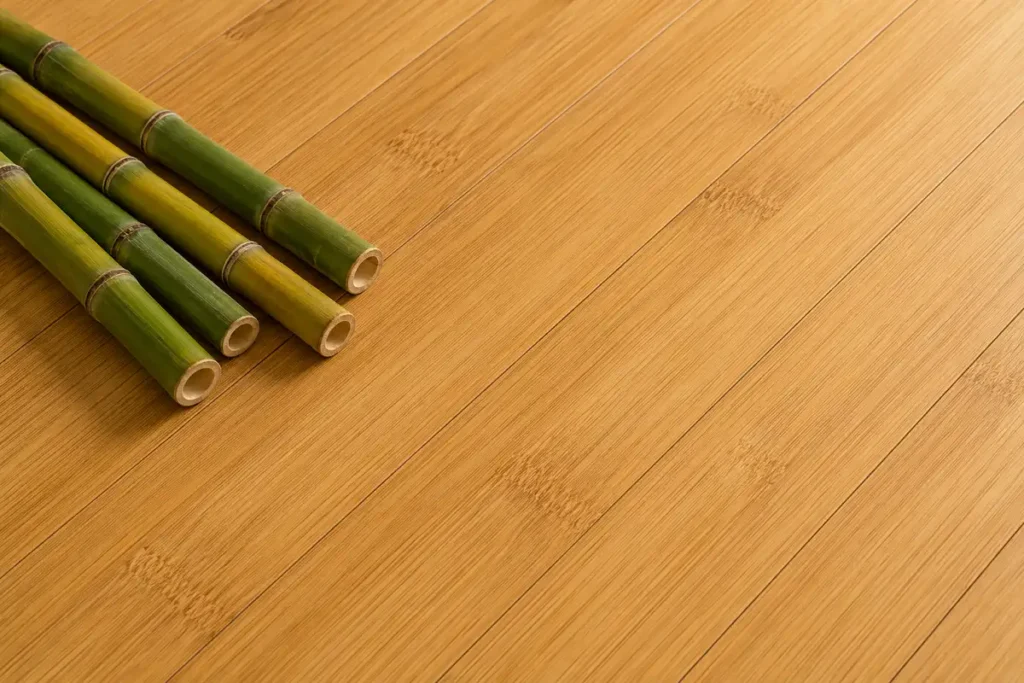
Bamboo flooring earns its eco place on renewal speed: bamboo is a grass, not a wood, and it matures in about 5 to 7 years against the decades a hardwood tree needs, regrowing from the same root system without replanting. That makes the raw material genuinely sustainable.
The one honest caveat is the adhesive: some bamboo is bonded with formaldehyde-based glues, so look for CARB-compliant, formaldehyde-free, FloorScore or GREENGUARD Gold certified boards, which are available in the UAE. Remember too that it is imported, so it carries a transport footprint like most floors here. It is also hard and durable, which suits busy living areas and hallways. For how bamboo compares head-to-head with cork specifically, see our bamboo vs cork flooring guide.
Responsibly sourced wood: why FSC-certified timber counts
Real wood can be a sustainable floor, but only if it is sourced responsibly, and that is exactly what FSC certification verifies. The Forest Stewardship Council certifies timber from responsibly managed forests rather than clear-cut rainforest or illegal logging, so an FSC label is your assurance the wood was grown and harvested sustainably.
Beyond sourcing, wood earns its eco case on longevity: a solid or engineered wood flooring floor can be refinished and kept for decades, which delays replacement and keeps it out of landfill, and timber is ultimately biodegradable. Choose formaldehyde-free or low-formaldehyde binders and a water-based low-VOC finish, and look for FloorScore or GREENGUARD Gold alongside the FSC mark. The wider wood flooring range covers the options, and engineered construction also suits the UAE’s concrete subfloors and humidity better than solid.
Wool and natural-fibre carpet as an eco option
Not every eco floor is hard flooring. Natural-fibre carpets made from wool, sisal or jute are renewable, biodegradable and far less chemically treated than synthetics, with low or no VOCs. Wool in particular is naturally flame-resistant and hypoallergenic, and quality natural carpet carries the CRI Green Label Plus low-emission certification.
The honest limits are maintenance and placement: natural fibres need regular care and are not for wet areas. It is worth being clear about the contrast, too, synthetic nylon and polyester carpets are the opposite of eco, being fossil-fuel-derived and prone to off-gassing, so the eco choice here is specifically the natural-fibre kind. For a bedroom or lounge, a wool carpet is a genuinely sustainable, comfortable option.
Where vinyl and laminate honestly sit on sustainability
It is worth being straight about vinyl and laminate rather than either greenwashing them or demonising them, because buyers deserve the honest picture. Vinyl, SPC and laminate are petroleum-based, so they are not natural or eco materials, full stop. No amount of marketing changes that.
What is fair to say is that low-VOC, FloorScore or GREENGUARD Gold certified versions genuinely improve indoor air quality over cheap uncertified products, and that a quality vinyl floor lasting 15 to 25 years has a real longevity argument in its favour. So they are not the worst environmental choice, and if vinyl is the practical answer for a wet or high-traffic area, a low-VOC certified one is the better version of it.
But they are not a green flooring pick, and if sustainability is your priority, the natural options above are cleaner. That is the honest boundary, no dressing up, no demonising.
Are eco-friendly floors more expensive in the UAE?
Not necessarily, and this is where the durability argument pays off twice. Supplied and fitted, the indicative bands run: linoleum about AED 45 to 220/sqm (about AED 4.2 to 20.4/sqft), cork about AED 90 to 250/sqm (about AED 8.4 to 23.2/sqft).
Bamboo runs about AED 110 to 300/sqm (about AED 10.2 to 27.9/sqft), engineered wood about AED 100 to 300+/sqm (about AED 9.3 to 27.9+/sqft), solid wood or parquet about AED 80 to 400/sqm (about AED 7.4 to 37.2/sqft), and wool broadloom within the carpet range about AED 30 to 450/sqm (about AED 2.8 to 41.8/sqft). So eco spans budget, linoleum and entry cork, to premium, bamboo and FSC wood, which means sustainable does not automatically mean expensive. And because durability is itself an eco lever, spending once on a long-lasting floor can be both greener and cheaper over its life than replacing a cheap one twice. All figures exclude 5% VAT and depend on grade and site. For the full breakdown across every floor type, see our flooring cost guide.
Which eco floor suits your UAE home?
The honest resolution is to match the eco option to the room and to the durable-low-VOC-keep-it-long rule. None of the natural floors is waterproof, so the wet rooms come out of the eco conversation and get decided on function instead. Match the option to the room:
- Dry living areas, bedrooms and comfort spaces: cork or linoleum, for natural, low-emission warmth and comfort.
- Busy, hard-wearing areas: bamboo or FSC-certified engineered wood, for durability that lasts and refinishes.
- Bedrooms and lounges wanting softness: natural-fibre wool carpet.
- Wet areas (kitchens, bathrooms): none of the organic floors, since none is waterproof, so a low-VOC certified waterproof floor is the practical answer there, chosen for function, not as an eco pick.
Eco-friendly flooring: frequently asked questions
What is the most eco-friendly flooring?
Cork, linoleum, bamboo and FSC-certified wood lead, all natural, renewable materials with low emissions. Cork and linoleum are especially clean and biodegradable. But the greenest real choice also depends on durability and low-VOC adhesives, not just the material: a long-lasting, low-emission floor you keep for decades often beats a “natural” one you replace quickly.
What makes a floor sustainable?
Five things: a renewable raw material, low-VOC emissions and adhesives for healthy indoor air, durability and longevity, recyclability or biodegradability at end of life, and a low sourcing and transport footprint. Longevity is often the biggest lever, since a floor kept for decades beats a “green” one replaced fast. Certifications like FSC and FloorScore verify the claims.
Is linoleum the same as vinyl?
No, and this is the key confusion. Genuine linoleum is a natural material made from linseed oil, pine resin, wood flour, cork dust and limestone on a jute backing, and it is biodegradable. Vinyl is petroleum-based PVC plastic. They can look similar and vinyl is sometimes loosely called “lino”, but they are completely different materials with opposite eco profiles.
Is vinyl or laminate eco-friendly?
Not really. Both are petroleum-based, not natural materials, so neither is genuinely “green” flooring. Low-VOC or FloorScore-certified versions improve indoor air quality, and a long-lasting floor has a real longevity argument, so they are not the worst choice. But if sustainability is your priority, natural options like cork, linoleum, bamboo and FSC wood are cleaner.
Is bamboo flooring really eco-friendly?
Yes, with a caveat. Bamboo is a rapidly renewable grass that matures in about 5 to 7 years, far faster than hardwood, so the raw material is genuinely sustainable. The catch is the adhesive: some bamboo uses formaldehyde-based glues, so look for CARB-compliant, formaldehyde-free, FloorScore-certified products. Remember too that it is imported to the UAE, which adds transport footprint.
Are eco-friendly floors more expensive?
Not necessarily. Linoleum and entry-level cork are mid-range, while bamboo and FSC wood sit higher, so sustainable does not automatically mean costly. And because durability is itself an eco factor, a long-lasting floor can work out cheaper and greener over its life than repeatedly replacing a cheap one. Judge on lifetime value, not just the upfront price.
What is low-VOC flooring?
Low-VOC flooring emits few or no volatile organic compounds, the gases released by adhesives, finishes and some materials that harm indoor air quality and cause that “new floor” smell. Look for FloorScore, GREENGUARD Gold or CARB Phase 2 certification. Low-VOC matters as much as the raw material for a healthy, genuinely eco floor, and it applies to adhesives and finishes too.
Which eco floor is best for a UAE home?
For dry living areas and bedrooms, cork or linoleum give natural, low-emission comfort. For hard-wearing areas, bamboo or FSC-certified wood are tougher. Keep all these organic floors out of wet rooms, since none is waterproof, and prioritise durable, low-VOC options you will keep long-term, which is the greenest real-world choice in the UAE.
The bottom line: the greenest floor for a UAE home
The genuinely eco floors for a UAE home are cork, linoleum, bamboo and FSC-certified wood, natural, renewable materials with low emissions, with wool carpet a sound soft-flooring option. But the real lesson of an honest eco guide is that the material label is only part of the story.
What actually makes a floor green is the whole picture: a renewable material, low-VOC adhesives and finishes for clean indoor air, responsible sourcing, and above all durability, because the greenest floor is usually the one you keep for decades rather than replace.
Genuine linoleum is natural and not vinyl, whatever the shop calls it; vinyl and laminate are practical but not eco. Keep the organic floors out of wet rooms, buy durable and low-VOC, and keep it long. Match the option to your room, and a free site visit will help you choose a floor that is genuinely sustainable and right for the space.
Get a genuinely sustainable floor with a free site visit
Looking for a genuinely eco-friendly floor for a home in Dubai or across the UAE? Message us on WhatsApp and a flooring specialist will talk you through the natural options, cork, linoleum, bamboo and responsibly sourced wood, with honest advice on low-VOC certification, durability and which suits each room, no greenwashing.
- WhatsApp us: +971 56 689 9831
- Call: +971 56 689 9831
- Request a free site visit and quote across Dubai and Abu Dhabi.
We have supplied and fitted natural and sustainable floors across the UAE since 2013, with more than 10,000 projects completed by our in-house team.

Junaid Rana is a content strategist with over 10 years of experience in the interior and fit-out industry, writing on flooring, finishes and fit-out across UAE homes and commercial spaces. His guides are reviewed for accuracy by Urban Flooring’s in-house experts.