
Reviewed for accuracy by Muhammad Gulbadin, founder and operations manager at Urban Flooring, 15+ years in UAE flooring.
Book a Free Site Visit · Ask About Your Rental on WhatsApp · Call us on +971 56 689 9831
What Flooring You Can Put in a Rented Apartment
Any floor that goes down without adhesive, nails or drilling, and lifts again leaving the original surface as it was. That means loose-lay vinyl, interlocking or loose-lay carpet tiles, a click floor accepted as one-use, and large rugs. Get the landlord’s written agreement before you buy any of it.
The test is reversibility, and it is a physical test rather than a legal one. A floor that rests on the one underneath can be taken away and leave nothing to argue about. A floor that is stuck, nailed or fitted behind the skirting has changed the property, and changing it back costs money at the point you are trying to leave.
That single test sorts every product on the market into two groups. Weight, friction and interlocking edges hold a floor in place in the first group. Adhesive, tape, nails and trim hold it in place in the second. Everything in this post is in the first group, and section 8 lists what is in the second and why each one is a problem.
Indoors is the whole scope here. Living rooms, bedrooms, hallways and kitchens all take a reversible floor. The balcony is the one room this post does not cover, because an outdoor surface has drainage and heat to deal with, and the renter answer for it is set out in our guide to balcony and terrace flooring.
Why the Landlord Comes First, Whatever the Floor
Ask the landlord in writing before you buy anything, whatever floor you have chosen. A message or an email you can keep is enough, and it should name the floor, the rooms and what happens to it at the end of the tenancy. Every tenancy agreement is different, so the only safe answer is a written yes.
The reason to put it in writing is not suspicion. It is that the person who agreed it may not be the person inspecting the property when you leave, and a conversation nobody wrote down is worth nothing two years later. A short message naming the floor and the rooms, with a reply you have kept, settles the question before it becomes one.
Ask early as well as in writing. A tenant who asks before ordering can still choose a different floor if the answer is no. A tenant who asks after delivery has a floor in the hallway and a decision already made.
Building management is a separate question from the landlord, and in an apartment it is worth asking about both. Many buildings have their own rules on working hours, lift use and moving materials in, none of which the landlord controls. Ask the landlord about the floor and the building about the delivery.
Whether a landlord will contribute to a floor is a conversation worth having, and it goes better with a specification and a quote in hand than with a request in the abstract. What a whole-property floor costs, and where a landlord’s priorities differ from an owner-occupier’s, is set out in our villa and apartment flooring cost guide.
What to Ask and Photograph Before You Start
Photograph the existing floor before anything goes down, in every room, including the damage already there. Then ask the landlord four things: whether the floor can be covered, whether it must come up at the end, who pays for that, and whether building management needs telling. Keep the answers in writing.
Photograph first, because the photographs are the part you cannot go back and take. Shoot each room wide enough to show the whole floor, then close enough to show the condition of the surface. Shoot the thresholds, the skirting line and anywhere the existing floor is already chipped, stained or lifting. Date-stamped phone photographs are enough and they cost nothing.
The four questions, in the order they matter. Can the existing floor be covered with something that is not fixed down. Does it have to come up at the end of the tenancy. If it does, who pays to lift it and make good. And does building management need to be told before anything is delivered. A yes to the first and a clear answer to the second is the whole permission you need.
Then record what you fitted. Photograph the new floor once it is down, keep the delivery note and the product name, and keep the offcuts if there is somewhere to store them. A floor you can identify two years later is a floor you can match, repair or replace a plank of.
If the existing floor is already damaged, that changes nothing about the sequence and makes the photographs more important rather than less. Send them to the landlord at the time rather than keeping them on your phone. Damage recorded before you covered the floor is existing damage. Damage found after you lift it is a dispute.
Loose-Lay Vinyl: the Default Answer for a Rental
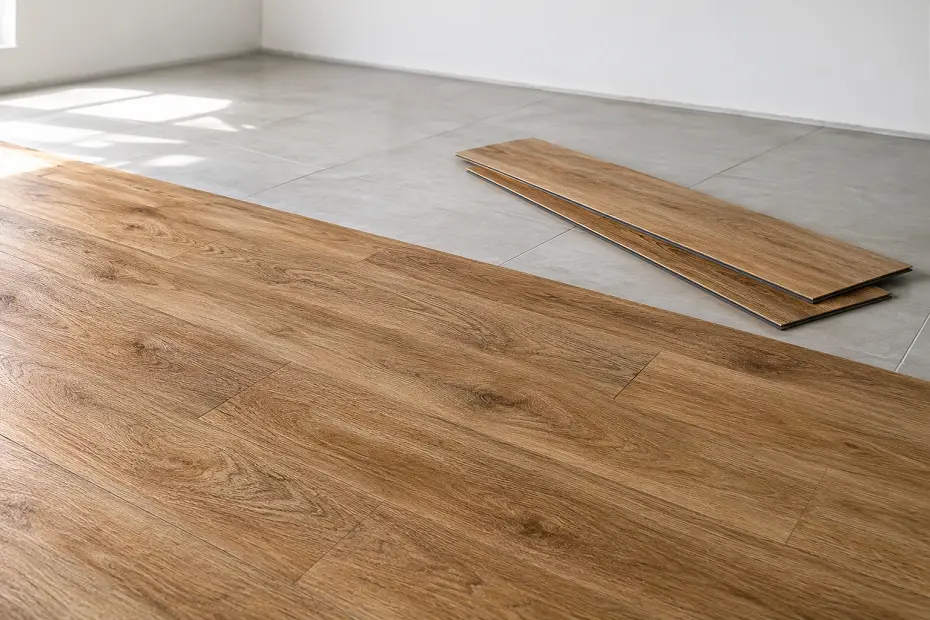
Loose-lay vinyl is the default answer for a rented apartment. The planks or sheet are heavy and flexible enough to hold position by weight and friction, so they need no adhesive under them. They sit straight on top of a sound existing floor, and they lift off it without leaving anything behind.

Loose-lay is a different product from the thin self-adhesive plank sold in the same aisle, and the difference is the point. A loose-lay plank is thick, dense and slightly flexible, with a grippy backing that holds against a smooth floor. It stays put because of what it weighs rather than what it is stuck to. Our vinyl flooring and LVT ranges both include loose-lay formats.
Where it works is any room with a sound, flat, dry floor underneath, which in a Dubai apartment is most of them. Where it struggles is a floor that is already uneven, because a loose floor follows what is beneath it, and a floor in direct sun through glass for hours a day, where any vinyl expands.
Over existing tiles, and over existing carpet
Over tiles, a loose-lay floor works well and the grout lines are the only thing to watch, because a wide shallow grout line can telegraph through a thin plank over time. Over carpet it does not work at all. A loose floor needs a firm base and carpet gives it none, so the planks move, the joints open and the surface flexes underfoot. Lift the carpet or choose a rug instead. What makes a tiled floor suitable to cover is set out in our guide to flooring over tiles.
Protecting the floor underneath
A loose floor protects the surface below it, which is an argument worth making when you ask for agreement. The original floor stops taking wear, stops taking furniture marks and stops being cleaned with anything. Where the floor underneath is delicate, a thin breathable layer between the two adds protection without adding a fixing, and our underlay page covers which products suit a floating floor and which do not.
Which rooms are worth doing
Do the rooms you look at and live in, which means the living room, the bedrooms and the hallway. Kitchens and bathrooms in a rented apartment are tiled, sound and the hardest rooms to reverse, so leaving them alone is the better call on a tenancy. A floor in three rooms that lifts cleanly is worth more than a floor everywhere that does not.
Carpet Tiles, and When They Suit a Rental
Carpet tiles suit a rental when they are the interlocking or loose-lay kind rather than the self-adhesive kind. They go down dry, they lift again, and a single damaged tile is replaced without touching the rest. The self-adhesive version bonds to the floor underneath and is the wrong choice in a property you do not own.

Which backing suits which room, and how the self-adhesive and interlocking formats compare on finish as well as on reversibility, is set out on our carpet tiles page. What carpet costs by type and grade is in the carpet cost guide.
One tile at a time
The replaceable-tile point is the one that matters most to a tenant. A stain or a burn in a broadloom carpet is a repair to the whole room. In a tiled floor it is one square, lifted out and swapped for a spare from the same box, which is why keeping spares from the original order is worth the storage space. It also means a worn doorway or a sun-faded strip by a window is fixed for the cost of a few tiles rather than a room.
Where carpet tiles fall short in a rental
They show their joints on a floor that is not flat, and a rented apartment is where you are least able to do anything about that. A loose-laid tile sits on what is under it, so a dip in the screed becomes a visible line between two squares. They also need a hard floor underneath rather than an existing carpet, the same constraint as loose-lay vinyl.
Click Flooring: Liftable in Theory, Harder in Practice
Click flooring can be lifted, and it survives fewer relays than it is sold on. SPC and laminate planks lock along a tongue and groove edge, and that edge takes wear each time a floor is pulled apart. Plan a click floor in a rental as a floor you lift once, not one you carry between apartments.
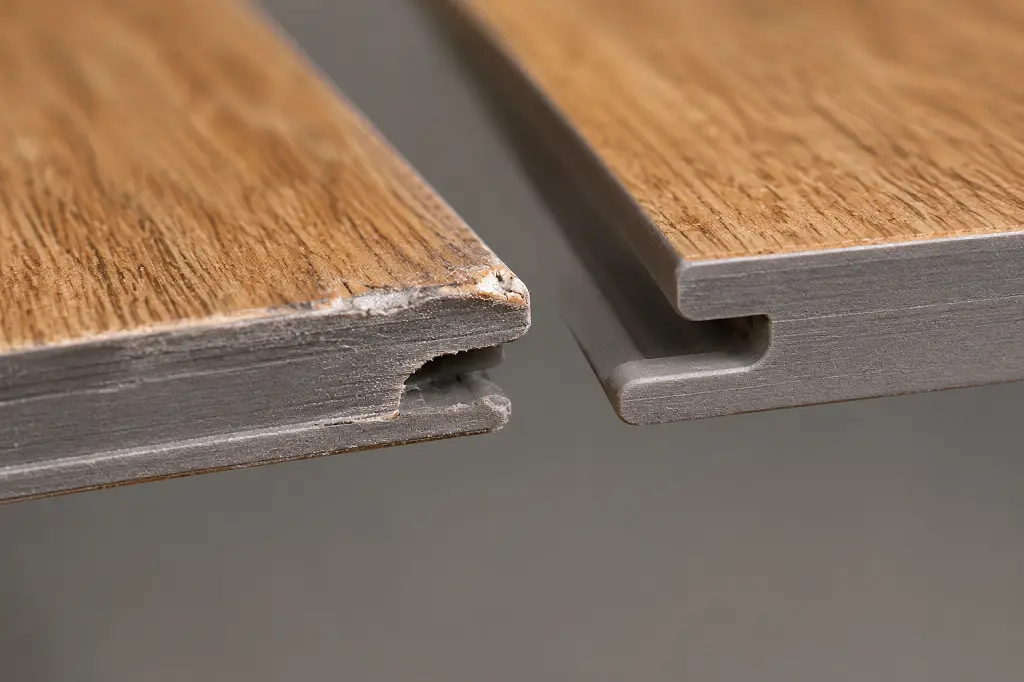
The mechanism explains the limit. A click joint works because a shaped tongue holds inside a shaped groove under slight tension, and that tension is what keeps the surface tight and level. Unclipping a floor loads those edges in the direction they were not designed for. The lip rounds off, a corner chips, and the joint that closed tightly the first time sits a fraction loose the second.
A fraction loose is enough to matter, because a loose joint on a floating floor opens further under use and collects dirt along the line. The floor still works. It stops looking new, and in a rental the point of a liftable floor was that it would be worth taking.
Nobody should read this as a reason to avoid click flooring. SPC and laminate are good floors, and in a long tenancy with written agreement a click floor is a reasonable thing to fit. Read it as a reason not to buy one on the promise of taking it with you. Specify it as a floor for this property, agree what happens to it at the end, and treat a successful lift as a bonus rather than a plan.
Large Rugs: the Option That Needs No Permission at All
Two large rugs beat any floor for a short tenancy in a furnished apartment. They need no permission, no fitting and no reversal at the end, they cover the floor you want hidden, and they move with you unchanged. On a one-year let, this is the right answer and buying a floor is not.
Tenancy length is what decides this, and it is the one variable no product page covers. A floor fitted for one year is paid for in one year. The same money in two large rugs is paid for across every property you live in afterwards, because a rug is not cut to a room and does not care about the next floor plan. The arithmetic only favours a fitted floor once the tenancy is long enough to spread it.
Size is where this goes wrong. A rug that is too small reads as a mat in the middle of a floor you were trying to cover, and the common mistake is buying one a size down on price. Cover the furniture group with room to spare, and in a living room that means the rug running under the front legs of the seating rather than stopping short of it.
Our rugs and area rugs pages cover sizes and constructions. This is the cheapest thing we sell and on a short tenancy it is the right recommendation, so it is the one we make.
What Not to Install in a Rental
Do not install anything that bonds to the floor or needs a fixing. Adhesive-down vinyl, glued engineered wood, peel-and-stick planks, nailed boards and tile laid over tile all leave the original surface changed, and all of them have to be broken up to remove. Each one creates a problem at the end of the tenancy.
| Do not fit | Why it is a problem in a rental | Fit instead |
|---|---|---|
| Adhesive-down vinyl or LVT | Bonded to the floor across its whole area. Removal takes the surface finish with it and leaves adhesive to grind off | Loose-lay vinyl in the same look |
| Peel-and-stick planks or tiles | The backing bonds to the floor and sits in tile grout lines. Lifting leaves residue that has to be cleaned off by hand | Loose-lay vinyl, or interlocking carpet tiles |
| Glued engineered wood | Bonded and rigid. It cannot be lifted in one piece and comes up in broken sections | A click floor, agreed in writing as one-use |
| Nailed or secret-fixed boards | Fixings go into the subfloor. Every fixing is a hole that stays after the floor leaves | A floating floor, which needs no fixings |
| Tile laid over tile | Permanent, heavy, and removal means breaking out two floors instead of one | Loose-lay vinyl over the existing tiles |
| Anything needing the skirting off | Skirting rarely comes off and goes back without damage, and the paint line never matches | A floor finished with a loose beading or a threshold bar |
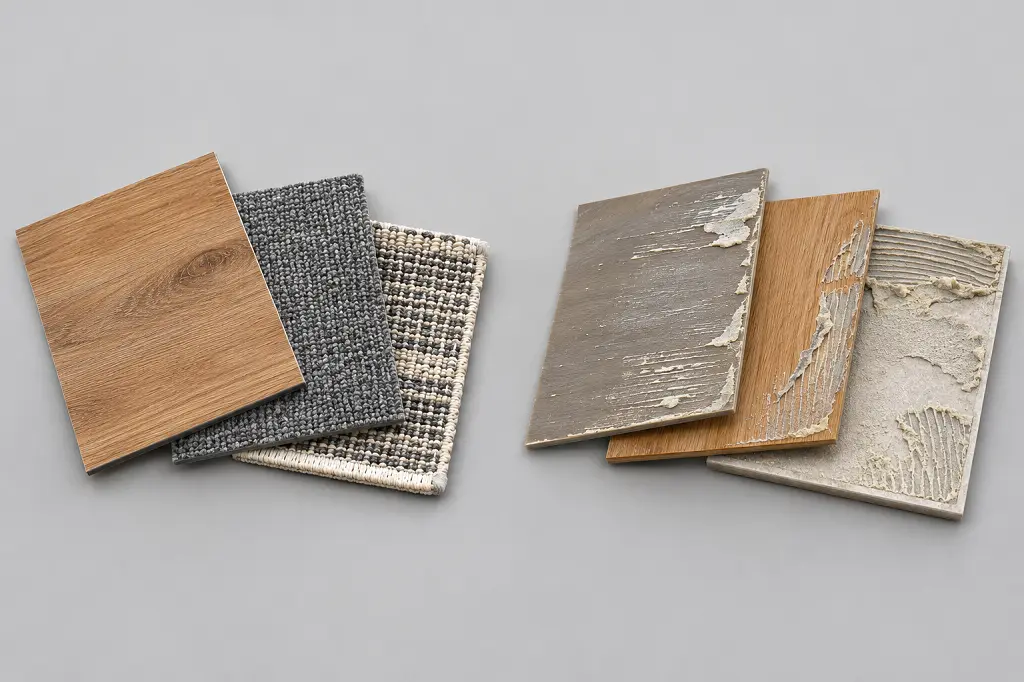
Peel-and-stick vinyl, the one most tenants consider
Peel-and-stick is the product most tenants reach for and the one least suited to a tenancy. It is cheap, it looks like the right answer, and the adhesive backing is doing exactly what a tenant needs to avoid. On a tiled floor it works into the grout lines and comes up in pieces. On a painted or sealed screed it lifts the finish. A loose-lay plank does the same decorative job, costs more, and comes up clean.
Anything that needs the skirting off
A fitted floor finished under the skirting looks better than one finished against it, and in a rental that finish is not worth what it costs. Skirting that has been prised off and refitted shows at the joints, and the paint line behind it never matches the wall it came from. Finish against the skirting with a loose beading or a threshold bar instead, both of which come away with the floor.
Height at the Door, and Why It Matters More in a Rental
A temporary floor raises the level, and in a rental you have to put that back. A loose-lay floor adds the thickness of the plank, a click floor with underlay adds more again, and a door trimmed to clear the new height cannot be untrimmed when the floor comes up. Check the door swing first.
In an owned property, trimming a door is a minor job on the way to a finished floor. In a rented one it is a permanent change to the landlord’s door made to accommodate a floor that is leaving. That reverses the usual order of priorities: the height build-up decides which floor you can fit rather than the other way round.
Check three things before ordering. Whether each internal door clears the new height with the floor under it. Whether the entrance door, which opens inward in most apartments, still clears. And whether any built-in wardrobe or sliding door runs on a bottom track that the floor would now foul.
Where the clearance is tight, the answer is a thinner floor rather than a trimmed door. Loose-lay vinyl is the thinnest reversible option, and skipping the underlay a click floor needs is not an alternative, because a floating floor without its underlay is noisy and wears unevenly. Which underlay a floating floor needs is covered on the underlay page.
At the End of the Tenancy
At the end of the tenancy a loose floor comes up in reverse order, and what it leaves depends on what went down. A loose-lay floor leaves the original surface as it was. Lift from a doorway, keep the planks flat, and photograph the floor underneath the moment it is uncovered.
Lifting a loose floor is the reverse of laying it and takes a fraction of the time. Start at a threshold or a doorway where an edge is accessible, work back across the room, and stack the planks flat rather than on edge, because a vinyl plank stored on its edge takes a curve that does not come out. A click floor comes up a row at a time from the last row laid.
Photograph the uncovered floor immediately, in the same rooms and the same framing as the photographs you took before you started. A before-and-after pair taken from the same spot is the clearest evidence there is that the floor came out as it went in.
Taking it with you. Rugs and interlocking carpet tiles move without difficulty. Loose-lay vinyl moves if it comes up flat and the next rooms are a similar size, because the planks were cut to these rooms and the offcuts are gone. A click floor is the doubtful one, for the joint-wear reason in section 6. Measure the next property before deciding to move a floor rather than after.
What a lifted floor leaves behind. A reversible floor leaves dust, the odd scuff where something was dragged, and a surface that has been protected from two years of wear. That is the whole point of choosing one. Anything bonded leaves adhesive, and adhesive is a making-good cost at the exact moment you want the property signed off.
Rented Apartment Flooring FAQs
Do I need my landlord’s permission to change the flooring?
Ask, and get the answer in writing before you buy anything. Every tenancy agreement is worded differently, so there is no single answer that covers all of them. Put the floor, the rooms and what happens at the end of the tenancy in the message, and keep the reply. A written yes is what protects you.
What is the best temporary flooring for a rented apartment?
Loose-lay vinyl, in a heavy flexible plank or sheet. It needs no adhesive, it holds position by weight and friction, it goes straight over a sound existing floor, and it lifts off leaving that floor as it was. Interlocking carpet tiles are the alternative where you want something softer underfoot.
Can I lay flooring over the existing tiles in a rental?
Yes, if the tiles are sound and the floor you lay is a loose one. A loose-lay or interlocking floor sits on top of tiles without adhesive and lifts off them cleanly. What makes a tiled floor suitable to cover, and when it is not, is set out in our guide to flooring over tiles.
Can click flooring be taken up and used again?
Once, with care. The tongue and groove edge that locks the planks together wears each time it is clicked and unclicked, so joints that closed tightly the first time sit looser the second. Treat a click floor in a rental as a floor you lift once. A floor you plan to move twice should be a rug.
Will a temporary floor damage the floor underneath?
Not if nothing bonds to it. A loose-lay floor rests on the surface and lifts away from it, so the floor underneath comes out as it went in. Adhesive, tape and self-adhesive backing are what cause damage, because removing them takes the finish with them. Photograph the original floor before you cover it.
Can I take the flooring with me when I move?
Rugs and interlocking carpet tiles travel well. Loose-lay vinyl travels if it comes up flat and the next rooms are a similar size, because the planks were cut to these rooms. A click floor is the one to be careful with, since the joints wear on relaying. Measure the next property before you plan a move.
Is peel-and-stick vinyl a good idea in a rental?
No. The adhesive backing bonds to the floor underneath, which is the one thing a tenant wants to avoid. Lifting it pulls at the surface below and leaves residue that has to be cleaned off, and on a tiled floor it sits in the grout lines. A loose-lay plank does the same job and comes up clean.
What should I do if the existing floor is already damaged?
Photograph it before you cover it and send the photographs to the landlord. Existing damage you have recorded is existing damage, and damage discovered after a floor comes up is an argument. A loose floor over the top also protects what is there, which is worth saying when you ask for agreement.
Tell Us the Rooms and the Tenancy
Send us the rooms you want done and how long you have left on the tenancy, and we will tell you which of these is the right answer for you, including when the answer is two rugs. Message us on WhatsApp with the room sizes, or book a free site visit and we will measure and advise on what lifts cleanly.
Book a Free Site Visit · Ask About Your Rental on WhatsApp · Call us on +971 56 689 9831

Junaid Rana is a content strategist with over 10 years of experience in the interior and fit-out industry, writing on flooring, finishes and fit-out across UAE homes and commercial spaces. His guides are reviewed for accuracy by Urban Flooring’s in-house experts.