
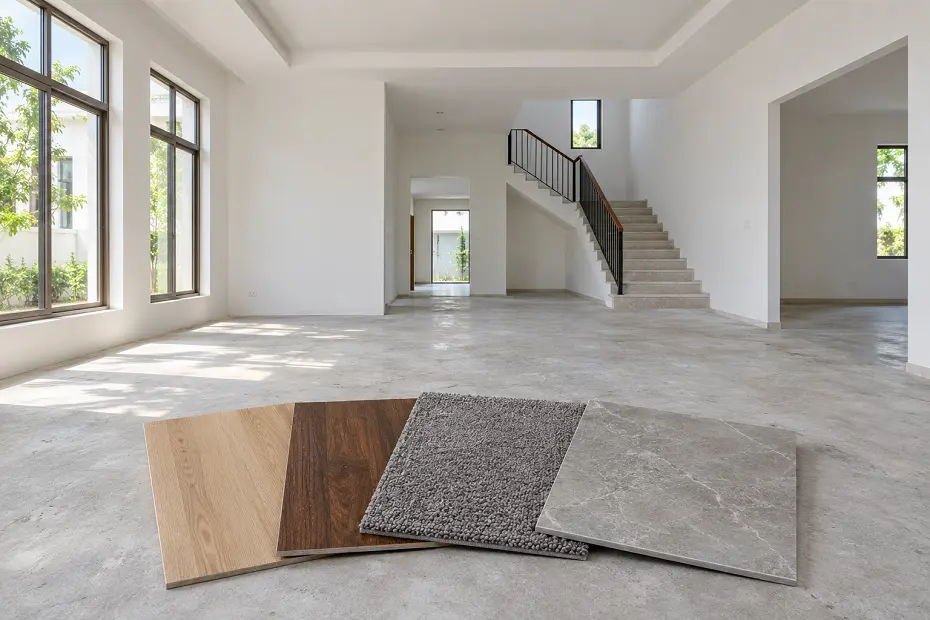
Reviewed for accuracy by Muhammad Gulbadin, founder and operations manager at Urban Flooring, 15+ years in UAE flooring.
Book a Free Site Visit · Ask About Your Property on WhatsApp · Call us on +971 56 689 9831
What It Costs to Floor a Whole Villa or Apartment
Flooring a whole three-bedroom villa of about 200 square metres runs from AED 9,000 to 18,000 in budget vinyl or laminate, AED 20,000 to 40,000 in mid-range SPC or LVT, and AED 40,000 or more in premium wood. A 90 square metre apartment starts near AED 4,000.
| Property | Built-up area used | Budget vinyl or laminate | Mid-range SPC or LVT | Premium wood or terrazzo |
|---|---|---|---|---|
| Apartment | 90 sqm (970 sqft) | AED 4,000 to 8,000 | AED 9,000 to 18,000 | AED 18,000 or more |
| 3-bedroom villa or townhouse | 200 sqm (2,150 sqft) | AED 9,000 to 18,000 | AED 20,000 to 40,000 | AED 40,000 or more |
| 4-bedroom villa | 300 sqm (3,230 sqft) | AED 13,500 to 26,500 | AED 30,000 to 60,000 | AED 60,000 or more |
| 5-bedroom villa | 420 sqm (4,520 sqft) | AED 19,000 to 37,000 | AED 42,000 to 84,000 | AED 84,000 or more |
Figures researched November 2026 and quoted as an indicative supply-and-fit guide. Property areas are typical ranges and a real total comes off a measure.
The apartment row is the figure already published in our flooring cost guide, for a 90 square metre apartment. The villa rows apply the same material rates to a larger area. A one-bedroom apartment sits below the 90 square metre reference and a three-bedroom apartment above it, so scale that row by the area in section 2 rather than by the bedroom count.
Each band is wide because two things vary at once. The property is larger or smaller than the area in the table, and the material runs from the cheapest vinyl to solid wood. Fixing one of them narrows the answer sharply. Fixing both is what a measure and a specification do.
How Much Floor Area You Are Actually Flooring
A typical Dubai apartment measures 65 to 195 square metres and a villa 149 to 557 square metres, both as built-up area. The area you pay to floor is smaller than either figure, because walls, balconies, garages and rooms already tiled come out of it. A measured plan settles it.
| Property | Typical built-up area | In square feet |
|---|---|---|
| 1-bedroom apartment | 65 to 84 sqm | 700 to 900 sqft |
| 2-bedroom apartment | 102 to 130 sqm | 1,100 to 1,400 sqft |
| 3-bedroom apartment | 149 to 195 sqm | 1,600 to 2,100 sqft |
| 3-bedroom villa or townhouse | 149 to 251 sqm | 1,600 to 2,700 sqft |
| 4-bedroom villa | 214 to 418 sqm | 2,300 to 4,500 sqft |
| 5-bedroom villa | 307 to 557 sqm | 3,300 to 6,000 sqft |
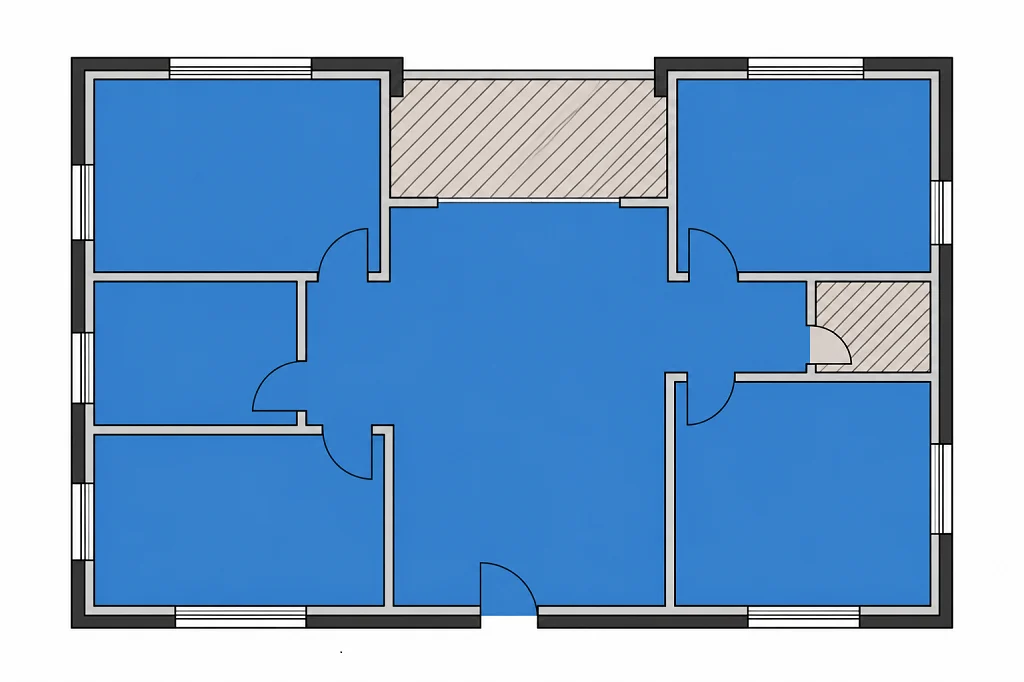
The ranges are wide for villas because a three-bedroom townhouse in a dense community and a three-bedroom standalone villa carry the same bedroom count and very different floors. Bedroom count is a poor guide to area. The plan is the guide to area.
Built-up area and the area you actually floor
Built-up area is the figure on a listing and it is not the figure a floor is priced on. It counts the thickness of internal walls, and in many developments it counts covered balconies, a garage, a maid’s room and stair landings as well. None of those is floored with the same material as a living room, and some are not floored at all. Expect the floored area to come in below the built-up figure on every property, and expect the gap to differ from one development to the next, because there is no single enforced definition of built-up area applied the same way by every developer in Dubai.
Are balconies and terraces included?
Balconies and terraces are quoted on their own line and not inside the internal floor area. An outdoor surface in this climate takes a different material from an indoor floor, with its own drainage and heat requirements, so it is measured, specified and priced separately. The trap is that a listing’s built-up area may already count the balcony, so a total worked out from that figure prices outdoor space at an indoor rate. Strip the balcony out before you multiply, then add it back as its own item.
Rooms that are already tiled
Most Dubai villas and apartments hand over with tiled kitchens and bathrooms, and those rooms stay as they are on a large share of jobs. Leaving them out takes a real slice off the area you are paying for, and it takes the wet-area specification question off the table at the same time. Measure the rooms you are changing, not the rooms you have.
Turning Area Into a Total
Turning an area into a total takes three steps. Measure the floor area room by room, apply the rate for the grade you have chosen to each room’s area, then add the extras that are priced per metre rather than per square metre. The third step is where most totals go wrong.
Step one, measure by room, not by property. A room-by-room measure is the only input that holds up, because the rate changes by room. A bedroom in carpet and a living room in engineered wood are different lines on the same quote. One property-wide figure multiplied by one rate gives a number that is wrong in both directions at once.
Step two, apply the rate for the grade. Our cost guide gives the rate per square metre for each material and grade. Pick the grade first, then read the rate, then multiply by that room’s area. SPC flooring, laminate flooring and vinyl flooring each carry their own band, and what carpet costs is set out in its own guide because carpet is priced on pile weight as well as area.
Step three, add the per-metre items. Skirting, thresholds and trims are priced by the metre. They do not scale with floor area and they are the step people leave out. Section 6 covers why they matter more on a whole property than on a single room.
The same arithmetic run backwards is the fastest way to test a quote you have been given. Divide the total by the floor area and look at the rate. A whole-property job in Dubai sits between AED 45 and AED 350 per square metre depending on material and grade, so a rate above or below that needs an explanation before you sign. What a written flooring quote should contain is covered separately.
What a Whole-Property Material Mix Looks Like
A whole-property mix is normal rather than a compromise. Most villas take a hard floor through living and dining areas, a waterproof floor in kitchens and bathrooms, and carpet or a warmer floor in bedrooms. The mix follows how each room is used, and it rarely costs more than one floor throughout.
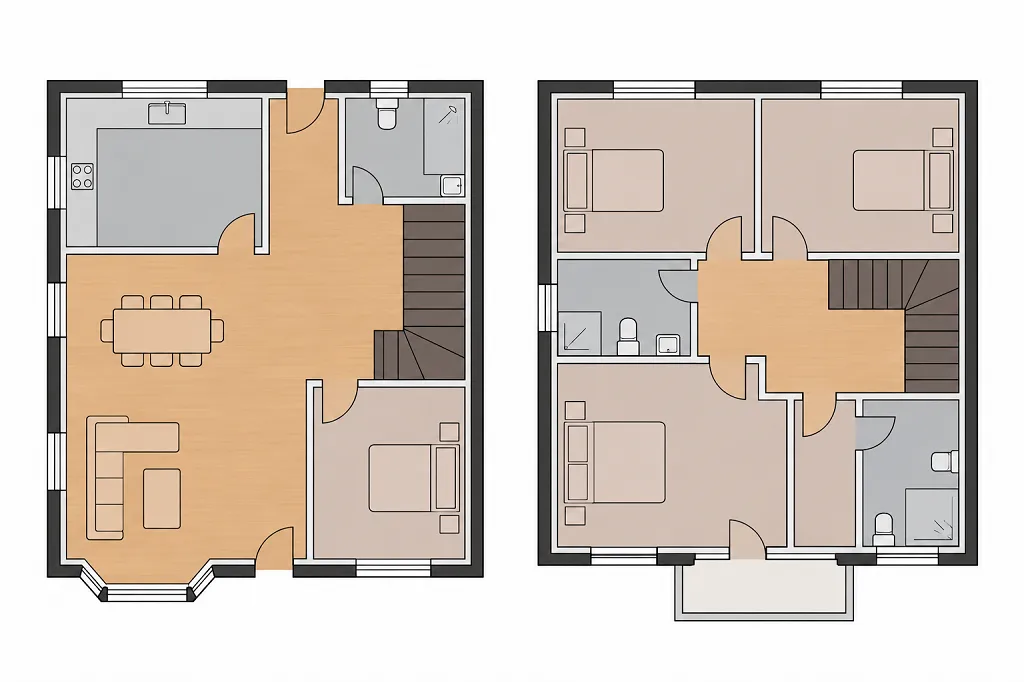
Living and dining areas
Living and dining areas take the hardest-wearing floor in the property, because they carry the most traffic and they set the look a visitor sees first. Engineered wood, LVT and SPC all suit the job, and the choice between them is a question of budget and of how much water the room sees. This is the area where a premium material earns its cost, since it is the floor you look at every day.
Bedrooms
Bedrooms are where a warmer floor pays off, and they are also where a budget can be recovered. Carpet is quieter underfoot, it is cheaper per square metre than most hard floors, and bedrooms are the rooms a guest never sees. Specifying carpet in bedrooms and a hard floor in the living areas is the most common way a whole-property budget is balanced.
Kitchens and bathrooms
Kitchens and bathrooms need a floor rated for standing water, and on most Dubai properties they are tiled at handover and stay tiled. Where they are being changed, a waterproof click floor or sheet material is specified rather than a wood product. Which material suits which wet room is set out in our comparison of vinyl and tiles.
Stairs and landings
Stairs are priced separately from rooms and cost more per square metre than a flat floor. Each tread and riser is a cut piece, the nosing needs its own trim, and the whole run is fitted by hand rather than laid in lengths. A staircase in a villa is a line of its own on a quote and should never be folded into the upstairs floor area.
A landlord’s mix against an owner’s
A landlord specifies for turnover and an owner-occupier specifies for years of use, and the two land in different places. A rental property is better served by one durable mid-range floor throughout, which is quick to replace in sections and cheap to match later. An owner staying put has reason to spend more in the living areas and less in the bedrooms.
An off-plan handover floor
A handover floor is worth replacing when the specification does not match how you will use the property, and worth keeping when it does. Developer floors are chosen to a build budget, so the tiling is sound and the soft flooring is the part worth changing. Lift a corner and look at what is underneath before you decide, because the condition of the subfloor changes the cost of changing it.
Does Mixing Materials Cost More Than One Floor Throughout?
Mixing materials costs slightly more than one floor throughout, and the gap is small. A single floor saves on thresholds, deliveries and offcuts. A mix adds a trim at every change of material. Against the price difference between a budget and a premium floor, the mix itself moves a total very little.
One floor throughout has three real advantages and they are all modest. There is no threshold at a doorway, so the per-metre trim count drops. Offcuts from one room can be used in the next, which cuts waste on a large order. And one material means one delivery and one fitting method, so labour is quoted as a single run rather than several.
A mix gives those back in exchange for a floor that suits each room. The transition strips are the only hard cost, and they are a per-metre item on a short run of doorways. Set against the difference between a budget vinyl and a solid wood, which can be a factor of five on the same area, the cost of mixing is noise. The mix is not where a whole-property budget is won or lost. The grade you pick for the largest rooms is.
What the Extras Add Across a Whole Property
The extras scale with the perimeter of a property, not its floor area. Skirting runs around every room, a threshold sits in every doorway, and both grow faster than the floor itself as a property gets bigger. Lifting the old floor and levelling the slab are quoted separately after a site visit.
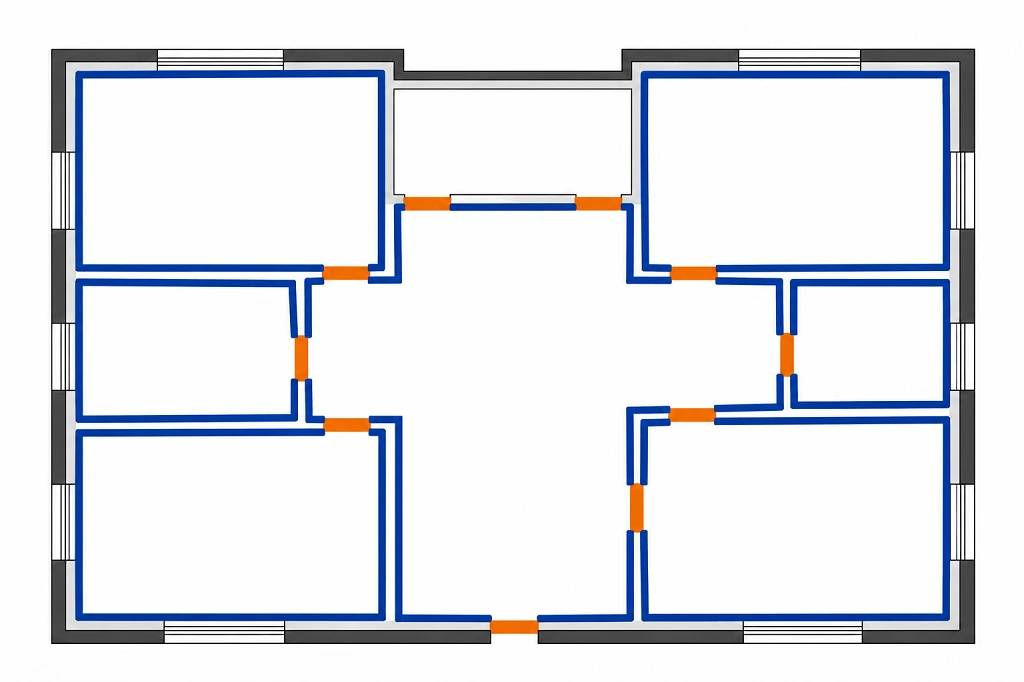
This is the part of a whole-property quote that surprises people, and the reason is geometric. Dividing the same floor area into more rooms adds wall length and doorways without adding a square metre. A villa with eight rooms has far more perimeter than an apartment with the same floor area, so the per-metre items on it are a bigger share of the total.
Skirting and trims. Skirting and profiles are priced by the metre and they run around the edge of every room being floored. Keeping sound existing skirting in place is the single largest saving available on a whole-property job, and it is the first thing to ask about.
Thresholds and door bars. Every doorway between two materials, and every doorway between two rooms laid in different directions, takes a bar. A whole property has many more of these than a single room, and each is a small charge on a long list.
Lifting and disposing of the old floor. This is quoted separately, because the price depends on what is down and how it is fixed. A glued or tiled floor is slow to remove and heavy to carry out. The subfloor is assessed during the free site visit so the quote reflects the real work.
Levelling the slab. Where the slab is out of tolerance, levelling or screeding is added as its own line, and across a whole property it is priced on the area that actually needs it rather than the whole floor. Underlay is specified per room and per material. How either is carried out is covered in the installation guide.
Is a Whole-Property Job Priced Differently?
A whole-property job does attract a better rate per square metre than a single room. Setup, delivery and labour spread across more floor, so the cost per square metre falls as the area grows. Larger and contract work is quoted on scope, specification and timeline, with a project rate given after a site visit.
The reason is in the fixed part of any job. A fitting team travels once, sets up once and protects the access route once, whether it lays twenty square metres or four hundred. Spread across a larger floor, that fixed cost per square metre falls. Material ordered in a single quantity for a whole property is handled once rather than several times.
What this does not mean is a published discount. A whole-property rate is set against the scope in front of it, the specification chosen and the timeline it has to run to, which is why it is given after a measure rather than off a list. Our completed work gives a fair picture of what a whole-property scope looks like, from a villa fitted throughout in SPC to an apartment done in one visit, and more of the same in the project record.
Phasing It Room by Room Instead
Phasing a property room by room is the right call when the budget is fixed and the whole job will not fit inside it. The trade is a higher rate per square metre on each visit and a risk that a batch no longer matches. Doing the bedrooms first is the common split.

Phasing works because the fixed costs that make a large job cheaper per square metre are the same costs you pay again on every visit. Two visits means two setups and two deliveries. The rate per square metre on each is closer to a single-room rate than to a whole-property one, so the sum of the phases comes to more than the single job would have.
The second cost is matching. A floor ordered a year after the first will come from a different production batch, and a different batch of a wood-look plank or a carpet will not be an exact match to the one beside it. Phasing by zone, with a doorway or a threshold between the phases, keeps the mismatch where nobody looks at two floors side by side.
Where phasing is the right call, order the whole property’s material at once and store it, or phase along a line the eye accepts. Doing the bedrooms in one visit and the living areas in another splits at a doorway. Doing half a living room does not.
How Long It Takes and Whether You Move Out
A whole-property install runs room by room, so you can stay in the property while it happens. Furniture moves ahead of the fitters, one zone is cleared and fitted at a time, and the rooms being worked on are out of use that day. A measure sets the schedule before anything is ordered.
The sequence on a whole property is the same every time. The property is surveyed and the floor area confirmed. Material is ordered and, where the product needs it, left to acclimatise on site. Furniture is moved out of the first zone, the old floor is lifted and removed, the subfloor is prepared and the new floor is laid, then skirting and trims are fitted and the furniture goes back. The next zone starts behind it.
What moves the schedule is the work under the floor rather than the floor itself. Lifting a tiled floor, treating moisture or levelling a slab that is out of tolerance all add days that a simple overlay does not. That is settled at the site visit, which is why a date is given after a measure and not before one.
Living in the property through it is normal. Bedrooms are fitted in a block so there is always somewhere to sleep, and kitchens and bathrooms stay in use where they are not part of the scope.
Where a Whole-Property Quote Goes Wrong
A whole-property total is the figure this trade gets wrong more than any other, and the cause is the same every time. It is quoted off a floor plan instead of a measure. Balconies and wardrobes get counted or missed, and the per-metre extras move a total further than the choice of material.
A floor plan gives built-up area. A floor is laid on the measured internal area of the rooms in scope, which is a smaller and differently shaped number. Quoting from the plan prices wall thickness and balconies as floor, and it misses the cut waste that an awkward room shape creates. On a single room the error is small. On a whole villa it compounds across every room at once.
Three specific items account for most of the gap between a quoted total and a final one. Built-up wardrobes and fitted units are either floored under or not, and the two answers differ by several square metres a bedroom. Balconies and terraces get priced at an indoor rate. And the per-metre items in section 6, which no floor plan shows, are left off entirely and appear later.
Two things are worth asking of any whole-property quote, our own included. Ask whether the area it is built on came from a measure or from a plan. And ask whether the total is stated inclusive of VAT, because a figure quoted one way and compared against a figure quoted the other way is not a comparison. What a written quote should list is set out separately.
Whole-Property Flooring FAQs
What is the cheapest way to floor a whole villa?
One budget floor throughout, in a wide plank laid in a straight pattern, with the existing skirting kept. A single material removes thresholds and cuts waste, a straight lay wastes less than herringbone, and leaving sound skirting in place saves the largest per-metre item on the job. Vinyl and laminate sit at the bottom of the rate table.
Should I use one floor throughout or a different floor per room?
One floor throughout if a single material suits every room, a mix if it does not. Kitchens and bathrooms need a waterproof floor, bedrooms suit something warmer underfoot, and a stair run has its own requirements. The cost difference between the two approaches is small, so let the rooms decide rather than the price.
Do I need to move out while a whole property is being floored?
No. A whole-property fit runs zone by zone, so one part of the property stays in use while another is worked on. Furniture is moved ahead of each zone and back once the floor is down. Rooms being fitted that day are out of use, and the rest of the property is not.
Is it cheaper to do the whole property at once or room by room?
At once. One visit spreads setup, delivery and labour across the whole floor area, which brings the rate per square metre down. Phasing repeats that setup on every visit and carries a batch-matching risk, because a dye lot ordered a year later will not match the first. Phasing buys time, not a lower total.
Does the quote include lifting the old floor?
Ask, because it is quoted separately. Lifting a glued or tiled floor and disposing of it is priced on what is there and the condition it is in, and so is levelling or screeding where the slab needs it. The subfloor is assessed during the free site visit so the quote reflects the real work.
How do I check a whole-villa quote is realistic?
Divide the total by the floor area and see where the rate lands. A whole-property job in Dubai sits between AED 45 and AED 350 per square metre by material and grade, so a rate outside that needs explaining. Then check the quote lists skirting, thresholds and old-floor removal as separate lines.
Does a bigger job get a better rate per square metre?
Yes. Setup, delivery and labour are spread across more floor on a larger job, so the rate per square metre falls as the area grows. Contract and large residential work is quoted on scope, specification and timeline rather than a list price, with the project rate given after a site visit.
Is the balcony included in the floor area?
Not in the floored area unless you are flooring it. A listing’s built-up area figure counts the balcony in some developments, and an outdoor surface takes a different material from an indoor floor, so it is measured and quoted on its own line. Ask which figure a quote was built from before comparing two of them.
Get a Measured Quote for the Whole Property
A whole-property total only becomes a real number after a measure. Send us the property type and the rooms in scope on WhatsApp and we will arrange a free site visit, measure room by room, and come back with a quote that lists the floor, the skirting, the thresholds and the subfloor work as separate lines.
Book a Free Site Visit · Ask About Your Property on WhatsApp · Call us on +971 56 689 9831

Junaid Rana is a content strategist with over 10 years of experience in the interior and fit-out industry, writing on flooring, finishes and fit-out across UAE homes and commercial spaces. His guides are reviewed for accuracy by Urban Flooring’s in-house experts.